
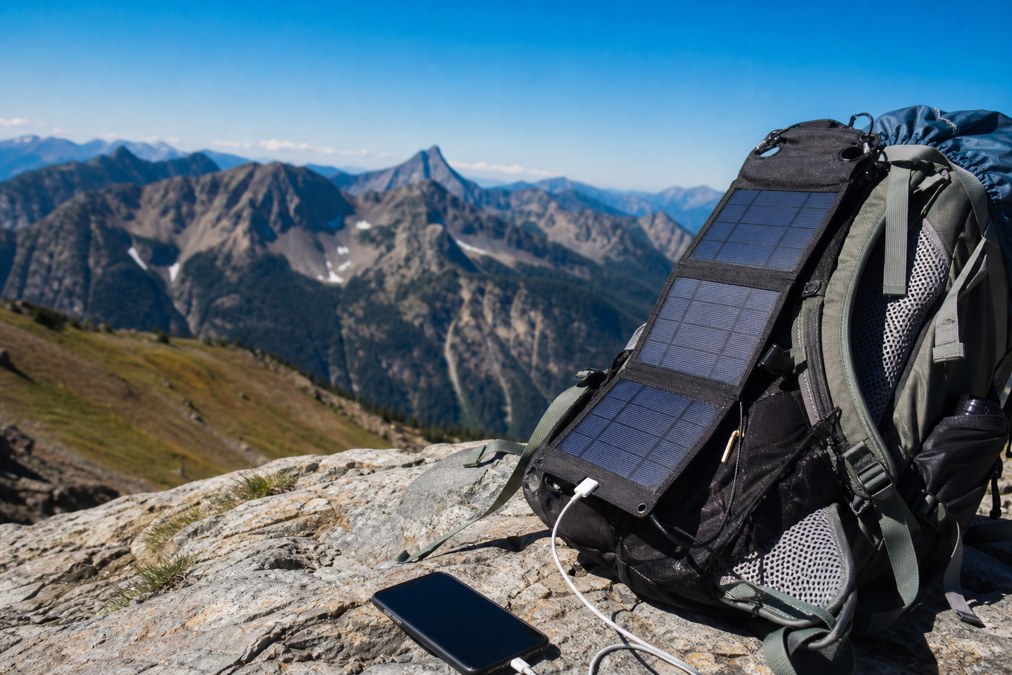
Listing check, 21 October 2026: the Anker route is a 21W two-port panel without a battery. The first BLAVOR route is a bundle of a stated 20,000mAh solar bank and a separate 64,000mAh/236.8Wh power station; the second is a two-pack of stated 10,000mAh banks. Nominal battery capacity is not usable USB output, and the separate devices’ capacities are not one combined bank.
Best Solar Phone Charger for Backpacking in 2026 (Researched & Compared)
Quick answer: panel wattage and pack weight matter more than battery size alone — the Anker 21W foldable panel supplies power only with sufficient sunlight; pair with a small power bank for cloudy stretches.
Below are the 3 best solar phone chargers for backpacking in 2026 — compared by published specifications and job fit. This is not a measured watts-per-ounce ranking or a multi-day field test.
Start here — pick your power job
Scoring rubric (weights)
Compare published output, ports, weight and intended use qualitatively. Numeric ratings are omitted because supporting evaluation records were not established.
How we ranked these
We checked the linked panel and bundle descriptions. Compare panel-only versus stored power, actual kit weight, device compatibility and usable output. No measured charging trial or weather-resistance test supports a performance ranking here.
Which charger for your trip?
Multi-day open-country miles
Prioritize watts per ounce. Clip a 15–25W panel in direct sun and keep a small bank for nights — do not rely on sun alone under canopy.
Two separate devices, more kit to assess
Check the trip energy budget against usable stored capacity, charging losses and device needs. A small integrated solar panel is supplementary; it does not establish that one bank will cover every weekend trip.
Backup juice + extras
Durability and stored capacity matter more than lunch-stop speed. Treat the solar face as a bonus, not your primary charger.
Heavy canopy / cloudy weeks
Panel output collapses in dappled shade. Pre-charge a bank at home and use solar only on open lunch stops or ridge days.
Anker panel vs BLAVOR bank/station bundle
Anker 21W foldable panel
- No built-in battery
- Faster daytime phone top-offs
- Clips to pack in open sun
- Needs a separate power bank
- Best for thru / section hiking
BLAVOR bank/station bundle
- Stored juice for nights
- Two-device bundle; assess total kit
- Dual ports for phone + GPS
- Integrated panel recharges slowly
- Consider only if both devices fit your needs
Solar notes (category benchmarks)
- Rated watts assume clear, perpendicular sun — trail angles and haze cut real output.
- Forest canopy and pack-lid bounce often make mid-day hiking charge slower than camp setups.
- Integrated panels on banks are for trickle recovery, not fast full recharges in one afternoon.
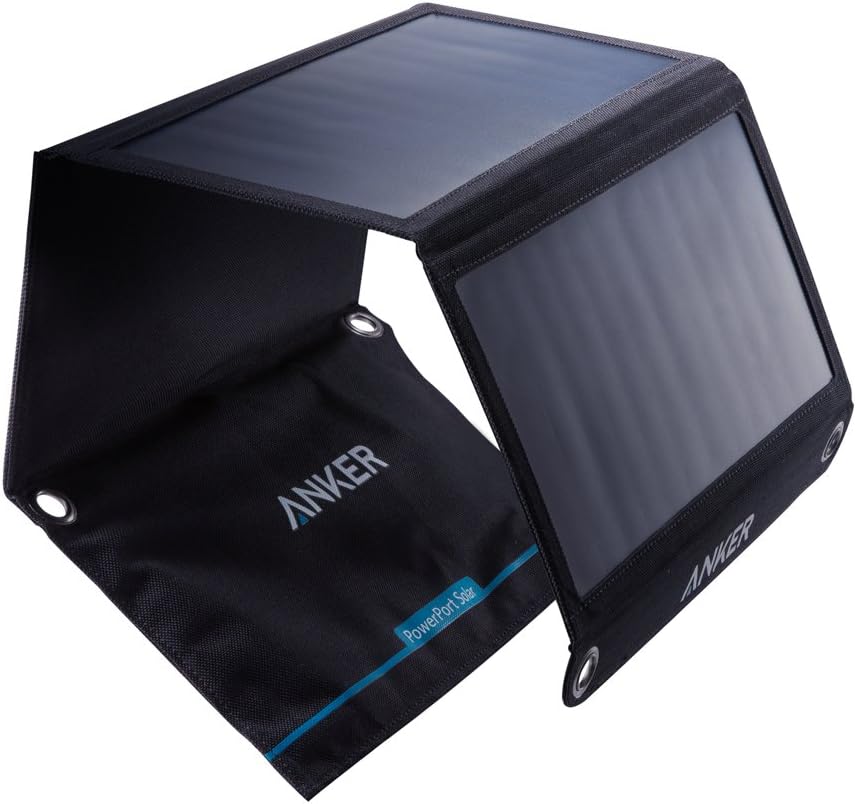
The Anker card retains its family illustration. BLAVOR photos are omitted because a single-device image would not establish the contents of these bundles.
Decision rules
- Choose Anker 21W if you want the dedicated foldable panel and will pair it with a bank.
- Choose BLAVOR bank/station bundle if you specifically need its two-device bank/station bundle.
- Choose the rugged BLAVOR backup if durability and emergency extras matter more than minimum weight.
- Skip panel-only kits if most of your miles are under dense canopy — start with a pre-charged bank.
Why Solar Matters on Multi-Day Hikes
A solar setup does not guarantee navigation or emergency communications. Estimate your actual device energy use, start with charged reserves, protect essential devices and carry navigation and communication backups appropriate to the route. Shade, weather, cable faults and battery temperature can interrupt charging.
Solar works best as a daytime top-off, not your only power source. Clip a panel to your pack in open sun, charge a small bank at camp, and reserve stored power for night navigation and cold mornings when panels are useless.
What to Look For — Buyer’s Guide
Match each category to your trip length and climate — one proven pick per slot beats buying overlapping gear twice.
Key Factors at a Glance
Dedicated 15–25W panels charge phones faster than tiny integrated panels — compare the exact panel’s stated weight, cable weight and performance in your conditions.
Panels top off during daylight; banks store juice for cloudy evenings. Most thru-hikers pair a light panel with a 10,000–20,000mAh bank.
PowerIQ or USB-C PD support reduces wait time at lunch stops. Dual USB ports let you charge phone and GPS simultaneously.
PET-coated cells survive pack abrasion; grommets or carabiners let you clip the panel to a lid facing south during open ridge walks.
The 3 Best Solar Phone Chargers for Backpacking in 2026
Anker 21W Portable Solar Charger
| Output | 21W |
|---|---|
| Form | Foldable panel |
| Weight class | Listed 14.7 oz |
| Best for | Thru / section hiking |
Buy this if
- Want a separate foldable panel on multi-day trips
- Already carry (or will buy) a separate power bank
- Hike open ridges / desert where panels see real sun
Skip if
- Want one all-in-one device for weekend trips
- Mostly hike under dense canopy
- Need stored emergency capacity without a second device
Category benchmarks put a ~21W foldable panel in the sweet spot for backpacking: light enough to clip on a pack lid, strong enough to top off a phone and satellite messenger during open-sun lunch stops. Solar panels work best as daytime top-offs, not a sole power source — pair with a small bank for shade and overnight use.
Pros
- 21W panel rating; USB output depends on sunlight and connected load
- PowerIQ optimizes USB charge speed
- Folds flat and clips to pack lid
- Listed at 14.7 oz; cables and any separate bank add weight
Cons
- No built-in battery — pair with a power bank
- Output drops sharply in forest shade
Complete the kit
BLAVOR 20,000mAh Bank + 64,000mAh Power Station Bundle
| Capacity | Seller-stated 20,000mAh bank plus separate 64,000mAh / 236.8Wh station; not one battery |
|---|---|
| Form | Bank + integrated panel |
| Ports | Dual USB / USB-C |
| Best for | Bank + station users |
Buy this if
- Check the trip energy budget against usable stored capacity, charging losses and device needs. A small integrated solar panel is supplementary; it does not establish that one bank will cover every weekend trip.
- Want overnight phone/GPS top-offs from stored juice
- Need the small bank and separate station, not just one compact bank
Skip if
- Need fastest daytime top-offs (use a dedicated 21W panel)
- Counting every ounce on a thru-hike
- Expect sun alone to refill a large bank in one afternoon
Pros
- Seller-stated 20,000mAh bank plus separate 64,000mAh / 236.8Wh station; not one battery
- Dual USB ports for phone and GPS
- Bank and station serve separate charging jobs
- Check total carried weight against your route
Cons
- Integrated panel recharges bank slowly
- Heavier than panel-only setups
Complete the kit
BLAVOR 10,000mAh Solar Bank (2-Pack)
| Capacity | Seller-stated 10,000mAh per bank; two-pack, not a single 20,000mAh unit |
|---|---|
| Extras | LED / compass (kit-dependent) |
| Durability | Rugged / weather-ready |
| Best for | Emergency backup |
Buy this if
- Want rugged backup with emergency extras
- Prioritize stored capacity over folding-panel speed
- Need a spare bank that can trickle from sun
Skip if
- Primary goal is fast lunch-stop phone top-offs
- Need the lightest dedicated panel only
- Hate carrying bulk for rare emergency use
Pros
- No IP65 rating established for this route; protect from water
- Built-in LED flashlight and compass
- Seller-stated 10,000mAh per bank; two-pack, not a single 20,000mAh unit
- Protect the housing and ports from impact and moisture
Cons
- Bulkier than foldable panels
- Solar recharge alone is slow on cloudy weeks
Complete the kit
Evidence: the linked Amazon offers describe the bundle contents and nominal capacities; these are seller specifications, not measured usable energy. The Anker listing states 14.7 oz, two USB ports and no internal battery. Confirm the current offer and supplied model before purchase.
Full Comparison Table
| Product | Output | Best For | Buy |
|---|---|---|---|
| Anker 21W Portable Solar Charger | 21W | Thru-hiking, day trips | Amazon → |
| BLAVOR 20,000mAh Bank + 64,000mAh Power Station Bundle | 20,000mAh bank + separate 64,000mAh station | Bank + station users | Amazon → |
| BLAVOR 10,000mAh Solar Bank (2-Pack) | 10,000mAh per bank; 2-pack | Emergency backup | Amazon → |
Common mistakes
- Expecting full phone charges under tree cover — Dappled shade kills output. Save panels for open ridges and charge banks at camp.
- Buying a bank with a tiny panel as a thru-hike primary — Integrated panels trickle slowly. Long trips need a dedicated 15–25W foldable.
- Skipping a power bank entirely — Panels only work in daylight. Night navigation and cloudy mornings need stored juice.
- Trusting labeled mAh / watts without job fit — Match the device to the trip: panel for daytime top-offs, bank for overnight and shade.
- Leaving leads to snag on brush — Route cables cleanly when the panel is clipped to a pack lid, or stow it for bushwhacks.
Frequently Asked Questions
Do solar chargers work while hiking?
Solar panel vs solar power bank for backpacking?
How many watts do I need for a phone on trail?
Can I leave a solar panel on my pack all day?
Do I still need a power bank with a solar panel?
Will solar charge in cold weather?
Related Guides


