
Best Tools to Break In Leather Work Boots Fast (Researched & Compared)
Quick answer: mechanical stretching plus conditioning breaks boots in faster than brute-force wearing — a cedar boot stretcher with bunion plugs fixes the specific tight spot, Leather Honey or Obenauf’s softens stiff leather fibers safely, and a PEET dryer manages the sweat that molds leather to your foot between wears.
Below are five tools that shorten break-in without wrecking the leather — the premium stretcher, the value stretcher, two conditioners for different boot weights, and the dryer that keeps the process moving — plus the break-in method that puts them to work and the mistakes that ruin good boots.
Start here — pick your fix
Scoring rubric (weights)
Overall score = weighted average of the four bars. Amazon star averages are not the score.
How we ranked these
We compared each tool on how much it actually shortens break-in, whether it risks the leather (warping, over-softening, water damage), how much fuss it takes per use, and cost per boot. Tools that fix the specific problem beat tools that treat the whole boot — and anything that soaks leather in water loses on principle.
Which fix for your problem?
Targeted stretch
A stretcher with bunion plugs puts pressure exactly where the boot pinches.
Soften the fibers
Conditioner lubricates leather fibers so they flex instead of fighting your foot.
Preserve while breaking in
Heavy boots in sun, mud, and rain need a preservative, not just a softener.
Dry between wears
Damp leather molds to your foot; soaked leather warps and stinks.
The Fast Break-In Method — What Actually Works
- Short daily sessions beat marathon days: wear the boots one to two hours a day for one to two weeks — long enough to warm and flex the leather, short enough to avoid the blisters that teach you to limp.
- Stretch the specific spot, not the whole boot: insert the stretcher, dial in mild pressure, and place a bunion plug at the exact point that pinches. Overnight sessions with gentle pressure do the work a week of painful wearing cannot.
- Condition before and during: apply conditioner the day the boots arrive and again mid-process — softening the fibers early is half of break-in. Work it into the flex points at the ball and the heel counter seams.
- Flex the sole by hand: bend the boot at the ball of the foot repeatedly before each wear session. Stiff soles break their own memory in faster when you help them.
- Never soak leather to break it in: water-swollen leather stretches unevenly, dries stiff, and cracks at the creases — stretchers and flexing beat soaking, every time.
- Dry sweat between wears: damp leather from a work day is opportunity — it molds to your foot as it dries. Use a dryer overnight so the next session starts from a shaped, dry boot instead of a swampy one.
Boot care notes that matter
- Conditioners are not one-size: soft conditioners suit dress and light boots, preservative pastes suit hard-working boots that see water and sun.
- Width stretches well — length does not. A stretcher can widen a boot roughly half a size; it cannot make a short boot long.
- Bunion plugs are the difference between fixing the pain point and stretching leather that already fits.
- Heel slip during break-in is normal early and a warning late — if it persists past two weeks, the boot is the wrong last, not under-broken-in.
The five picks below build the complete break-in toolkit.
Break-in tools — decision rules
- Choose the FootFitter Premium Stretcher for the best targeted stretch with bunion plugs and cedar construction.
- Choose the Leather Honey Conditioner to soften stiff new leather safely and quickly.
- Choose the Obenauf’s Heavy Duty LP for hard-working boots that need preserving, not just softening.
- Choose the FootFitter Width Stretcher as the budget stretcher for simple width problems.
- Choose the PEET Original Dryer to manage sweat and keep break-in moving between wears.
What to Look For — Buyer’s Guide
Match the tool to the problem — mechanical stretch for fit, conditioner for stiffness, drying for sweat — and let each do its one job.
Key Factors at a Glance
Tight spots are mechanical problems (stretchers); creaky stiffness is a fiber problem (conditioners). Diagnose before buying tools.
Light conditioners soak in and soften; preservative pastes protect against water and sun. Work boots usually need the paste, dress boots the liquid.
Bunion plug holes, pressure handle travel, and instep risers separate useful stretchers from wall decorations.
Air-drying takes a day; a convection dryer takes overnight and never warps — sweat management is what keeps break-in progressing.
The 5 Tools That Shorten Break-In
(not Amazon stars)
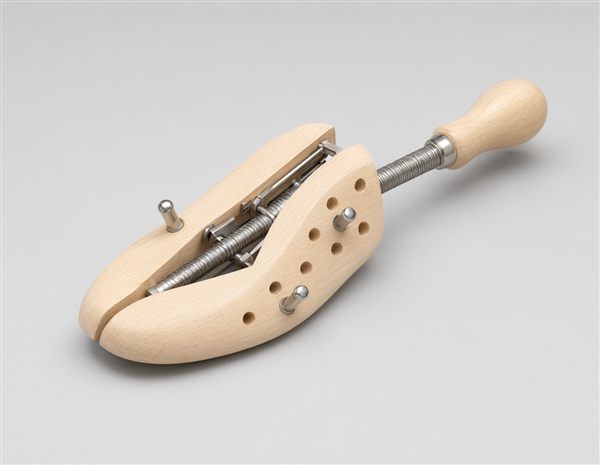
FootFitter Premium Professional Boot Stretcher
| Material | Cedar wood construction |
|---|---|
| Function | Width expansion with pressure handle |
| Spot fixes | Bunion plug holes for pain points |
| Fits | Men’s and women’s boots |
Buy this if
- One specific spot pinches — a plug fixes it precisely
- You want the classic overnight stretch method
Skip if
- Whole boot is tight — see a full width stretcher
- Leather is stiff rather than tight — condition instead
The FootFitter Premium is the classic answer to the classic problem: a solid cedar body, a pressure handle with enough travel to actually move leather, and holes that take bunion plugs so the stretch lands on the exact spot that hurts instead of the boot that already fits. Cedar also pulls moisture between sessions, which is a quiet bonus during a sweat-heavy break-in. Insert it, dial in gentle pressure overnight, recondition the stretched area, and repeat — a hotspot that would cost a week of limping resolves in a few nights. It is the first tool to buy and the last to wear out.
Pros
- Bunion plugs target exact pain points
- Solid cedar construction
- Doubles as a moisture absorber
Cons
- Width only — not length
- Gentle pressure takes multiple nights
Complete the kit
(not Amazon stars)
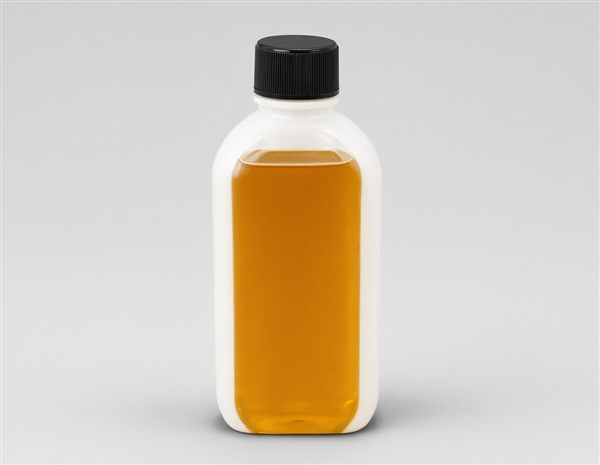
Leather Honey Leather Conditioner
| Type | Liquid leather conditioner |
|---|---|
| Safety | Non-toxic, made in the USA |
| Coverage | Concentrated — small amount per boot |
| Use | Before and during break-in |
Buy this if
- New boots feel like plywood — this softens them
- You want one conditioner for boots, belts, and jackets
Skip if
- Boots in heavy rain and mud daily — Obenauf’s LP below
- Suede or nubuck — this is for smooth leather
Leather Honey is what you reach for when the problem is stiffness rather than size: a concentrated, non-toxic liquid that soaks into the fiber structure and lubricates it so the leather creases where your foot flexes instead of fighting it. Applied the day new boots arrive and again mid-break-in at the flex points, it meaningfully shortens the stiff phase — and a single bottle conditions a small herd of leather goods, which is how it has earned a fifty-year reputation. It darkens some leathers slightly, so test at the shaft first. For hard-working boots in weather, graduate to a preservative paste; for break-in softening, this is the bottle.
Pros
- Softens stiff leather quickly
- Non-toxic and concentrated
- Works on boots, bags, jackets
Cons
- Can darken light leathers
- Not a weatherproofing preservative
Complete the kit
(not Amazon stars)
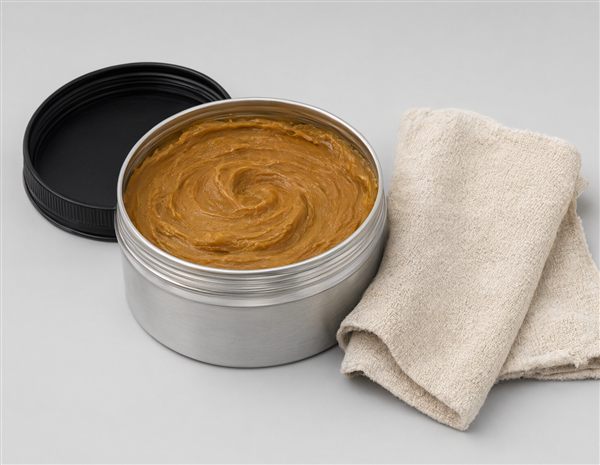
Obenauf’s Heavy Duty LP Leather Preservative
| Type | Paste conditioner and preservative |
|---|---|
| Base | Natural oils and beeswax |
| Protection | Repels water, salt, and sun |
| Use | Work and outdoor boots |
Buy this if
- Your boots live in mud, rain, and concrete
- You want conditioning and protection in one step
Skip if
- Dress boots — the paste is too heavy
- Fastest possible softening — liquids soak in quicker
Obenauf’s Heavy Duty LP is the conditioner for boots whose break-in happens on job sites and wet trails: a beeswax-and-oil paste that softens the leather while building water and abrasion resistance into it, rather than softening it and leaving it bare. Born for wildland firefighter leather, it handles the abuse that turns ordinary conditioners into a wasted afternoon — salt, sun, repeated soaking. During break-in it keeps working boots supple as they flex through their first weeks, then keeps protecting them for years after. It takes elbow grease to apply and it darkens leather — on hard-working boots, both are just the deal.
Pros
- Softens while waterproofing
- Handles repeated soaking and sun
- Durable protection past break-in
Cons
- Heavy paste takes effort to apply
- Darkens leather noticeably
Complete the kit
(not Amazon stars)
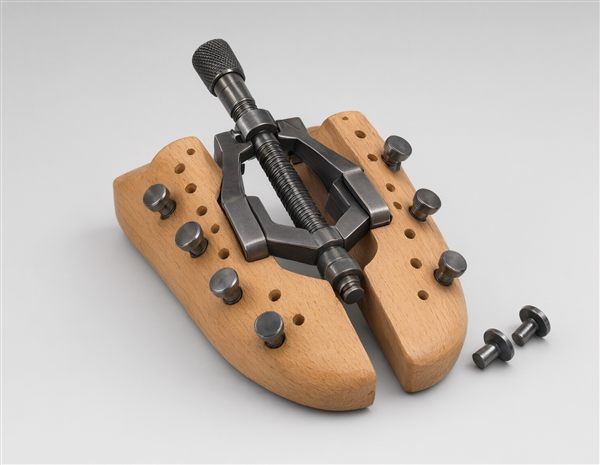
FootFitter Professional Boot Width Stretcher
| Function | Width expansion for boots |
|---|---|
| Target | Tight toe box relief |
| Fits | Hiking and work boots |
| Price | Below the premium cedar model |
Buy this if
- The whole front of the boot is tight, not one spot
- You want stretcher results at a lower price
Skip if
- One specific bunion spot — the premium model’s plugs aim better
- Stiffness without tightness — condition instead
The FootFitter width stretcher is the same overnight method at a friendlier price: solid width expansion aimed at the toe box and forefoot, where new boots most often squeeze. It skips the cedar body and the bunion plug holes of the premium model, which makes it the right choice when the problem is general tightness across the front of the boot rather than one angry spot. Dial in pressure, leave it overnight, recondition, repeat — the leather remembers. For boots that pinch in one place, aim the premium model’s plugs instead.
Pros
- Reliable width expansion
- Lower price than premium models
- Simple overnight method
Cons
- No bunion plugs for spot fixes
- Width only — not length
Complete the kit
(not Amazon stars)
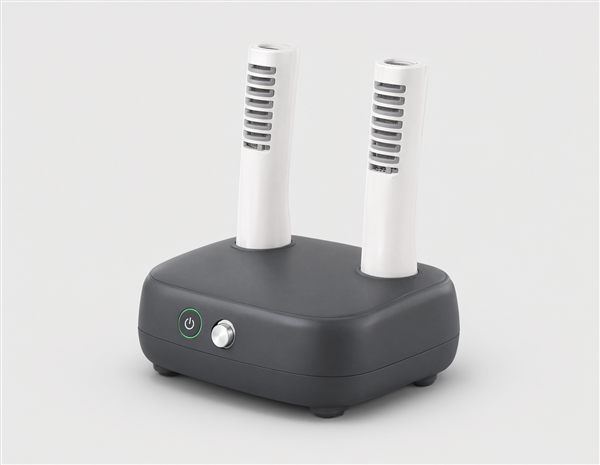
PEET Original Boot Dryer
| Method | Silent convection, no heat blast |
|---|---|
| Runtime | Always-on, energy efficient |
| Warranty | 25 years, made in the USA |
| Use | Work boots, hiking boots, cleats |
Buy this if
- You wear boots through sweaty days during break-in
- You want boots dry and warm every morning
Skip if
- Occasional dry-climate wear — air drying suffices
- You need portability — this is a plug-in station
The PEET Original does the unglamorous half of break-in: it dries the boots you sweated in overnight with silent convection — no blast of heat, no warping, just warm air moving through damp leather until morning. That matters during break-in specifically because damp leather is the leather that molds to your foot; the trick is drying it at the shape you want, not the shape of last night’s puddle of sweat. The always-on design costs pennies a day, it is silent enough for a mudroom, and the 25-year warranty from a US maker is the kind of confidence you buy once. Not a stretching tool — the supporting tool that keeps the whole process hygienic and moving.
Pros
- Silent, gentle convection drying
- 25-year warranty, USA-made
- Kills the mildew cycle in sweaty boots
Cons
- Not a stretching tool
- Needs a plug and a stationary spot
Complete the kit
Full Comparison Table
| Product | Tool Type | Best For | Buy |
|---|---|---|---|
| FootFitter Premium Stretcher | Cedar boot stretcher | Tight spots and toe boxes | Amazon → (paid link) |
| Leather Honey | Liquid leather conditioner | Softening stiff new leather | Amazon → (paid link) |
| Obenauf’s Heavy Duty LP | Preservative paste | Boots in weather and abuse | Amazon → (paid link) |
| FootFitter Width Stretcher | Value width stretcher | General width tightness | Amazon → (paid link) |
| PEET Original Dryer | Convection boot dryer | Drying between wears | Amazon → (paid link) |
Common mistakes
- Soaking boots in water — the old break-in hack warps leather, cracks creases, and dissolves the finish; stretchers and conditioner achieve more with none of the damage.
- Wearing new boots all day first — the first full day in stiff leather buys blisters and a bad attitude; short daily sessions break the same leather in without the casualties.
- Stretching the whole boot for one hot spot — whole-boot stretch loosens leather that already fits; a bunion plug fixes the spot and leaves the rest alone.
- Using the wrong conditioner — heavy preservative on dress leather over-softens it; light conditioner on work boots does almost nothing. Match the weight to the boot.
- Skipping the dryer — sweat-soaked leather stretches unevenly where the foot sweats most, and mildew moves in; overnight drying keeps the shape honest.
Frequently Asked Questions
How long does it take to break in leather work boots?
Is fast break-in safe for the boots?
Boot stretcher or conditioner — which do I need?
Can a boot stretcher stretch a full size?
Does heat help break in leather boots?
Related Guides


