
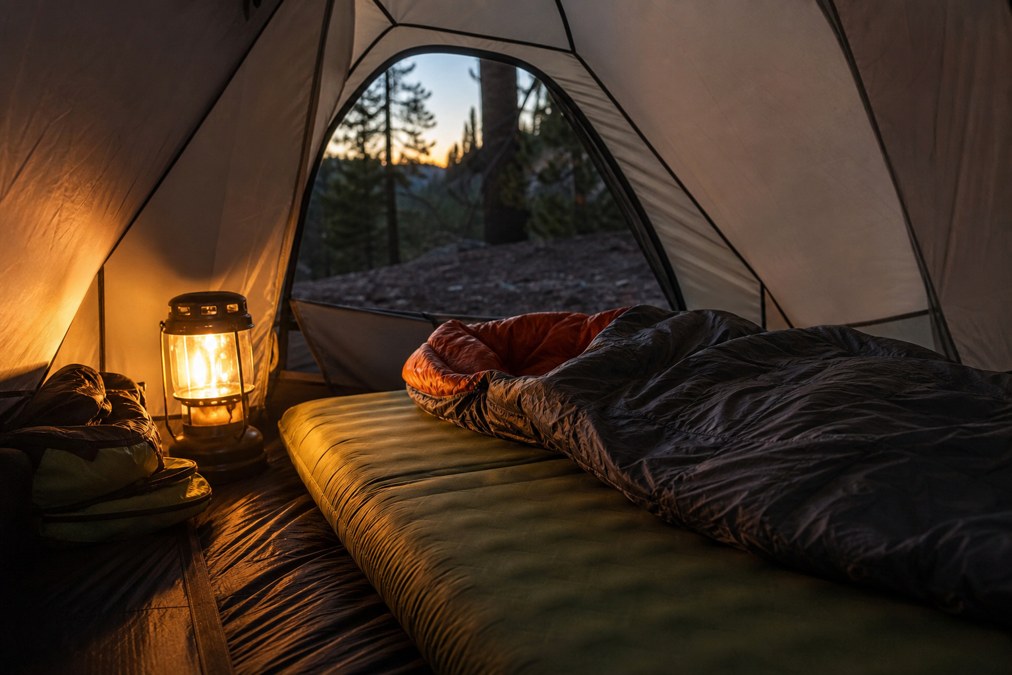
Best Self Inflating Mattress for Camping in 2026 (Researched & Compared)
Quick answer: the best self-inflating mattress pairs an open-cell foam core with enough air to sleep like a bed — the Exped MegaMat 10 is the comfort benchmark with 4 inches of foam, R 8.1 warmth, and an included pump. The Therm-a-Rest ProLite Plus is the packable backpacking pick, and the ALPS Comfort Series covers the budget tier.
Below are five picks across every sleep style and budget — the luxury benchmark, a backpacking workhorse, a big-and-tall option, a packable premium pad, and the value play — plus the R-value and inflation notes that decide whether a mattress keeps you warm or just keeps you off the ground.
Start here — pick your camp style
Scoring rubric (weights)
Overall score = weighted average of the four bars. Amazon star averages are not the score.
How we ranked these
We compared each mattress on foam thickness and density, published R-values, how small the pad packs versus how much comfort it delivers, and price per night of good sleep. A mattress that sleeps like a bed but can’t leave the car is a different tool from one that rides in a backpack — both have a place here.
Which mattress for your trip?
Every ounce carries
The ProLite Plus packs to water-bottle size and still self-inflates at camp.
Sleep like it’s a bed
Four inches of foam, R 8.1 warmth, and a pump in the bag — car camp luxury.
Hips off the ground
4.25 inches of foam in an XXL footprint that fits broad shoulders.
Value per night
A tough self-inflating pad for the price of a couple of camp dinners.
R-Value & Inflation Notes
- How self-inflation works: open-cell foam inside an airtight shell wants to expand — open the valve and the foam pulls air in on its own. You top off with a few breaths (or a pump) for final firmness, which is why these pads set up in minutes without pumping.
- R-value is the warmth spec: R 2–3 for summer, R 4+ for three-season, R 5+ for cold ground. Note for bag shoppers: ISO-rated sleeping bags are tested on roughly R 7 mats, so a warm pad is what makes your bag hit its rating.
- First setup takes patience: brand-new foam is compressed from the factory. Open the valve and let the pad breathe for a few hours (or overnight) before your first trip, then top off — the foam lofts fuller after a few inflation cycles.
- Storage is lifespan: store pads valve-open, flat or loosely rolled, not cinched tight in a stuff sack. Months of compression in a hot trunk is how good foam dies young — quality pads should last 5–10 years stored right.
- Protect the floor side: sweep the tent floor of sticks and rocks, and use a footprint or plastic rug under the pad. Self-inflating shells are tough, but a puncture at 2 a.m. is still a puncture.
Comfort notes that matter
- Foam density separates the classes — Exped publishes 16 kg/m³ open-cell foam for the MegaMat; bargain pads don’t publish density at all.
- Pads that include pumps (MegaMat’s Top-Up, MondoKing’s pump sack) keep breath moisture out of the foam — better warmth over years.
- Side sleepers need 3+ inches of loft to keep hips from bottoming out; back sleepers get away with less.
- R 8 versus R 3 is the difference between a 3-season bag behaving like winter gear or not — warmth lives in the pad, not just the bag.
The five picks below cover every camp style and budget.
Mattress — decision rules
- Choose the Exped MegaMat 10 for the best sleep you can put in a car trunk.
- Choose the Therm-a-Rest ProLite Plus when the pad rides in a backpack.
- Choose the MondoKing 3D if you are big, tall, or a committed side sleeper.
- Choose the NEMO Roamer for near-MegaMat comfort that packs down smaller.
- Choose the ALPS Comfort Series when the budget makes the call.
What to Look For — Buyer’s Guide
Match the pad to how you travel — comfort is a function of foam, warmth is a function of R-value, and packed size decides where it can go.
Key Factors at a Glance
3–4 inches and dense foam separate bed-like pads from camping pads. Side sleepers: 3 in minimum.
R 2–3 summer, R 4+ three-season, R 5+ winter ground. Warm pads let the sleeping bag do its job.
Backpacking wants water-bottle packed size; car camping can afford a rolled sleeping bag.
Flat valves and included pumps mean faster setup and no breath moisture in the foam.
The 5 Mattresses That Earn Their Pack Space
(not Amazon stars)
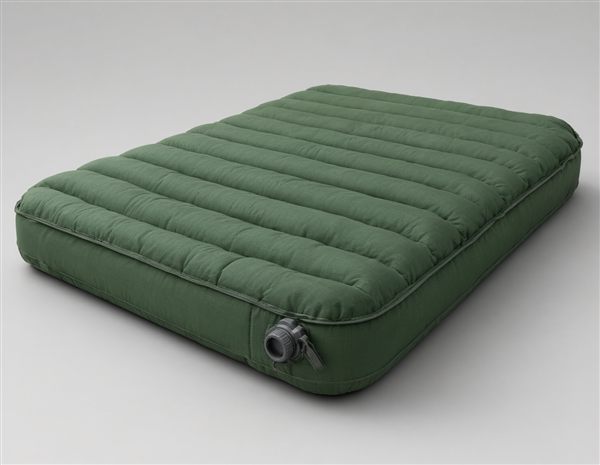
Exped MegaMat 10
| Thickness | 4 in (10 cm) open-cell foam |
|---|---|
| R-value | 8.1 (ASTM) |
| Includes | Top-Up pump, Sidewinder bag, repair kit |
| Warranty | 5 years |
Buy this if
- You car camp and want bed-level sleep at camp
- You camp cold — R 8.1 makes a 3-season bag feel winter-rated
Skip if
- The pad needs to ride in a backpack → ProLite Plus
- The budget tier decides → ALPS Comfort
The MegaMat 10 is the comfort benchmark self-inflating pads get measured against: 10 centimeters of dense open-cell foam (16 kg/m³ per Exped’s spec sheet) with horizontal air channels that cut weight without softening the sleep surface, vertical side walls that keep the full width usable, and a recycled tricot top that feels like bedding instead of gear. It is genuinely self-inflating, with two flat valves and the included Top-Up pump for final firmness — no huffing moisture into the foam. R 8.1 means winter-ground warmth, the Sidewinder bag and repair kit ship in the box, and a 5-year warranty backs it. The only honest complaints: it packs to rolled-sleeping-bag size, not water-bottle size, and it costs like the best at something it is.
Pros
- Dense 4 in foam sleeps like a bed
- R 8.1 — winter-ground warmth
- Pump, bag, and repair kit included
Cons
- Heavy and bulky for backpacking
- Premium price
Complete the kit
(not Amazon stars)
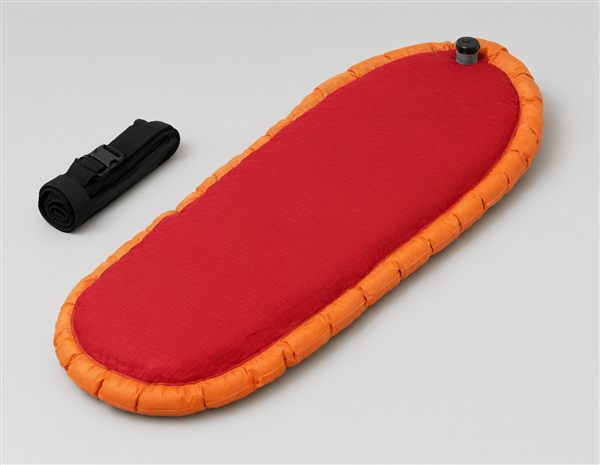
Therm-a-Rest ProLite Plus
| Type | Self-inflating die-cut foam |
|---|---|
| R-value | 3.2 (listed) |
| Packed | Compact roll, backpack-sized |
| Best for | Three-season backpacking |
Buy this if
- The pad rides in a pack, not a trunk
- You want self-inflating convenience at camp without the weight
Skip if
- You sleep cold on late-season ground → size up in R-value
- Car camping only → the MegaMat is a better bed
The ProLite Plus is what self-inflating looks like when it has to fit in a backpack: die-cut foam keeps the weight down, the pad rolls to roughly water-bottle size, and at camp you crack the valve, let the foam do the work, and top off with a couple of breaths. Comfort is honest rather than luxurious — this is a pad, not a mattress — but R 3.2 covers three-season trips, and Therm-a-Rest’s build reputation means the valve and shell survive years of pack life. For decades this has been the default answer to “self-inflating and backpackable,” and it still is.
Pros
- Packs small enough for backpacking
- Self-inflates — no pump to carry
- Proven Therm-a-Rest durability
Cons
- Backpacking comfort, not bed comfort
- R 3.2 is three-season, not winter
Complete the kit
(not Amazon stars)
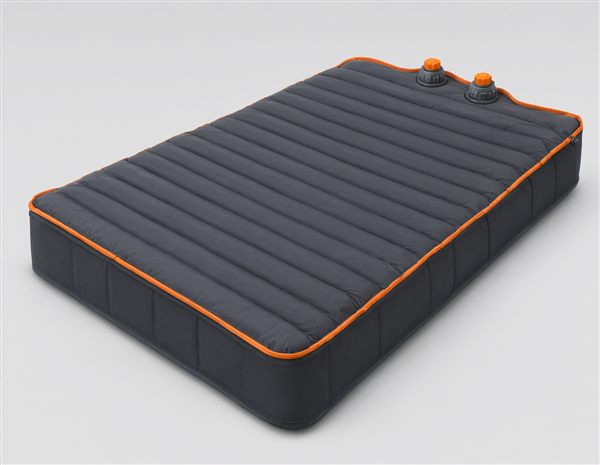
Therm-a-Rest MondoKing 3D
| Thickness | 4.25 in (11 cm) foam |
|---|---|
| R-value | 7.0 |
| Sizes | Large 77 x 25 · XXL 80 x 30 in |
| Includes | Pump/stuff sack, TwinLock valve |
Buy this if
- You are big, tall, or a committed side sleeper
- You want near-MegaMat comfort with faster inflation
Skip if
- You camp in a small tent — measure the 30 in width first
- The budget tier decides → ALPS Comfort
The MondoKing 3D is Therm-a-Rest’s biggest bed: 4.25 inches of StrataCore foam with a 7.0 R-value, and an XXL option that runs 30 inches wide by 80 long — enough that broad shoulders and side-sleeping hips never touch ground. The TwinLock valve is the quiet feature worth knowing: it inflates roughly three times faster and deflates about five times faster than single-valve pads, and the included pump/stuff sack tops off firmness without breath. It is made in the USA of US and imported materials, packs to a 26-inch roll, and weighs 4.4–5.5 pounds depending on size — a trunk pad, unmistakably, and a very good one.
Pros
- 4.25 in foam — hips never bottom out
- XXL width for big frames
- TwinLock valve with included pump sack
Cons
- Trunk-sized packed roll, 4.4–5.5 lb
- Priced with the premium pads
Complete the kit
(not Amazon stars)
NEMO Roamer
| Type | Self-inflating foam mattress |
|---|---|
| Size | 76 x 25 in (single) |
| Feel | Plush foam, soft top |
| Best for | Comfort that still packs |
Buy this if
- You want near-MegaMat sleep with a smaller packed roll
- You sometimes carry the pad to paddle-in or hike-in camps
Skip if
- Maximum comfort is the only goal → the MegaMat is plusher
- Budget-led → the ALPS undercuts it by half
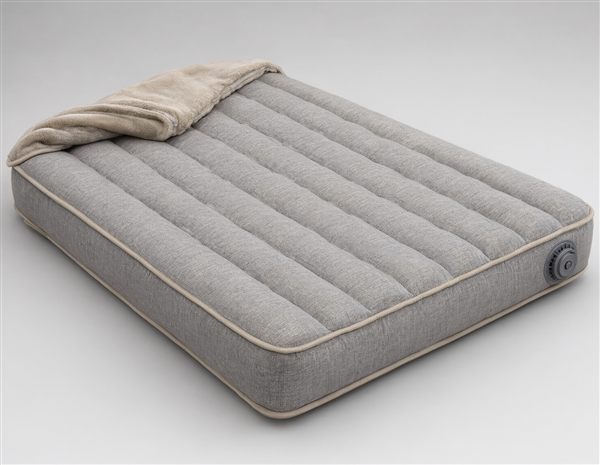
The Roamer is NEMO’s answer to the comfort-pad class, and its angle is packability: plush self-inflating foam with a soft next-to-skin top that packs down noticeably smaller than the same-thickness competition, in a 76 x 25 single that fits standard tents. It splits the difference between the trunk pads and the backpack pads — comfort close to the big mattresses, packed size close to the carryable ones. The trade is price: it is a premium pad, and the MegaMat still sleeps plusher when packed size doesn’t matter. When it does — paddle-ins, hike-ins, small cars — the Roamer is the luxury pick that comes along.
Pros
- Packs smaller than its comfort class
- Plush sleep surface, soft top fabric
- Fits standard tent floors
Cons
- Premium price for the size
- MegaMat is plusher when size doesn’t matter
Complete the kit
(not Amazon stars)
ALPS Mountaineering Comfort Series
| Type | Self-inflating air pad (foam core) |
|---|---|
| Build | Durable shell, multiple sizes |
| Brand | ALPS Mountaineering |
| Best for | Value campers, spare pads |
Buy this if
- The budget tier makes the decision
- You want self-inflating comfort for guests, cots, or the spare kit
Skip if
- You camp cold — the premium pads carry higher R-values
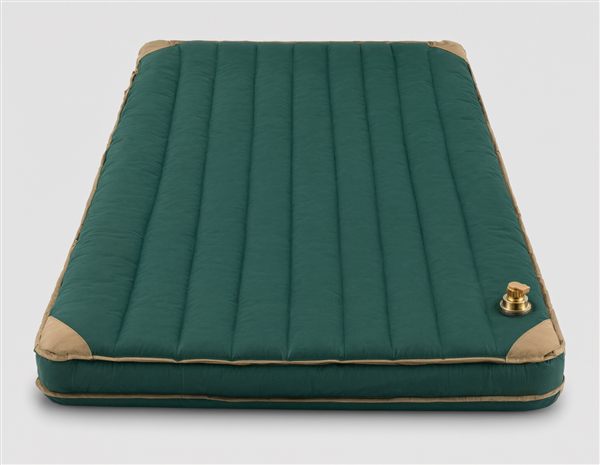
The ALPS Comfort Series is the value answer that stays honest: real open-cell self-inflating foam (not an air pad in disguise), a durable shell in a range of sizes, and a price that undercuts the premium pads by half or more. It will not match the MegaMat’s density or R 8.1 warmth, and it does not pretend to — it is the pad for guest-bed duty, the cot at hunting camp, the spare for the kids’ tent, and the first self-inflating mattress for anyone not ready to spend premium money on sleep. Buy it for the right job and it outperforms its price every trip.
Pros
- Half the price of premium pads
- Real self-inflating foam core
- Tough shell in multiple sizes
Cons
- Comfort below the premium class
- Lower R-value than the leaders
Complete the kit
Full Comparison Table
| Product | Type | Best For | Buy |
|---|---|---|---|
| Exped MegaMat 10 | 4 in foam, R 8.1 | Car camping, base camp | Amazon → (paid link) |
| Therm-a-Rest ProLite Plus | Packable foam, R 3.2 | Backpacking | Amazon → (paid link) |
| Therm-a-Rest MondoKing 3D | 4.25 in foam, R 7.0 | Big & tall, side sleepers | Amazon → (paid link) |
| NEMO Roamer | Plush foam, 76 x 25 | Packable luxury | Amazon → (paid link) |
| ALPS Comfort Series | Value foam core | Budget, guests, cots | Amazon → (paid link) |
Common mistakes
- Buying an air pad when you want self-inflating — the popular Klymit Static V Luxe SL often appears in these searches, but it is an air pad: no open-cell foam core, no self-inflation. Check for foam and a self-inflate valve, not just “camping mattress” in the title.
- Storing the pad compressed in a hot trunk — months of squeeze and heat kill foam loft. Store valve-open and loosely rolled, and the pad lasts 5–10 years.
- Chasing thickness without R-value — a thick pad can still be a cold pad. Warmth is the R-number; check it before the inches.
- Skipping the repair kit on long trips — patch kits weigh nothing and a puncture without one ends sleep for the trip.
- Buying XXL without measuring the tent floor — 30-inch-wide pads and 80-inch lengths eat small-tent real estate fast. Measure first, sleep later.
Frequently Asked Questions
What is a self inflating camping mattress?
Self inflating pad vs air pad?
How long do self inflating mattresses last?
What R-value do I need for a camping mattress?
Can I use a self inflating mattress in a tent?
Related Guides


