
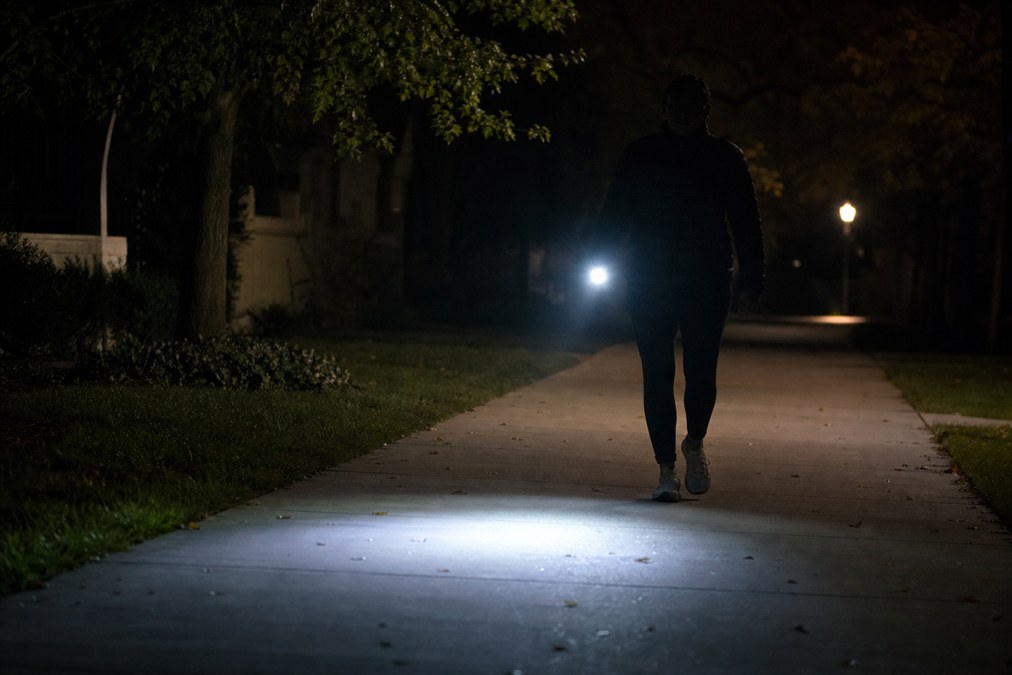
Best Flashlight for Night Walking in 2026 (Researched & Compared)
Quick answer: Choose a night-walking flashlight by the beam you can use comfortably, its runtime at that setting and the controls you can operate while walking. The linked Fenix is the PD36R ACE; the linked Nitecore is the EDC27 UHi. Their peak outputs are not continuous-output promises.
These three flashlights for walking at night offer different formats: the Fenix tube light with configurable modes, the zoomable Anker LC90 and the flat Nitecore pocket light. Compare the exact versions below; the original PD36R and standard EDC27 have different specifications.
Even flood coverage beats raw turbo lumens for pavement edges and trip hazards.
Start here — match the light to your route
Selection criteria
Specifications describe the exact model, but they do not establish a comparative walking score. No numerical beam-quality or runtime ranking is presented here.
How we compared these
We checked the linked Amazon model headings against manufacturer specifications and manuals. This comparison uses published information, not a documented side-by-side walking test. Runtime depends on the output mode, temperature, battery condition and test method; a maximum-lumen figure cannot establish how much light remains throughout a walk.
Manufacturer references
Which light for your route?
Sidewalks and dog walks
Test a lower steady mode on familiar ground. Check that it lights the pavement edges without aiming into faces, windows or traffic.
Near ground versus a distant point
The LC90 changes its beam with a zoom slider. Check both positions before leaving; the narrow setting need not illuminate the pavement beside your feet.
Keep a light with you
The EDC27 UHi has a flat body and USB-C charging. Learn its steady modes and lockout before carrying it in a pocket or bag.
Plan for a light failure
Choose a tested setting that covers the route with reserve and carry an independent backup on a remote walk. A peak turbo mode is not a route plan.
Fenix PD36R ACE vs Nitecore EDC27 UHi
Fenix PD36R ACE
- Tube format; 181.6 g including battery
- 3000 lm maximum; 350 lm medium setting
- USB-C charging; IP68
- SET options change which modes are available
Nitecore EDC27 UHi
- Flat format; 122 g listed weight
- 3100 lm maximum; 200 lm medium setting
- USB-C charging; IP54
- OLED display and lockout options
Beam and runtime checks before a walk
- Lumens describe total light output, not how evenly it covers the path. Beam distance and hotspot intensity describe different parts of the picture.
- A listed runtime is tied to a particular mode and test method. It does not mean peak output stays unchanged for that many hours.
- The EDC27 UHi manual lists 200 lm and 4 h 20 min for medium under laboratory conditions. Treat that as a manufacturer test value, not a guaranteed route duration.
- Fenix documents heat- and low-voltage-related output reduction. Choose a useful lower setting rather than planning around maximum output.
- Use the manufacturer’s transport lockout or isolation instructions to prevent accidental activation in a pocket or bag. Keep a hot lamp head away from fabric.
Decision rules
- Choose PD36R ACE if its tube format and configurable output groups suit you; confirm ACE in the listing.
- Choose LC90 if you want a zoomable beam and are comfortable carrying a Micro-USB cable.
- Choose EDC27 UHi if its flatter shape fits your carry routine; learn its lockout and steady controls.
- For hands-free use, compare a headlamp rather than assuming a pocket clip aims a handheld light correctly.
- If your route is remote, carry a backup that does not depend on the same light or battery.
What makes a useful walking flashlight?
A useful beam lets you see the ground ahead and the edges of the path without constantly repositioning the light. Start on a familiar route and adjust the brightness as needed; wet surfaces, terrain and surrounding lighting change what works.
Check whether the light stays comfortable to carry, whether you can find a steady mode quickly and whether the remaining battery covers the return journey. Rechargeable and AA-powered lights can both be useful; choose around your charging access and backup plan instead of assuming a guaranteed cost saving.
What to Look For — Buyer’s Guide
Compare the exact model, useful modes and controls before maximum output. Try the intended setting before relying on the light for an unfamiliar route.
Key factors at a glance
Compare nearby ground coverage and hotspot intensity. Aim away from other people and road users.
There is no universal safe lumen threshold. Use the lowest steady setting that gives enough visibility for your conditions.
Match the runtime table to the actual mode. USB-C and Micro-USB are different charging connections; check the included cable and instructions.
Check weight, grip, lockout and the exact IP rating. An ingress rating is not permission to ignore the manual’s sealing and drying instructions.
The 3 Best Flashlights for Night Walking in 2026
Fenix PD36R ACE Flashlight
| Variant | PD36R ACE; not original PD36R or V2.0 |
|---|---|
| Output | 3000 lm maximum; 350 lm medium setting |
| Charging | USB-C; supplied 21700 battery |
| Weather | IP68; follow manufacturer test/use limits |
Consider it if
- You want a tube light with configurable mode groups
- You will learn the controls and test a useful lower setting
Choose another option if
- You want the lightest flat pocket format here
- You expect maximum output to remain constant for the whole walk
The linked product is PD36R ACE. Fenix lists a 3000-lumen maximum, five regular brightness levels and SET options that change the available outputs. Check the selected output group before a walk: a turbo-only group is a different experience from having lower settings available. USB-C charging and the battery indicator are useful conveniences, but neither proves a full route’s runtime or a glare-free beam.
Pros
- Manufacturer documents regular modes and SET groups
- USB-C charging and battery indication
Limitations
- More control options to learn
- High output can generate heat and step down
Complete the kit
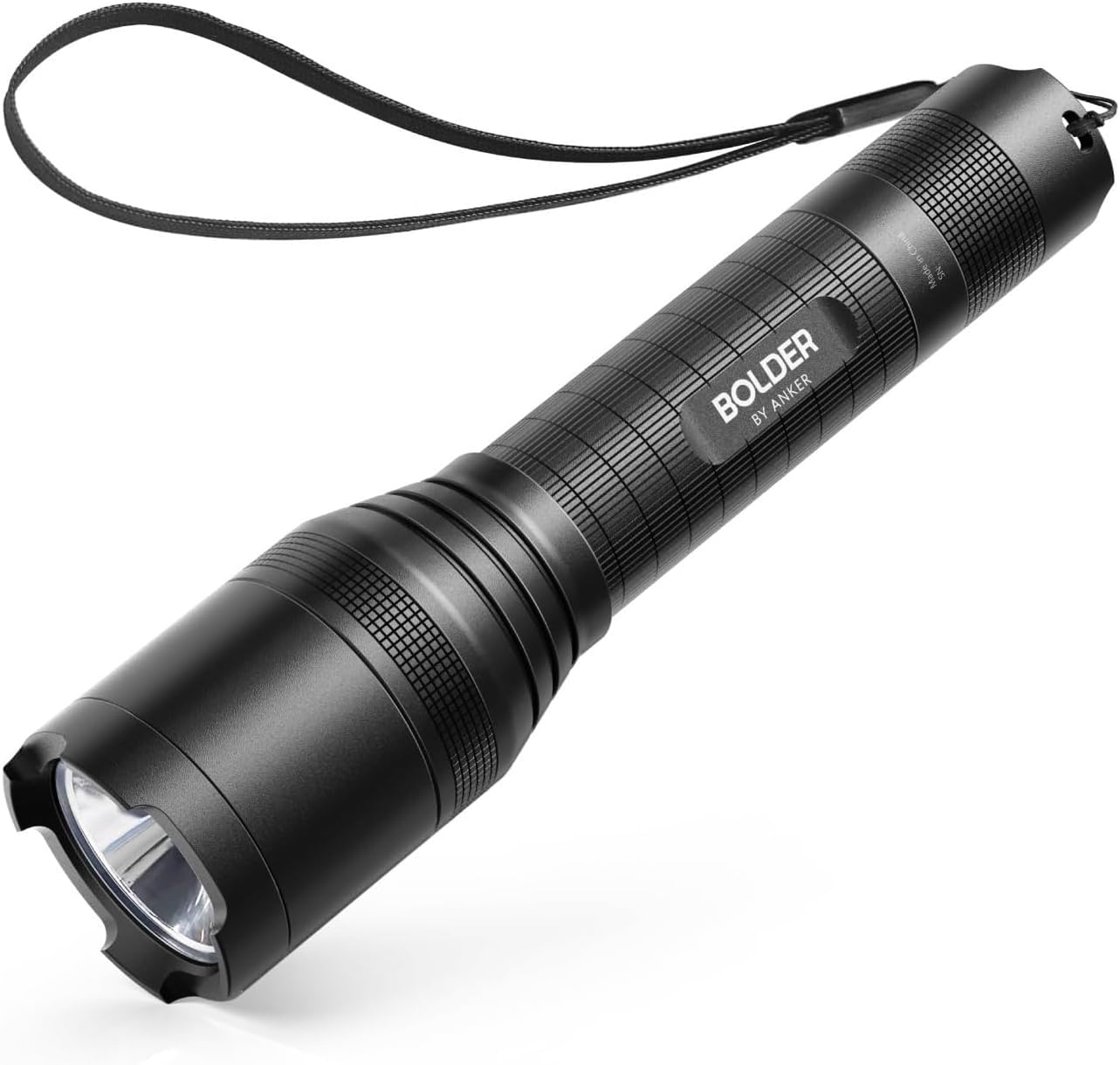
Anker Bolder LC90
| Model | Anker Bolder LC90 |
|---|---|
| Output | 900 lm maximum listed |
| Beam | Zoom slider; wide to narrow |
| Charging | Micro-USB; confirm supplied battery instructions |
| Weather | Linked US listing states IPX5 |
Consider it if
- You want to adjust between a wide and narrower beam
- You are comfortable with Micro-USB charging
Choose another option if
- You want USB-C for all your gear
- You need specifications that the selected seller cannot confirm
The LC90 uses a zoom slider and offers high, medium, low, strobe and SOS modes. Its linked US listing describes a 900-lumen maximum and Micro-USB charging. Choose it for the adjustable-beam format rather than an assumed price advantage. The Anker regional page and the US listing differ on some battery and ingress details, so use the supplied manual for your exact unit rather than transferring every regional specification.
Pros
- Adjustable beam and multiple steady modes
- Manufacturer manual available for model T1420
Limitations
- Older charging connector
- Regional and seller specifications need checking
Complete the kit
Nitecore EDC27 UHi Flashlight
| Variant | EDC27 UHi; standard EDC27 differs |
|---|---|
| Output | 3100 lm maximum; 200 lm medium setting |
| Published medium | 4 h 20 min under manufacturer laboratory conditions |
| Charging / battery | USB-C; built-in 1700 mAh battery |
| Weather | IP54; do not assume immersion protection |
Consider it if
- You prefer a flatter pocket light
- You will learn the controls and lockout
Choose another option if
- You require the same ingress rating as the Fenix
- You want a built-in battery you can swap during the route
The EDC27 UHi is the variant behind this guide’s shopping link. Its manual lists 3100 lumens at maximum and 200 lumens on medium; the medium-mode runtime is a laboratory result, not a sustained-turbo claim. Compare its flat carry format, display and switches in person where possible. Learn full lockout before pocket carry and use steady output around other walkers rather than relying on instant strobe or turbo.
Pros
- Flat format with an information display
- USB-C charging and documented lockout modes
Limitations
- Built-in battery limits on-route swapping
- IP54 is not an immersion rating
Complete the kit
Check the light in your walking setup
- Confirm PD36R ACE, LC90 or EDC27 UHi on the actual unit and manual; do not borrow another generation’s controls.
- Charge under the supplied instructions and select a useful steady mode. For ACE, confirm the output group makes that mode available.
- Try near-ground coverage, glare and switch access on familiar ground with the leash, gloves or poles you actually use.
- Plan the return with reserve and an independent backup on a remote route; published laboratory runtime is not a guaranteed outing duration.
- Use the exact transport lockout/isolation and weather-care instructions. Check connector and cable compatibility before departure.
Keep the ACE instructions or EDC27 UHi manual with the unit. Our hiking essentials guide covers the rest of a route plan.
Full Comparison Table
| Product | Type | Best For | Buy |
|---|---|---|---|
| Fenix PD36R ACE Flashlight | PD36R ACE tube / USB-C | Configurable modes | Amazon → |
| Anker Bolder LC90 | LC90 zoom / Micro-USB | Adjustable beam | Amazon → |
| Nitecore EDC27 UHi Flashlight | EDC27 UHi flat / USB-C | Flat pocket carry | Amazon → |
Common mistakes
- Comparing different generations: PD36R, ACE and V2.0 are not interchangeable specification sheets. The same applies to EDC27 and UHi.
- Treating maximum lumens as continuous output: read the mode-specific runtime data and step-down notes.
- Assuming tube or flat shape proves the best beam: try the near-ground coverage and glare yourself.
- Carrying an unlocked light beside fabric: follow transport instructions to prevent accidental activation and heat buildup.
- Ignoring the charging connector or remaining battery: check both before the return leg of the route.
Frequently Asked Questions
How many lumens for night walking?
Rechargeable vs AA flashlights for daily walks?
Flood beam or throw beam for sidewalks?
Is a flashlight better than a headlamp for night walking?
What runtime do I need for a night walk?
Do I need waterproofing for neighborhood walks?
Related Guides


