
Best Handheld Radio for Hunting in 2026 (Researched & Compared)
Quick answer: cell service dies in timber, and a GMRS pair with NOAA weather keeps a hunting party in contact ridge-to-ridge — Midland’s GXT1050VP4 is the reliable 50-channel baseline, Retevis’s RT29 is the heavy-duty battery workhorse, and Motorola’s T800 adds Bluetooth app features on top.
Below are four radios across hunting parties and budgets — the GMRS standard with weather alerts, the high-capacity duty radio with earpieces, the smart-feature pick, and the slim budget pair — plus the license, channel, and range-honesty notes that keep the whole party actually hearing each other.
Start here — pick your radio
Scoring rubric (weights)
Overall score = weighted average of the four bars. Amazon star averages are not the score.
How we ranked these
We compared each radio on real terrain performance (GMRS power vs FRS limits, antenna length, terrain honesty — not the marketing mile numbers), battery life through a full hunting day, hunting-relevant features (NOAA weather, VOX hands-free, earpiece quietness, camo), and price. A radio that dies at 2 p.m. or that nobody can hear in a cedar swamp has failed the hunt.
Which radio for your hunt?
GMRS power
Fifty channels and weather alerts keep spread-out hunters synced.
Battery workhorse
3200 mAh and earpiece discretion from dark to dark.
Smart radio
Bluetooth pairing, offline maps, and location sharing.
Slim and cheap
Pocket radios for around-camp and short pushes.
Range & License Notes — The Honest Physics
- Range numbers are marketing: “36-mile” ratings describe open-water line-of-sight in a lab. Real timber, ridges, and leaf cover deliver a few miles at best, often less. Buy power and antenna quality, then expect terrain to do what terrain does.
- GMRS vs FRS — the license split: GMRS runs higher power and can use repeaters, and it needs an inexpensive FCC license (no test, covers the family) in the US. FRS is license-free but power-capped. Serious ridge-to-ridge hunting parties land on GMRS; casual camp use stays on FRS.
- Channel discipline: agree on a private channel and privacy code before the hunt — avoid channel 9 (emergency) and the crowded defaults at public-land trailheads. Radios are only as organized as the plan made in the truck.
- Weather alerts are a safety feature: NOAA weather channels with alerts turn the radio into a storm warning system — the feature that has moved hunting parties off ridges before lightning, more than once.
- Earpieces keep the woods quiet: wired earpieces keep conversations off the ridge line — a real hunting advantage over speaker conversations that carry. VOX hands-free lets a call come in mid-stalk without movement.
Field notes that matter
- Cold kills batteries: spare lithium AAs in an inside pocket outlast the radio’s own pack on frost mornings.
- Higher ground talks farther — ten feet of elevation gain beats ten miles of marketing range.
- Set a check-in schedule (every hour on the hour); silent hunts breed missed-check confusion.
- Mark channel and code on tape on the radio’s back — cold hands and adrenaline forget settings.
The four picks below cover every hunting party.
Hunting radio — decision rules
- Choose the Midland GXT1050VP4 for the GMRS standard with weather alerts and camo pair.
- Choose the Retevis RT29 for all-day battery, earpieces, and heavy-duty build.
- Choose the Motorola T800 for Bluetooth app features and location sharing.
- Choose the Retevis RT22 for budget close-range duty around camp.
What to Look For — Buyer’s Guide
Pick the service (GMRS vs FRS) by party distance, then battery capacity by day length, then features.
Key Factors at a Glance
GMRS pairs with the cheap FCC license buy real power for ridge-to-ridge parties; FRS stays license-free for camp range. Mixed-brand parties should standardize on one service.
Removable AA compatibility beats sealed packs for multi-day hunts — lithium AAs in a pocket are lighter and colder-proof than any second proprietary pack.
Wired earpieces keep the timber quiet; VOX hands-free answers mid-stalk. Speaker-only radios cost hunts in pressured woods.
NOAA alerts and SOS features are the safety layer worth paying for; a radio that warns of an incoming front earns its pack weight.
The 4 Radios That Keep Parties Talking
(not Amazon stars)
Midland GXT1050VP4 GMRS Two-Way Radio (2-Pack)
| Service | GMRS (license required) |
|---|---|
| Channels | 50 + 142 privacy codes |
| Weather | NOAA with alerts |
| Power | Rechargeable + AA backup |
Buy this if
- Ridge-to-ridge party communication
- Weather alerts are part of the safety plan
Skip if
- License-free needs → the T800 or RT22
- Multi-day battery-first duty → the RT29
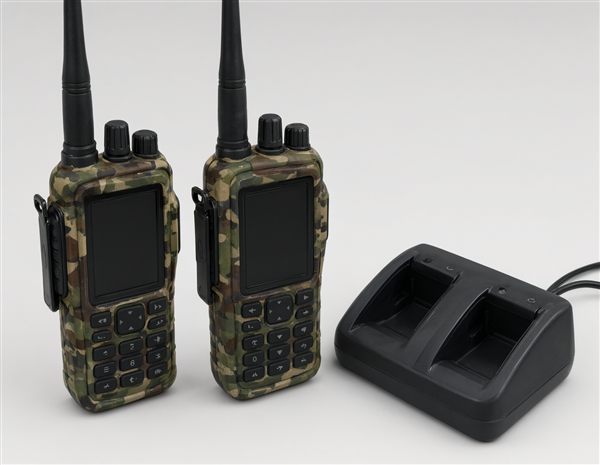
The GXT1050VP4 is the radio hunting parties keep buying because it does the whole job: 50 GMRS channels with privacy codes for clean party lines, NOAA weather channels with alert mode for the morning the front moves in, and a camo pair with drop-in charger that also runs on AAs when the rechargeables meet a frost morning. It transmits at GMRS power for genuine ridge-to-ridge reach — with the inexpensive FCC license that unlocks — and its build has survived enough seasons of drop-testing from treestand heights that the failure stories are folklore. The app-age features of the T800 and the battery muscle of the RT29 are absent; the reliability that matters in the woods is not.
Pros
- 50 channels with privacy codes
- NOAA weather alert mode
- AA backup power for cold hunts
Cons
- Requires the GMRS license
- No smart/app features
Complete the kit
(not Amazon stars)
Retevis RT29 Heavy-Duty Two-Way Radio (2-Pack)
| Battery | 3200 mAh rechargeable |
|---|---|
| Includes | Earpieces per radio |
| Rating | IP54 dust/splash |
| Best for | Dark-to-dark hunts |
Buy this if
- Hunt days run from dark to dark
- Quiet earpiece communication matters
Skip if
- GMRS-repeater range needs → the Midland
- Smart features wanted → the T800
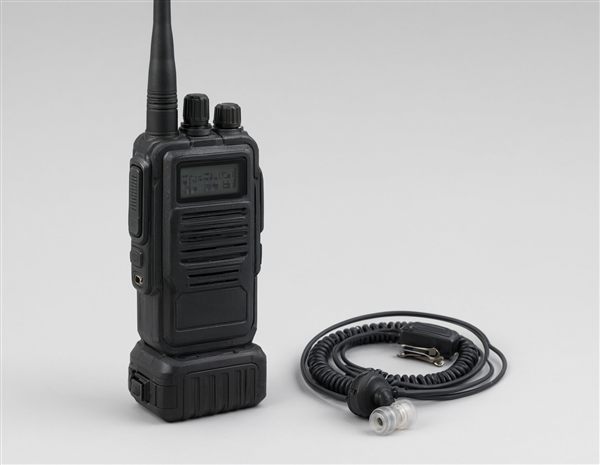
The RT29 is the battery-first radio: a 3200 mAh pack that carries a genuine dark-to-dark hunt with margin, in a heavy-duty housing with a long whip antenna that out-talks compact radios in timber, and wired earpieces in the box so the woods stay quiet from the first sit. As a duty-grade tool it reads like the radios construction crews use — which is the compliment it is — shrugging off dust, splashes, and truck-floor life. It is an FRS-class service radio rather than a GMRS repeater machine, and its weight is the price of the battery. For hunters whose radios need to still be alive at last light, it is the pick that answers the actual question.
Pros
- 3200 mAh true all-day battery
- Whip antenna for timber penetration
- Earpieces included for quiet
Cons
- Heavier than compact radios
- FRS-class service, no repeaters
Complete the kit
(not Amazon stars)
Motorola Talkabout T800 Two-Way Radio (2-Pack)
| Service | FRS (license-free) |
|---|---|
| Smart | Bluetooth app, offline maps |
| Location | Share positions with paired units |
| Weather | NOAA channels |
Buy this if
- App-era features appeal (maps, location)
- License-free simplicity wins
Skip if
- High-power ridge-to-ridge needs → GMRS Midland
- All-day battery priority → the RT29
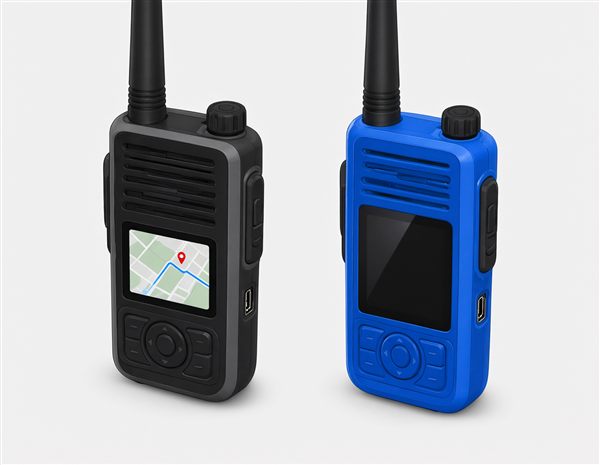
The T800 is the radio that meets the smartphone halfway: a Bluetooth app that pairs the pair to your phone, offloads offline maps, and shares locations between units — the feature that finds a party member’s position without a single spoken word, which in hunting terms is close to magic. As an FRS radio it is license-free and power-capped: honest camp-and-ridge-adjacent range rather than the GMRS reach above. The build is Motorola-consumer grade, the weather channels are present, and the app dependency is real but optional. For parties that navigate by pins and check positions silently, it is the modern pick that still talks when the towers do not.
Pros
- Bluetooth app with offline maps
- Silent location sharing between units
- License-free FRS operation
Cons
- FRS power caps ridge-to-ridge range
- App features need the phone battery too
Complete the kit
(not Amazon stars)
Retevis RT22 Slim Rechargeable Radio (2-Pack)
| Service | FRS (license-free) |
|---|---|
| Profile | Slim, lightweight |
| Includes | Earpieces, charging |
| Best for | Camp and close-range duty |
Buy this if
- Close-range camp and short-push communication
- The budget tier decides the purchase
Skip if
- Ridge-to-ridge hunting range → GMRS picks
- All-day battery needs → the RT29
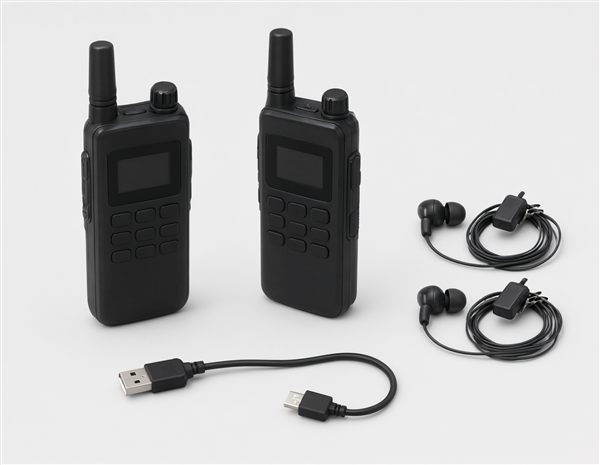
The RT22 is the budget tier in its best form: a slim, light, pocketable FRS pair that costs about what lunch does, charges over USB, and comes with earpieces that keep camp chatter discrete. The range is honestly close — camp perimeter, short pushes, vehicle-to-camp — and the little battery is a day-part rather than a day. What it does at its price is remarkable: license-free, feather-light radios that get clipped to pack straps and forgotten until they are needed. For the around-camp layer of communication under a serious hunting pair, or for younger hunters getting their first radios, it is the cheap answer that works.
Pros
- Slim, light, and truly cheap
- Earpieces and charging included
- License-free and simple
Cons
- Close-range performance only
- Battery is a part-day, not all-day
Complete the kit
Full Comparison Table
| Product | Service | Best For | Buy |
|---|---|---|---|
| Midland GXT1050VP4 | GMRS camo pair | Serious hunting parties | Amazon → (paid link) |
| Retevis RT29 | High-capacity duty radio | All-day hunting duty | Amazon → (paid link) |
| Motorola T800 | Bluetooth FRS pair | App-age party navigation | Amazon → (paid link) |
| Retevis RT22 | Slim budget FRS | Camp and close-range duty | Amazon → (paid link) |
Common mistakes
- Trusting the mileage on the box — “36-mile” ratings are line-of-sight lab numbers; real timber delivers single-digit miles at best. Buy power, antenna quality, and elevation habits, not the marketing figure.
- Running GMRS unlicensed — GMRS power and repeaters require the inexpensive no-test FCC license in the US; the family-covered fee is trivial next to the range gain, and enforcement is real.
- Default channels at public trailheads — every radio in the parking lot is on channel 1; agree on a private channel plus privacy code in the truck, and keep channel 9 clear for actual emergencies.
- Speaker conversations in pressured woods — radio chatter carries like a voice on the ridge; wired earpieces keep the party talking while the woods stay quiet, which is the entire point of the tool.
- One battery for a dark-to-dark sit — cold saps packs quietly; carry spare lithium AAs or the RT29-class high-capacity battery, because a dead radio at 2 p.m. is a solo hunt with extra steps.
Frequently Asked Questions
GMRS or FRS radios for hunting?
What channel should hunters use on walkie talkies?
How far do hunting radios actually reach?
Do I need a license for a two-way hunting radio?
What features matter most for hunting radios?
Related Guides


