

Best Running Caps for Summer in 2026 (Researched & Compared)
Quick answer: lightweight UPF 50 caps with mesh panels and sweat-wicking headbands beat cotton hats on hot runs.
Three caps, three conditions: a mesh cap for hot training runs, a cheap washable cap for races, and a UPF 50+ cap with neck coverage for long sun exposure.
Bill length and mesh coverage matter more than brand on 90°F days.
Pick your run, then your cap
Scoring rubric (weights)
Weighted toward protection and airflow, because a cap you take off after two miles protects you from nothing.
How we ranked these caps
We compared rated UPF, mesh coverage, and sweatband construction, then checked how each cap adjusts and how it holds up to repeated washing. Every pick had to still have a live Amazon listing with a product name matching what we recommend. We do not claim test runs we did not do — these picks come from spec comparison and runner-reported use.
Which cap for which runner
You run at midday in full sun
Mesh side panels dump heat while the brim shades your face, and it packs flat when you carry it instead of wearing it.
You want a cheap cap you can retire without regret
Light, washable, and proven in events — the cap to buy in a hurry and wear until it wears out.
You are out for hours on exposed trails
UPF 50 fabric plus an optional neck cape covers ears and neck that a standard running cap leaves bare.
Swift Cap vs Ultra Cap — which do you actually need?
Outdoor Research Swift Cap (best overall)
- UPF 40+ with mesh side panels
- Light and packable for a pocket
- Brim shades the face without a cape
- Less coverage on ears and neck
- Best for hot training runs
Sunday Afternoons Ultra Cap (sun coverage)
- UPF 50+ fabric
- Optional neck cape for ears and neck
- Better for hours of exposed sun
- More fabric means more heat retention
- Best for long runs on open ridges
Washing and salt notes
- Wash it every three to five runs. Salt degrades the elastic in the sweatband, and sweat feeds bacteria in the fabric.
- Machine wash cold in a mesh bag, then air dry. Heat from a dryer is what kills stretch and shape.
- Rinse salt out after sweaty sessions. Dried salt stiffens the brim and abrades the fabric where it creases.
- UPF 40+ blocks about 97 percent of UV and UPF 50+ about 98 percent — the gap is small, so fit and ventilation matter more than the last point of rating.
Product photos are on each card below — self-hosted on OutdoorsPapa (no duplicate URLs in this strip).
Decision rules
- Choose the Swift Cap if you train in summer heat and want maximum airflow with a face-shading brim.
- Choose the Headsweats Performance Race Hat if you want a light, inexpensive cap for races and daily training.
- Choose the Sunday Afternoons Ultra Cap if your runs leave your neck and ears exposed to hours of sun.
- Skip a cap entirely if your route is fully shaded — then a visor or a headband is the lighter choice.
Why Ventilation Beats the Last Point of UPF
Runners shop the number on the tag and miss the two things that decide whether a cap helps. First, UPF 40+ blocks roughly 97 percent of UV and UPF 50+ about 98 percent — a gap you will never feel. Second, a cap only protects you while it is on your head. If it traps heat and you pull it off at mile two, the rating was irrelevant.
Mesh side panels and a liner that moves sweat off your forehead are what keep a cap wearable in real summer heat. Coverage is the other half of the decision: a standard cap shades your face but leaves your neck and ears bare, which is fine for an hour and not fine for a four-hour exposed run. Match the cap to your actual exposure, and see our hiking gear guide for the trail equivalents.
What to Look For — Buyer’s Guide
Match each category to your trip length and climate — one proven pick per slot beats buying overlapping gear twice.
Key Factors at a Glance
40+ and 50+ differ by about one percent of UV. Do not pay much for the upgrade.
Mesh panels move heat out. This is the feature you feel on a hot run.
A liner that wicks keeps sweat out of your eyes — the reason you take a cap off.
A brim shades the face; a cape covers ears and neck. Pick for your exposure time.
The 3 Best Running Caps for Summer in 2026
(not Amazon stars)
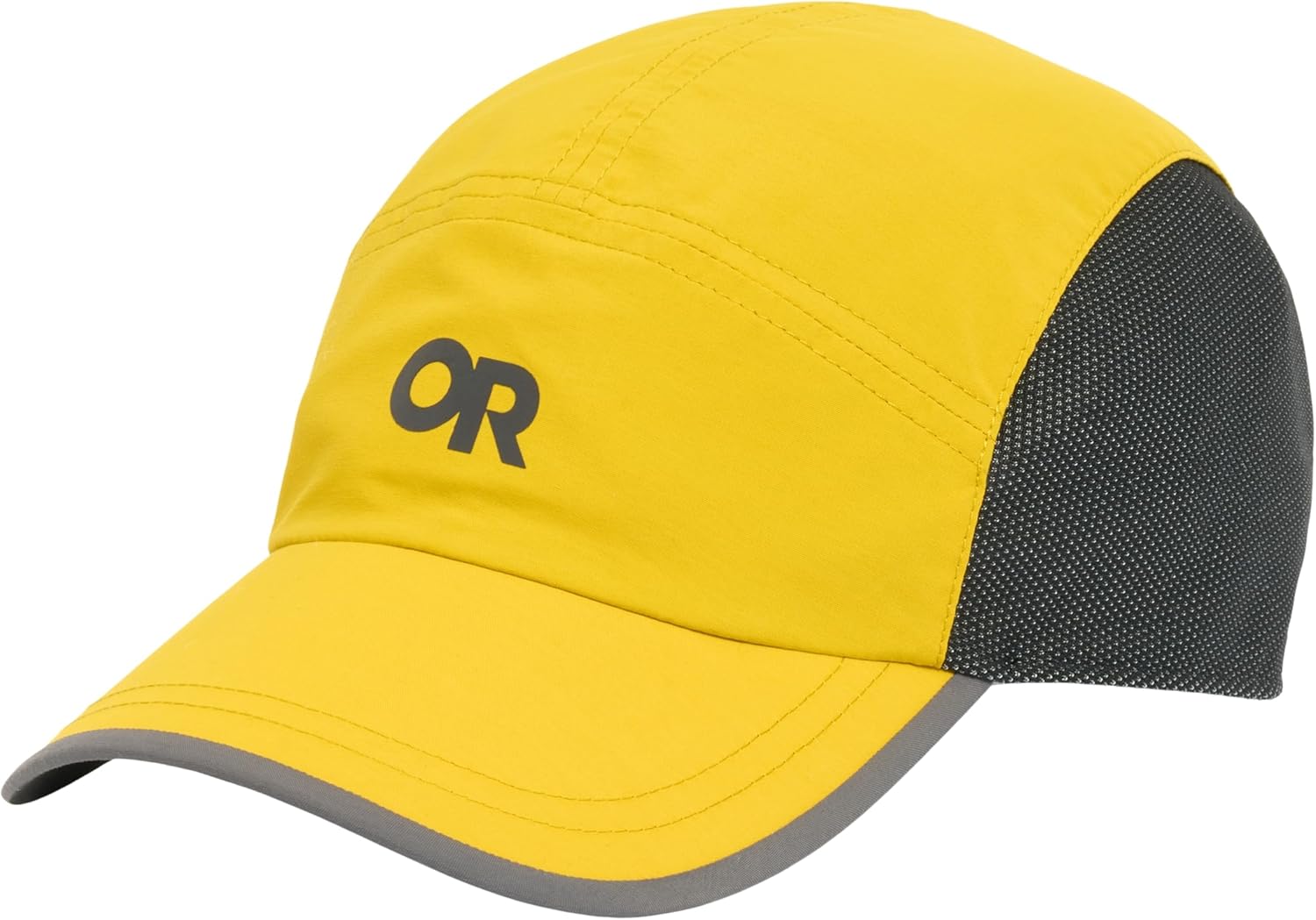
Outdoor Research Swift Cap
| UPF | 40+ |
|---|---|
| Ventilation | Mesh side panels |
| Weight | Light |
| Best for | Hot training runs |
Buy this if
- You run at midday in full sun
- You overheat easily
- You want a cap that packs into a pocket
Skip if
- You need neck and ear coverage
- You run in cold wind
- You want the lowest cost
Mesh panels prevent overheating on noon runs — rinse salt after sweaty sessions.
Pros
- Mesh side panels dump heat
- UPF 40+ rated fabric
- Light and packable
- Brim shades the face on exposed runs
Cons
- Less coverage on ears and neck
- Mesh means less wind protection in cold
- Not the cheapest option
Complete the kit
(not Amazon stars)
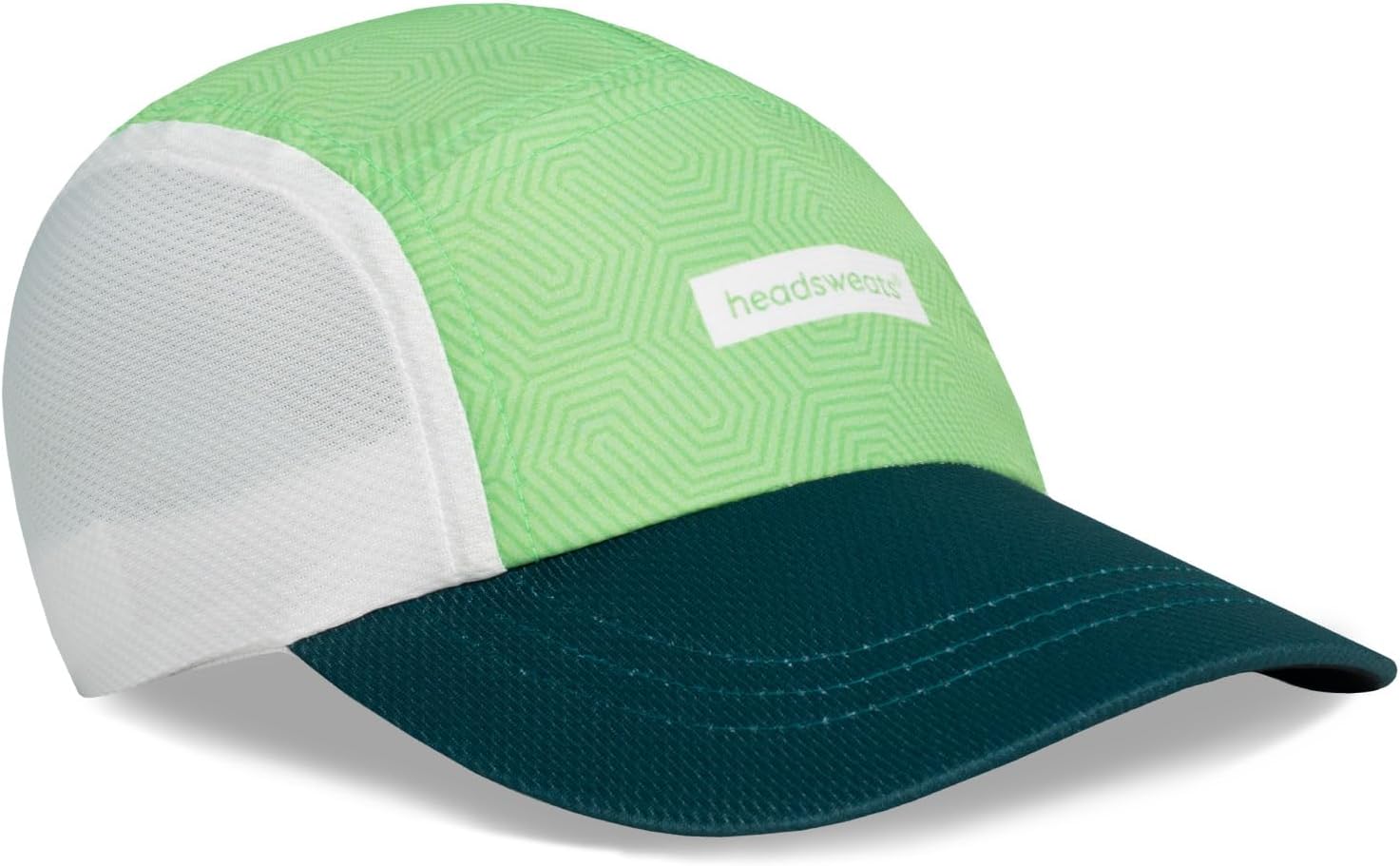
Headsweats Performance Race Hat
| Type | Performance race hat |
|---|---|
| Weight | Light |
| Care | Machine washable |
| Best for | Races, training |
Buy this if
- You race and train in summer
- You want a low-cost washable cap
- You want a spare for the car
Skip if
- You need maximum sun coverage
- You want premium materials
- You run long exposed routes
Marathon-staple cap wicks sweat on long summer training blocks — toss in the wash every few runs to preserve elastic.
Pros
- Wicks sweat on long training blocks
- Machine washable
- Light and inexpensive
- Proven in races
Cons
- Less sun coverage than a UPF 50 cap
- Basic construction
- Not the most stable in strong wind
Complete the kit
(not Amazon stars)
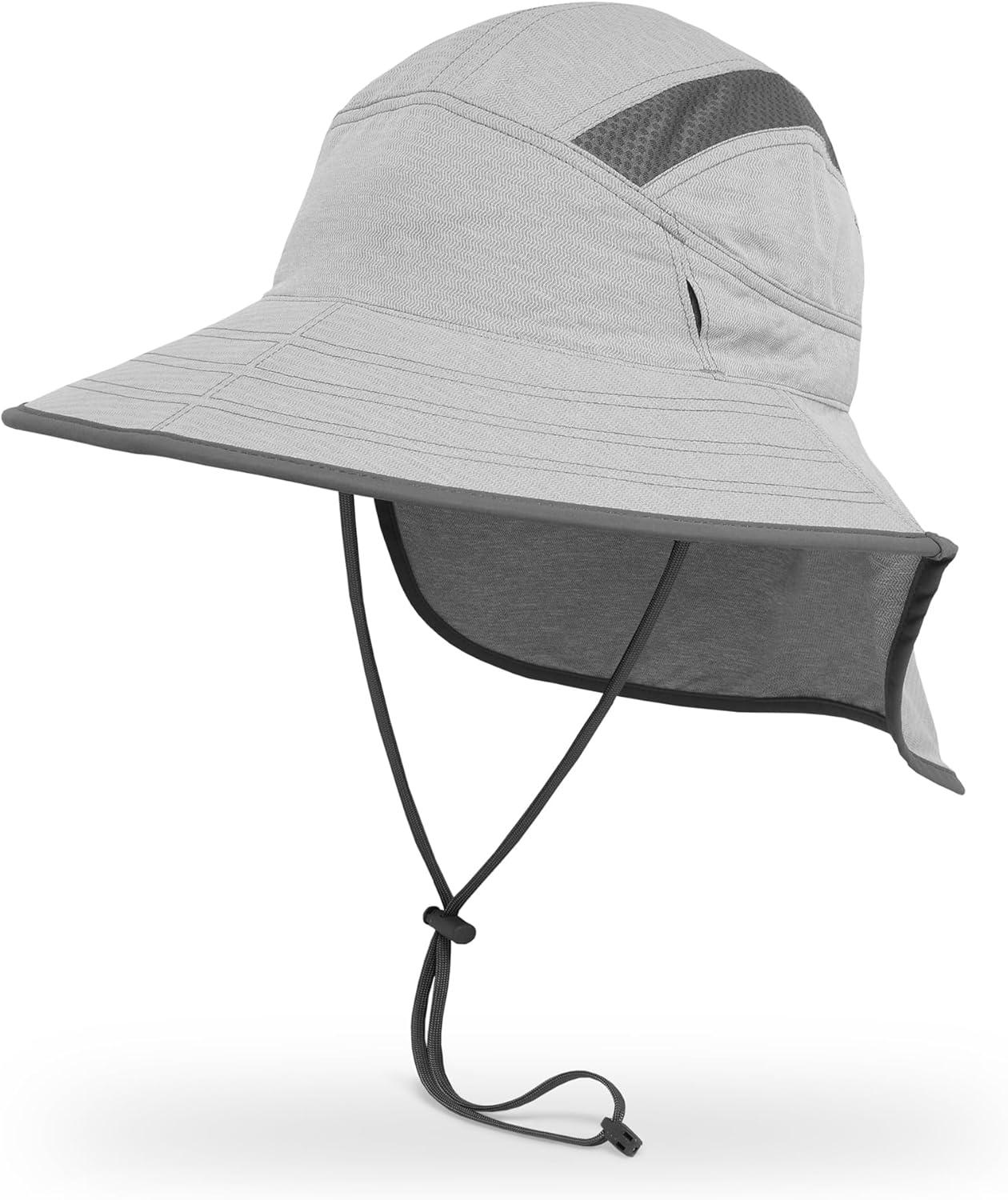
Sunday Afternoons Ultra Cap
| UPF | 50+ |
|---|---|
| Coverage | Optional neck cape |
| Adjust | Yes |
| Best for | Long sun exposure |
Buy this if
- You run long exposed routes
- You burn easily on ears and neck
- You want UPF 50+ fabric
Skip if
- You want maximum airflow
- You run short shaded loops
- You want the lightest possible cap
UPF 50 fabric and optional neck cape protect ears and neck on exposed ridge runs — worth the extra coverage on alpine ultras.
Pros
- UPF 50+ fabric
- Optional neck cape covers ears and neck
- Holds up on hours of exposed sun
- Good adjustability
Cons
- More fabric retains more heat
- Bulkier to stash
- Costs more than a basic cap
Complete the kit
Full Comparison Table
| Product | Type | Best For | Buy |
|---|---|---|---|
| Outdoor Research Swift Cap | UPF 40+ | Hot runs | Amazon → (paid link) |
| Headsweats Performance Race Hat | Lightweight | Races | Amazon → (paid link) |
| Sunday Afternoons Ultra Cap | Sun | Long runs | Amazon → (paid link) |
Common running cap mistakes
- Buying on UPF rating alone — UPF 40+ and 50+ differ by about one percent of UV. Ventilation and whether you actually wear it matter more.
- Never washing it — Salt degrades the elastic and sweat feeds bacteria. Every three to five runs, cold wash in a mesh bag.
- Tossing it in a hot dryer — Heat is what destroys stretch and shape. Air dry it.
- Cinching it too tight — A cap that leaves a mark restricts airflow and gives you a headache on long runs. Adjust it so it stays put without pressure.
- Wearing a cotton hat instead — Cotton soaks and stays wet, which is the opposite of what you want on a 90°F run.
Frequently Asked Questions
Running cap or visor – which is better in heat?
How often should I wash a running cap?
Do I really need a running cap in summer?
What UPF rating should I look for?
How do I keep a running cap from getting gross?
Cap, visor, or headband?
Related Guides


