
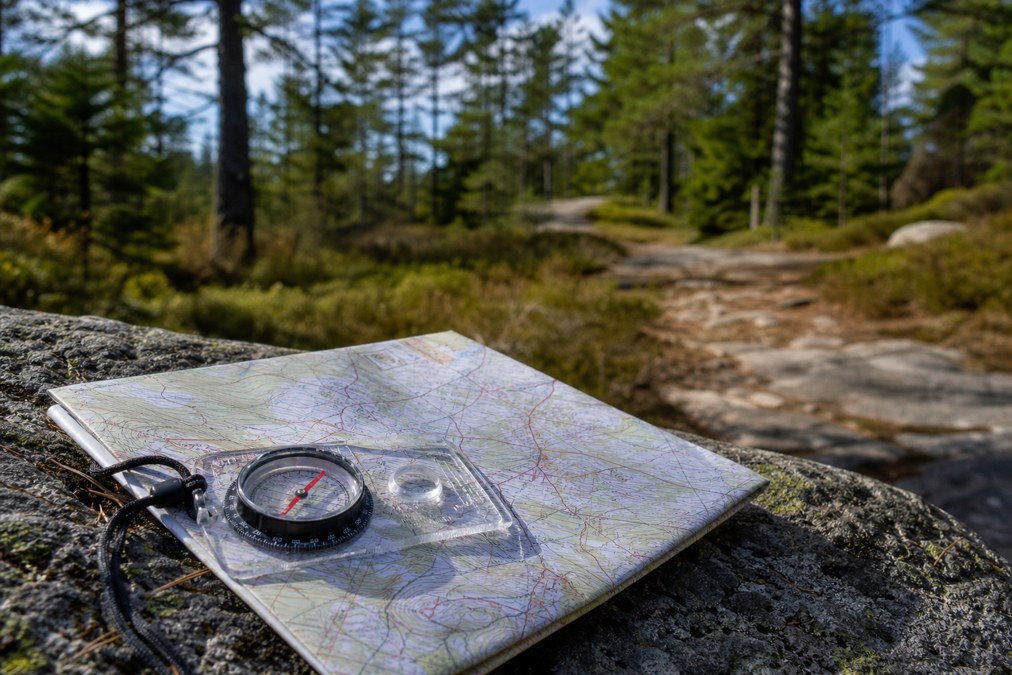
Best Compass for Land Navigation in 2026 (Tested & Reviewed)
Quick answer: The Silva Ranger 2.0 and Suunto A-10 both adjust for declination, which covers the navigation most hikers actually do.
Two compasses, two stages: a declination-adjustable baseplate for backcountry navigation, and a low-cost baseplate for learning on marked trails.
Set declination once per map zone; practice triangulation before off-trail reliance.
Pick your navigation, then your compass
Scoring rubric (weights)
Weighted toward the thing that actually puts hikers off course: forgetting to correct for declination.
How we ranked these compasses
We compared whether each compass adjusts for declination, how legible the bezel and ruler edge are, and what the housing is rated to survive. Every pick had to still have a live Amazon listing with a product name matching what we recommend. We do not claim field testing we did not do — these picks come from spec comparison and hiker-reported use.
Which compass for which navigator
You navigate off-trail with a paper map
You need declination you can set once per map zone, a clinometer for slope angle, and a clear baseplate that lays flat for triangulation.
You are learning to follow a bearing on maintained trails
A plain baseplate with 2° graduations teaches the same skills for less money. Upgrade once you are navigating off marked routes.
Silva Ranger 2.0 vs Suunto A-10 — which do you actually need?
Silva Ranger 2.0 (best overall)
- Adjustable declination set on the compass
- Built-in clinometer for slope angle
- Clear baseplate with ruler edge for map work
- Costs more than the starter baseplate
- Best for off-trail and backcountry routes
Suunto A-10 Starter (best value)
- Baseplate with declination correction
- 2° graduations are plenty for trail bearings
- Light and cheap enough to keep in every pack
- No clinometer and no mirrored sighting
- Best for learning and day hikes
Declination and practice notes
- Look up magnetic declination for your area and set it on the compass — it changes by region, and it is the single biggest source of navigation error.
- Practice on a known route before you rely on it. Reading a bearing is easy on a kitchen table and fiddly with cold hands in wind.
- Keep compasses away from magnets, phones, and speakers. A steel water bottle clipped nearby can swing the needle too.
- A GPS is a convenience, not a replacement — batteries die in the cold, which is exactly when you least want to be without a bearing.
Product photos are on each card below — self-hosted on OutdoorsPapa (no duplicate URLs in this strip).
Decision rules
- Choose the Silva Ranger 2.0 if you navigate off-trail, want declination adjustment on the instrument, and need a clinometer for slope angle.
- Choose the Suunto A-10 if you are learning map and compass on maintained trails and want a light, low-cost baseplate.
- Skip both if you need mirrored sighting for precision bearings over distance — that is a different class of instrument.
- Do not skip declination on either compass — a correct instrument with the wrong setting is worse than no bearing at all.
Why Declination Is the Part That Actually Matters
Most navigation errors are not instrument errors. A cheap baseplate compass reads to about 2 degrees, which is well inside the error you introduce by walking off bearing. The mistake that puts people miles off is ignoring magnetic declination — the angle between magnetic north and true north where you are. It varies by region and it is large enough on both US coasts to matter on a single day hike.
A compass with adjustable declination lets you set the local value once per map zone and then read true bearings straight off the map. The alternative is correcting every bearing in your head, which people get wrong when they are tired. Pair it with a waterproof quadrangle of your area and a hiking essentials kit before you head out.
What to Look For — Buyer’s Guide
Match each category to your trip length and climate — one proven pick per slot beats buying overlapping gear twice.
Key Factors at a Glance
Adjustable on the compass beats doing arithmetic per bearing. Set it once per map zone.
Clear plastic with a ruler edge lays flat on a map — that is what map-and-compass work requires.
A rotating bezel you can turn with gloves keeps your hands working in cold weather.
Liquid-filled housings settle faster. Global needles only matter if you cross hemispheres.
The 2 Best Compasses for Land Navigation in 2026
(not Amazon stars)
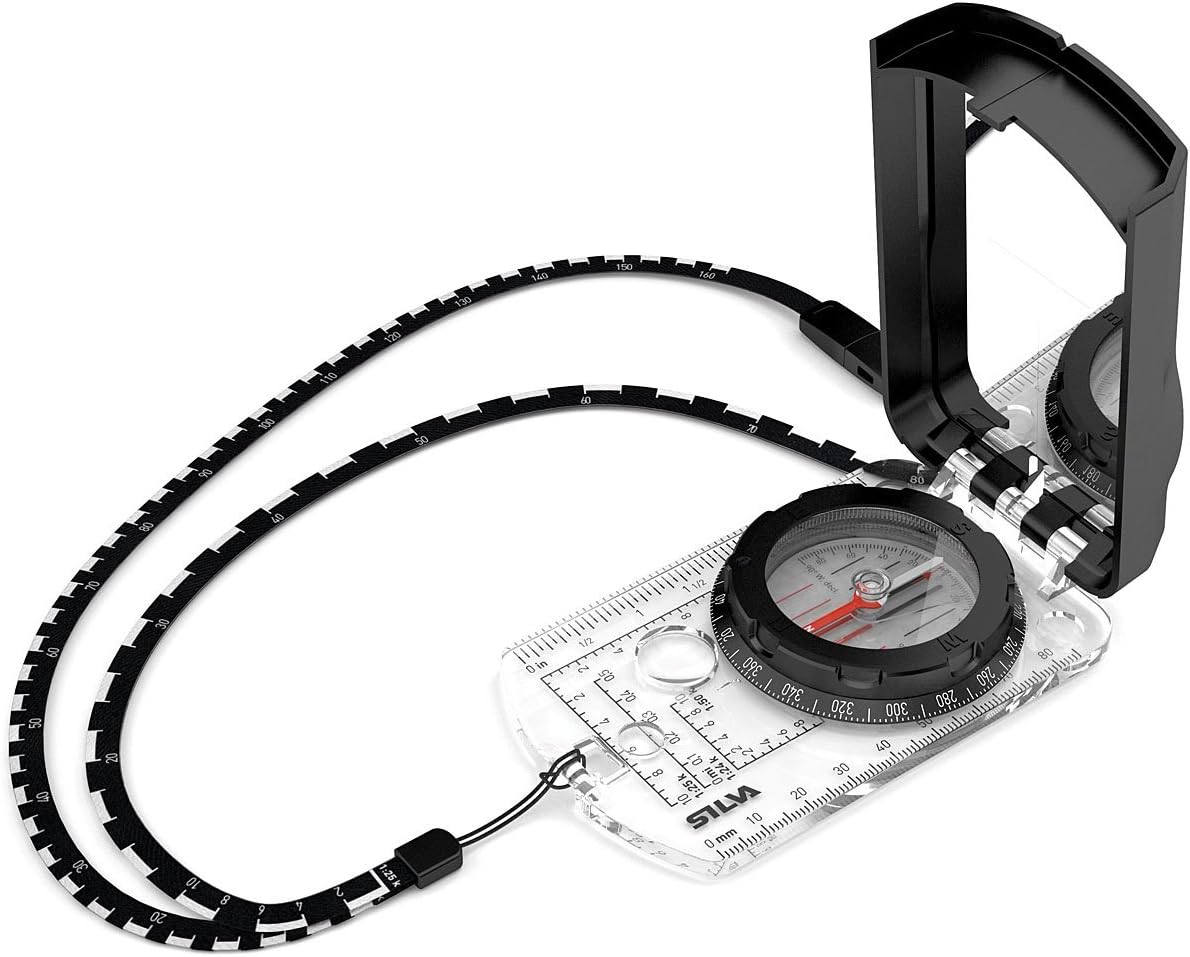
Silva Ranger 2.0 Compass
| Type | Baseplate |
|---|---|
| Declination | Adjustable |
| Clinometer | Yes |
| Best for | Backcountry nav |
Buy this if
- You navigate off-trail with a paper map
- You want declination adjustment on the instrument
- You want a clinometer for slope angle
Skip if
- You are still learning on maintained trails
- You want the lowest-cost option
- You need mirrored precision sighting
A declination-adjustable baseplate with a clinometer for slope angle. Works with gloves, and the clear baseplate lays flat on a map for triangulation. Pair it with a waterproof quadrangle for your area and set declination once per map zone.
Pros
- Adjustable declination set on the compass
- Built-in clinometer for slope angle
- Clear baseplate with ruler edge for map work
- Workable with gloves
Cons
- Costs more than a starter baseplate
- More instrument than a beginner needs
- No mirrored sighting for long-distance bearings
Complete the kit
(not Amazon stars)
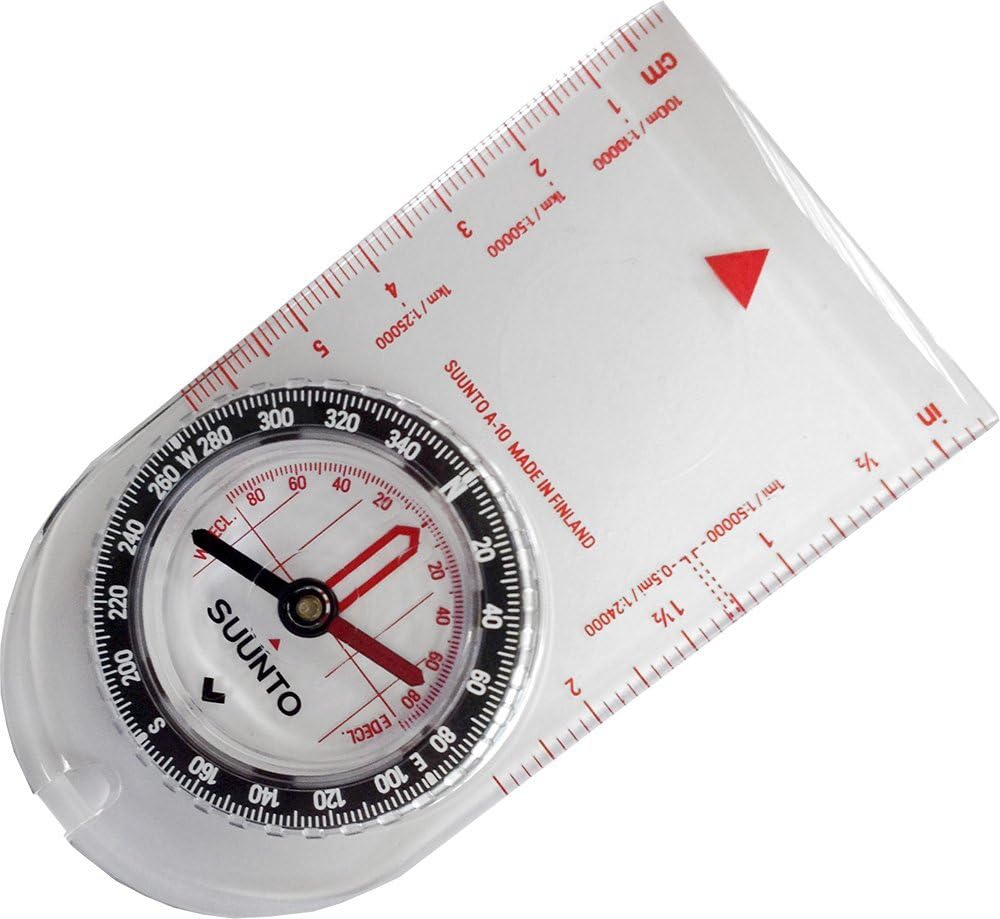
Suunto A-10 Starter Compass
| Type | Baseplate |
|---|---|
| Graduations | 2° |
| Declination | Correction |
| Best for | Beginners |
Buy this if
- You are learning map and compass
- Your routes follow maintained trails
- You want a light spare in every pack
Skip if
- You navigate off-trail regularly
- You need slope angle readings
- You want declination adjustment on the instrument
The A-10 covers map-and-compass basics without mirror-sighting price — ideal for day hikers learning to follow a bearing along maintained trails before stepping up to a declination-adjustable baseplate like the Ranger.
Pros
- Baseplate with declination correction
- 2° graduations suit trail bearings
- Light and inexpensive
- Simple enough to learn on
Cons
- No clinometer
- No mirrored sighting
- Less precise bezel than a premium baseplate
Complete the kit
Full Comparison Table
| Product | Type | Best For | Buy |
|---|---|---|---|
| Silva Ranger 2.0 Compass | Baseplate | Backpacking | → (paid link) |
| Suunto A-10 Starter Compass | Baseplate | Beginners | → (paid link) |
Common compass mistakes
- Ignoring declination — It is the biggest error source in land navigation. Look up the value for your map and set it before you start.
- Trusting the phone instead of a compass — Phones die in the cold, and a dead phone leaves you with no bearing at all.
- Storing it next to magnets — Speakers, magnetic closures, and phones can leave the needle reading wrong. Keep it isolated.
- Never practicing with it — A compass you have not used on a known route is an ornament. Practice before you need it.
- Reading the bearing once and walking blind — Check your heading against terrain features as you go — error compounds over distance.
Frequently Asked Questions
Do I still need a compass if I carry a GPS?
What is magnetic declination and how do I set it?
Baseplate or lensatic compass for hiking?
What compass features actually matter?
Do I need a global needle compass?
How accurate is a baseplate compass?
Related Guides


