
3 of the Best Hunting Pants for Cold Weather in 2026 (Researched & Compared)
Quick answer: insulated soft-shell pants beat bibs for most late-season sits — Nomad's VX3 line blocks wind without the bulk, and HOT SHOT covers the same job for a third of the price.
Three pants, three jobs: sitting in wind, walking in and posting up, and handling wet snow on a budget.
What kind of cold are you hunting in?
Scoring rubric (weights)
Weights reflect the real failure mode: most hunters are not cold because their pants are thin, they are cold because wind strips the heat out of what they are wearing.
How we ranked these pants
We started from how the pants are actually used — sitting in a stand versus walking in — and weighted wind protection above raw insulation thickness. Every pick was checked against a live Amazon listing so the product name on this page matches the product you receive, and the images here are self-hosted from the current listing. We do not claim on-animal field testing we did not do; these picks come from spec comparison, materials, and owner-reported use.
Which pants for which hunt
You sit for hours in wind and single digits
Windproofing matters more than thickness here, and bulk fights you getting into the stand.
Long approach, then you post up
You want less insulation and better breathability so you do not arrive sweated through.
Weather that turns mid-morning
Waterproofing beats breathability when precipitation is in the forecast.
Cottonwood vs Harvester — which VX3 do you need?
Nomad Cottonwood VX3
- Full windproof membrane, warmest of the three
- Silent face fabric for close cover
- Better for sitting still in wind
- Bulkier — less comfortable on a long walk in
Nomad Harvester VX3
- Wind-resistant rather than fully windproof
- Lighter and more breathable on the move
- Cheaper than the Cottonwood
- Less warm once you stop and sit
Layering notes that matter more than the pants
- Merino or synthetic base layer against skin. Cotton next to your body is the fastest way to get cold.
- Windproofing beats thickness. Moving air pulls heat out of any insulation — that is why a thin windproof shell outperforms a thick non-windproof one in a stand.
- Size for your layers, not your street waist. Compression flattens insulation and cuts its warmth.
- Do not overdress on the walk in. Sweat is what freezes you once you stop moving.
Product photos are on each card below — self-hosted on OutdoorsPapa (no duplicate URLs in this strip).
Decision rules
- Choose the Nomad Cottonwood VX3 if you mostly sit — tree stands, ground blinds, long cold watches in wind.
- Choose the Nomad Harvester VX3 if your cold-weather hunting involves walking in or still-hunting.
- Choose the HOT SHOT insulated if wet snow or freezing rain is normal where you hunt and you want to stay budget-conscious.
- Skip all three if you are hunting above roughly 45°F — these are late-season pants and you will overheat.
Why Wind Protection Beats Thickness
Insulation works by trapping still air. Moving air does not care how much insulation you are wearing — it pushes the warm layer away from your body and replaces it with cold. A thin pant with a windproof membrane will keep you warmer sitting in a 15 mph wind than a thick fleece that lets air straight through. That is the single most useful thing to understand before buying late-season pants.
After wind protection, the decision is really about whether you sit or walk. Sitting favors warmth and a windproof shell; walking favors breathability so you do not arrive at your spot soaked in sweat. Those two jobs pull in opposite directions, which is why these three picks split the way they do. If you are new to cold-weather hunting generally, our cold weather bow hunting clothing guide covers the rest of the layering system.
What to Look For — Buyer’s Guide
Match each category to your trip length and climate — one proven pick per slot beats buying overlapping gear twice.
Key Factors at a Glance
The most important spec. Windproof beats thicker-but-porous every time in a stand.
Only helps if wind is not stripping it away. Match to your expected low, not the coldest day of the year.
Face fabric noise matters in dry brush and close cover. Brushed and tricot fabrics stay quieter than hard shells.
Size for a base layer plus a midlayer. Movement at the knee matters for climbing into a stand.
The 3 Best Hunting Pants for Cold Weather in 2026
(not Amazon stars)
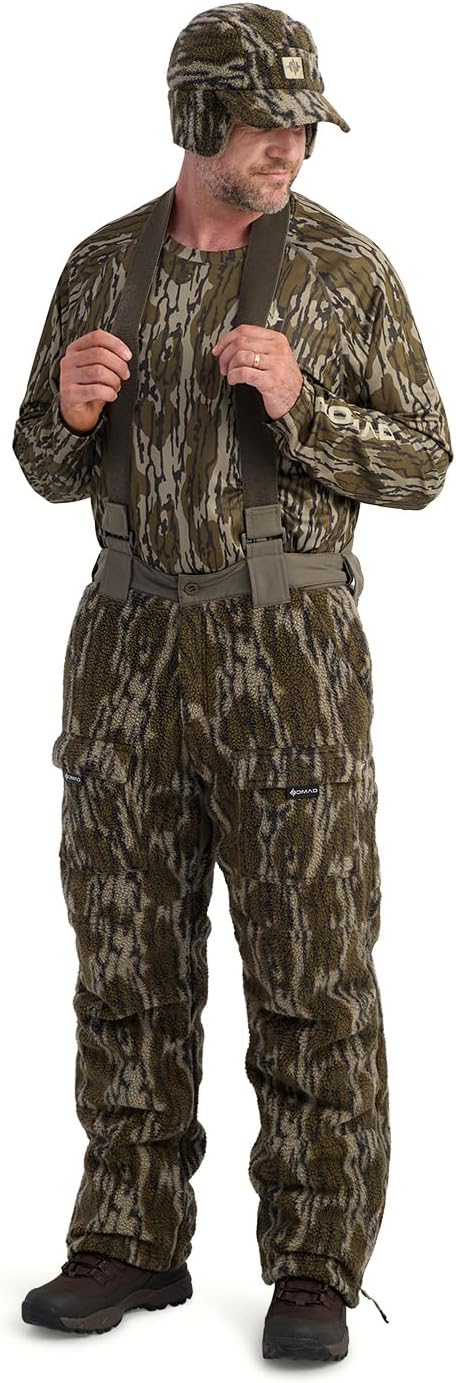
Nomad Cottonwood VX3 Pant
| Type | Insulated soft shell |
|---|---|
| Wind | Windproof |
| Weight | Mid-heavy |
| Use | Late season sitting |
Buy this if
- You hunt late season from a stand or blind
- You sit for hours in wind
- You want the warmest quiet option
Skip if
- You still-hunt long distances
- You hunt in warm weather
- Budget is the deciding factor
The Cottonwood VX3 is the pick when you are sitting still in wind and sleet rather than walking. The windproof membrane is what does the work — insulation only helps if moving air is not stripping it off you. The face fabric stays quiet on brush, and the cut leaves enough room at the knee to climb into a stand and sit down without the fabric fighting you. Size for a base layer plus a midlayer underneath; worn alone they run warm above about 40°F.
Pros
- Windproof membrane — the key feature for stand hunting
- Silent face fabric for close cover
- Warmest of the three
- Articulated enough to climb into a stand
Cons
- Most expensive of the three
- Bulkier on a long walk in
- Too warm above roughly 40°F
Complete the kit
(not Amazon stars)
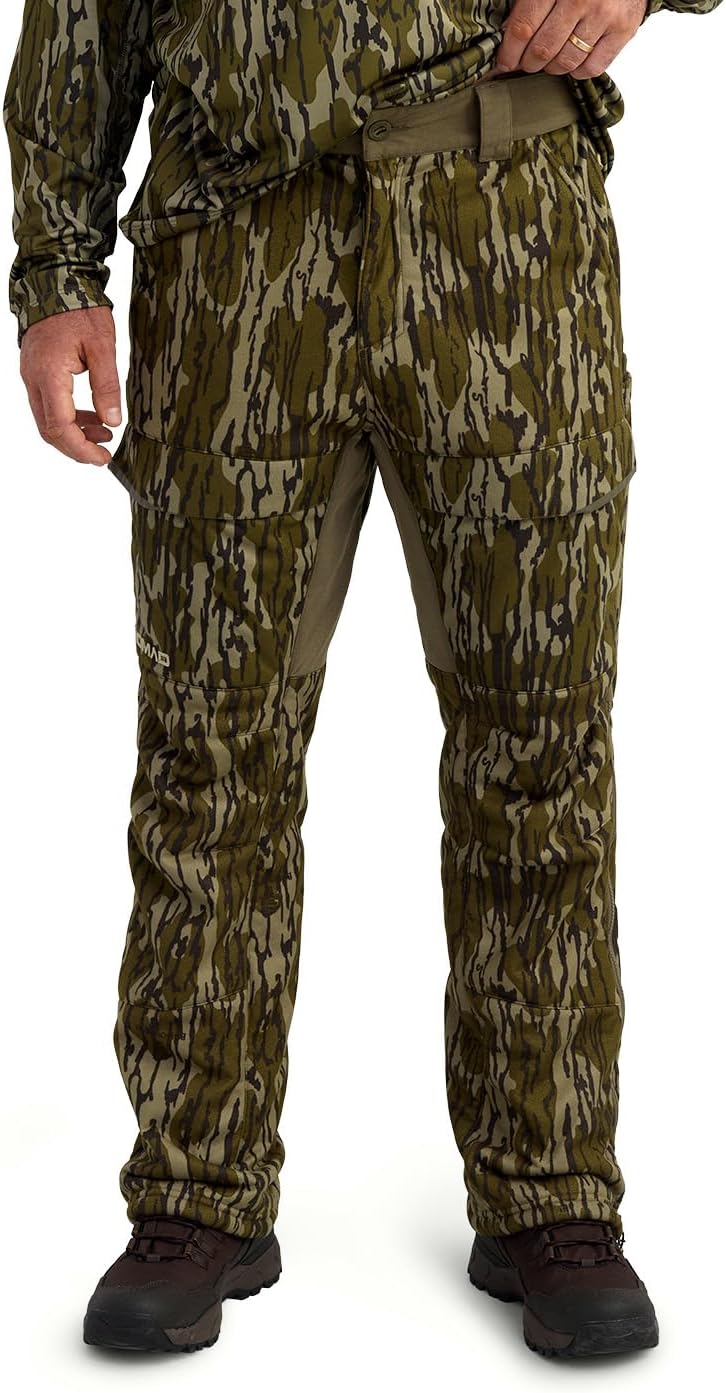
Nomad Harvester VX3 Pant
| Type | Insulated soft shell |
|---|---|
| Wind | Wind-resistant |
| Weight | Mid |
| Use | Active cold-weather hunting |
Buy this if
- You still-hunt or walk in to your spot
- You want to avoid sweating on the approach
- You want VX3 build for less money
Skip if
- You sit motionless in serious wind
- You hunt in single digits
- You need maximum warmth
Same VX3 family as the Cottonwood, a bit less shell and a bit less money. That trade makes the Harvester the better choice if your cold-weather hunting involves walking — still-hunting ridges, pushing cover, or a long approach to the stand. Less bulk means less sweat on the way in, and sweat is what freezes you once you stop. If you sit motionless for hours in single digits, the Cottonwood is worth the upgrade.
Pros
- Lighter and more breathable than the Cottonwood
- Still insulated and wind-resistant
- Cheaper than the Cottonwood
- Better for walking in without overheating
Cons
- Not fully windproof
- Less warm once you stop moving
- Face fabric slightly less quiet than the Cottonwood
Complete the kit
(not Amazon stars)
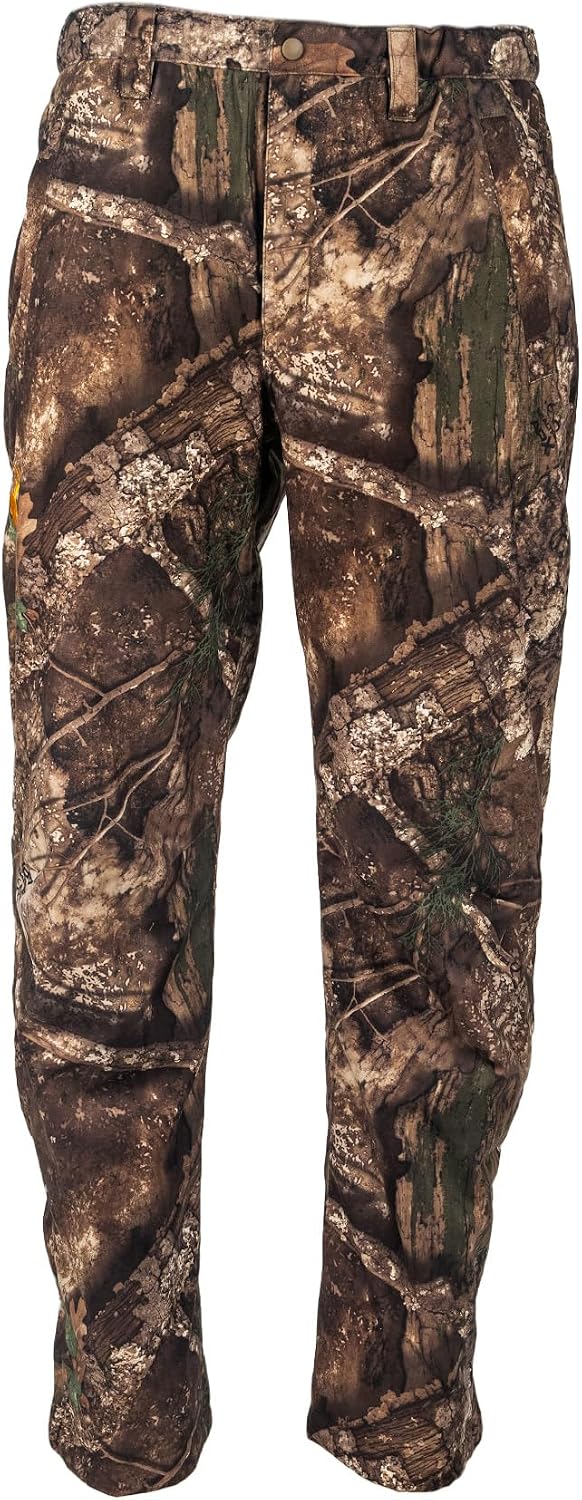
HOT SHOT Waterproof Insulated Camo Pant
| Type | Insulated shell |
|---|---|
| Weather | Waterproof |
| Weight | Heavy |
| Use | All-day sits in precipitation |
Buy this if
- Wet snow or freezing rain is normal where you hunt
- You want to spend the savings on base layers
- You need a waterproof shell on a budget
Skip if
- You hunt dry cold and value quiet above all
- You cover long distances on foot
- You want a trimmer fit
The budget answer that still does the real job: waterproof, insulated, and cut for sitting. You give up the premium quiet face fabric and the trimmer fit — HOT SHOT runs bulkier and slightly louder through dry brush. In exchange it handles wet snow and sleet better than either Nomad, which matters if you hunt where the weather turns. Spend the savings on merino base layers; they matter as much as the pants.
Pros
- Waterproof — handles wet snow and sleet
- Insulated for all-day sits
- Lowest cost of the three
- Camo pattern options
Cons
- Heavier and bulkier than the Nomad picks
- Louder face fabric in dry brush
- Less breathable on the walk in
Complete the kit
Full Comparison Table
| Product | Weight | Type | Best For | Buy |
|---|---|---|---|---|
| Nomad Cottonwood VX3 Pant | Mid-heavy | Soft shell | Late season tree stands | Amazon → (paid link) |
| Nomad Harvester VX3 Pant | Mid | Soft shell | Active cold-weather hunting | Amazon → (paid link) |
| HOT SHOT Waterproof Insulated Camo Pant | Heavy | Insulated shell | Wet snow and all-day sits | Amazon → (paid link) |
Common cold-weather hunting pants mistakes
- Wearing cotton against your skin — It holds moisture and stops insulating. Merino or synthetic base layers only.
- Buying thickness instead of wind protection — A thin windproof shell beats a thick non-windproof pant in any wind.
- Sizing to your street waist — You need room for a base layer plus a midlayer. Too tight is worse than too loose.
- Overdressing on the walk in — Sweating on the approach is what makes you cold once you stop moving.
- Ignoring noise — Dry brush and a loud face fabric will cost you more deer than being slightly cold will.
Frequently Asked Questions
What pants should I wear for hunting below 20°F?
Are insulated hunting pants or bibs better for cold weather?
Can I just wear jeans hunting in cold weather?
Should cold weather hunting pants be waterproof or just windproof?
How do I size insulated hunting pants for layering?
Do I need scent control in cold weather pants?

Related Guides


