
How to Listen to Music While Surfing
Audio gear, attachment and salt-water care — plus the limits of listening while surfing and when to leave audio ashore.

On this page
surfers considering music devices: this guide explains why listening belongs ashore and how to assess equipment limits without treating them as water-safety guarantees.
know the water before you add distractions — read why surfing is dangerous.
Music equipment: ratings and limits
Compare music equipment for shore use. Water resistance, audio transmission and retention claims do not establish that a device is suitable or safe to wear while surfing.
| Gear | Key Features |
|---|---|
| Waterproof headphones | Check the exact headphone water rating and instructions. A swimming claim does not automatically cover surf impacts, salt water or unrestricted awareness. |
| Wearable speakers | A speaker water rating describes specific test conditions, not permission to attach it to a board or expose it to every surf condition. Keep it ashore and respect other beach users. |
Audio gear marketed for water use still has model-specific limits. A waterproof label or wearable-speaker design does not establish resistance to surf impacts or freedom from distraction.
A shore break is the simpler place to listen. Do not buy equipment on the assumption that it makes listening in surf safe.
Choose equipment for its permitted shore use and follow its charging, cleaning and exposure limits. No accessory removes drowning, collision or entanglement risk.
Creating the Perfect Surfing Playlist
Build a playlist for before or after the session. Put the device away before entering the water so music does not compete with calls, warnings or awareness.
Choose music by your preference ashore; a track tempo does not establish appropriate wave timing or safe technique.
No musical genre is established here as improving surfing performance. Use qualified instruction and suitable conditions for skill development.
Arrange playback before relaxing ashore, with volume considerate of others. Do not handle a phone or change tracks while surfing.
Surfing Playlist Example
| Song Title | Artist | Length |
|---|---|---|
| Surfin’ USA | The Beach Boys | 2:28 |
| Wipe Out | The Surfaris | 2:38 |
| September | Earth, Wind & Fire | 3:36 |
| Ocean Breathes Salty | Modest Mouse | 3:49 |
| Stir It Up | Bob Marley & The Wailers | 5:32 |
| Here Comes The Sun | The Beatles | 3:06 |
Use the playlist ashore. Conditions and ability determine whether to surf; they are not a reason to choose a different in-water soundtrack.
Safety: keep listening ashore
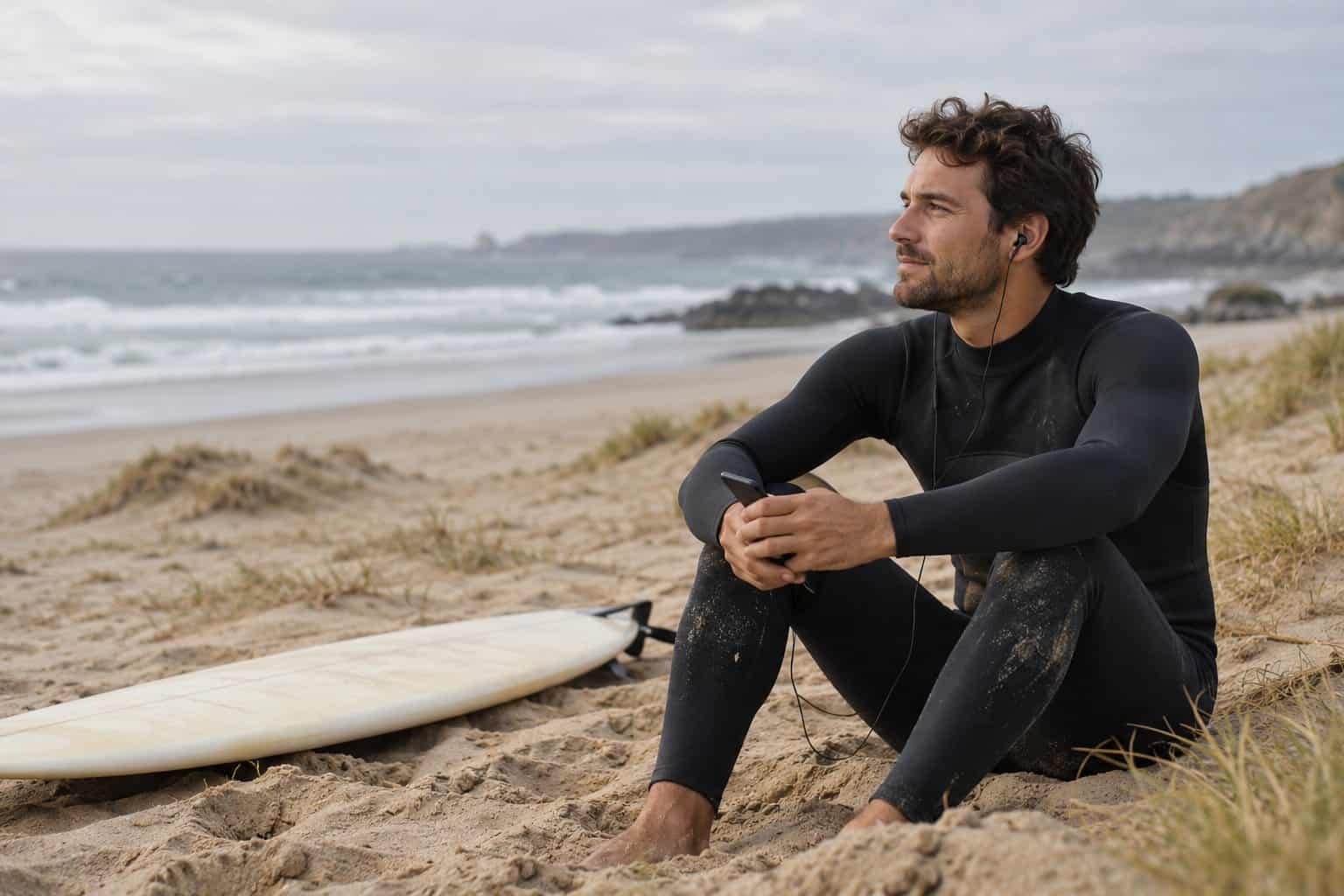
The safer boundary in this guide is straightforward: enjoy music before or after the water session and preserve your hearing and attention in the lineup.
- Water resistance does not prevent distraction. Check the exact device’s immersion depth, duration, saltwater and activity limits; a generic waterproof label does not establish surf suitability.
- Low volume does not guarantee awareness of warning signals; keep music on shore.
- Do not use music tempo as a safety strategy. Leave audio off when it could compete with signals, instructions or awareness of other surfers.
- Crowds and rough water add hazards, but quiet or calm conditions do not establish that listening while surfing is safe.
- Inspect devices as the maker directs for their permitted use. Working equipment can still distract you or create retention and entanglement problems.
Keep music devices ashore. Open-ear designs and low volume do not guarantee that you will hear calls, approaching surfers or changing conditions.
Keep listening ashore; device features are not a substitute for surf awareness.
Retention accessories do not establish surf safety
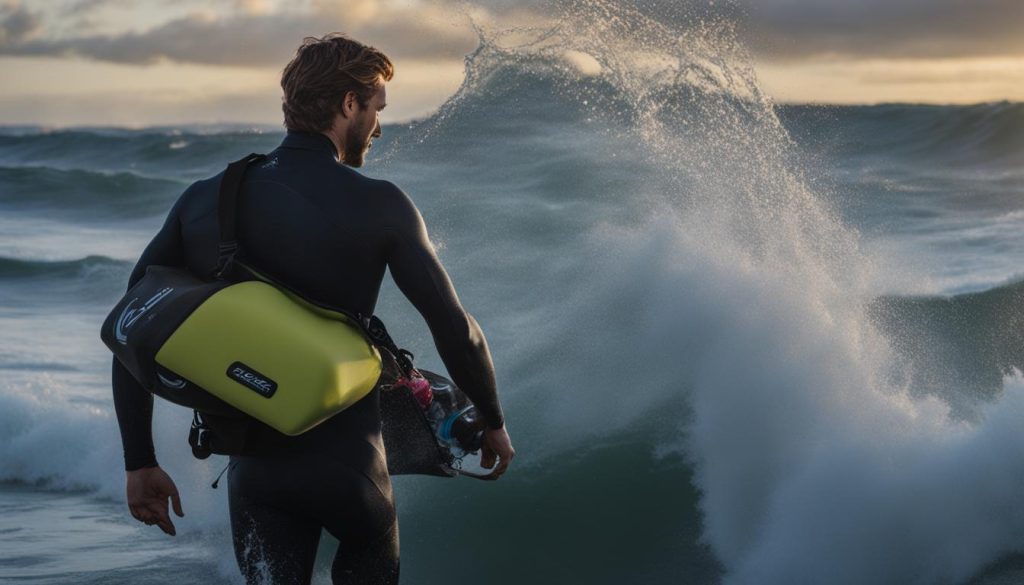
Pouches, clips and cords can introduce their own hazards. Do not improvise a device attachment to your body, board or surf leash.
Pouches and stated water ratings
A pouch’s rating does not establish resistance to surf impacts. Do not clip it into the board leash or create extra snagging lines without explicit compatible-equipment instructions.
Cords and attachment claims
Do not improvise audio-device tethers. Follow the exact device and surf-equipment instructions; leave the device ashore if safe, compatible retention is not established.
| Accessory claim | Limit to consider |
|---|---|
| May retain a device in its specified use | May interfere with movements while surfing |
| Does not guarantee recovery or prevent entanglement | May not be suitable for all gear types |
Follow the exact accessory instructions for its intended shore use; a secure attachment is not evidence that taking it into the lineup is appropriate.
Music before and after surfing
Keep wave decisions independent of music
Music can be part of time ashore, but it does not establish wave-reading skill or safe timing.
Do not turn up music to compete with waves. Keep the listening break on shore and give attention to conditions before entering the water.
For a listening break, return ashore rather than using the pause between sets to handle audio equipment.
Keep listening ashore; device features are not a substitute for surf awareness.
No evidence reviewed here establishes that a playlist improves surfing ability. Keep practice decisions grounded in instruction and conditions.
Choose music for enjoyment ashore; do not use it as a prompt to catch more waves or stay out longer.
Conclusion
Put music away before the session and return to it after leaving the water. Stay willing to end a session when conditions or fatigue warrant it.
Taking Care of Your Gear
Clean, dry, store and charge each device exactly as its maker directs. Do not assume that every water-resistant product can be rinsed or immersed in the same way.
Sharing Your Experience
Why not share your experience with other surfers? Join online surfing communities, attend events, and connect with like-minded individuals. You’ll have a chance to swap tips, gear recommendations, and stories, creating a supportive and inspiring network of surfers and music lovers.
Keep the distinction clear: music for time ashore, full attention for the water session. Equipment ratings do not close that gap.
Surfing with music FAQ
Related Guides


