
Best Ultralight Backpacking Gear in 2026 (Researched & Compared)
Quick answer: Start an ultralight backpacking gear list by weighing the complete kit you will actually carry. These eight category picks are comparison starting points, not a complete packing list or a guaranteed sub-10-pound setup. Fit, conditions and required equipment take priority over a target number.
Reduce duplicate items before replacing useful gear. Base weight normally excludes consumables such as food, water and fuel; total carried weight includes them. Weigh the selected sizes and accessories consistently. Keep navigation, first aid, lighting, weather protection and other route-specific essentials in the plan.
Reduce unnecessary weight while keeping the equipment your route and conditions require. This is our category comparison guide — one pick per category with weights. For pack fit and capacity details, see our long-distance hiking backpack guide . For sleeping pad comparisons, see our sleeping pad for side sleepers guide .
Part of our Camping Gear Hub and Hiking Gear Hub . Budget picks: Budget Ultralight Backpacking Gear
Start here — ultralight job
Selection criteria
- Fit and intended use: match the selected size and conditions.
- Complete carried weight: count required accessories using the same basis.
- Compatibility: check fuel, containers and sleep-system components.
- Budget and care: compare current totals, maintenance and replacement needs.
No numerical performance, durability or comfort ranking is presented. We have no documented comparative field test for these eight picks.
How to use this guide
Use the category choices to identify equipment to investigate, then check the actual selected generation, size and package before buying. The previous weight and price summaries did not establish a complete kit total. This planning pass removes unsupported scores and kit guarantees; remaining model-specific checks are recorded separately.
Food-storage reference: BearVault canister requirements and local-rule guidance. See our sleeping-pad comparison for the same original XLite route review.
Exact-model checks
- Current Fly Creek UL2 structure and features
- Current BV450 specifications — one family size only
- Current Flash 1.0L specifications
Routes checked19October2026. Some family selections and jacket specifications remain unverified; they are labeled rather than inferred. The blanket route is not a verified rated sleeping quilt.
Which UL kit path?
Weekend trip
Build a route-specific checklist and test the loaded pack before departure.
Long section
Account for resupply intervals, water carries and the heaviest expected load.
Food storage
Check every land manager’s current requirements and accepted container models.
Budget first
Compare the starter-picks guide, then price the complete required kit separately.
Pack fit versus pack weight
Fit and load
- Measure torso and check the selected size
- Try the pack with your expected load
- Check the manufacturer’s load guidance
Carried weight and cost
- Compare complete configured weights
- Include required accessories
- Price the selected package and missing gear
The budget guide now uses Crown3, not Crown2. Read its current variant and frame guidance rather than carrying over the old comparison here.
Kit notes
- Base weight and total carried weight answer different questions. Count food, water and fuel when checking pack load.
- Published minimum, trail and packed weights are not interchangeable. Use one consistent basis.
- Sawyer Squeeze is not a virus purifier; preserve a complete water-treatment plan appropriate to the source.
- Check food-storage rules and accepted models for every part of the route. Certification alone does not establish local acceptance.
- Test fit, pitching, inflation and cooking instructions before the trip. No lower-weight target guarantees comfort or reduced pain.
Decision rules
- Fit the pack to your torso and expected loaded weight.
- Check the exact shelter’s structure, stakes and usable floor dimensions.
- Match the sleeping pad, bag or quilt to your complete sleep system and conditions.
- Keep food storage and safety essentials even when they increase base weight.
- Use the budget guide as a starter comparison, not a complete kit priced below a fixed ceiling.
How to Reduce Weight Without Losing Essentials
Weigh what you already own, remove unnecessary duplicates and test changes close to home. Lower carried weight can change how a pack feels, but this guide does not establish medical benefits, a mileage threshold or a predictable speed improvement.
A useful gear list covers the actual route, weather, food storage and emergency needs. These eight categories leave additional essentials to plan. Compare one replacement at a time against the complete carried kit.
What to Look For — Buyer’s Guide
Match every selected model, size and configuration to the route; category labels alone do not establish a complete kit.
Key factors at a glance
Separate base weight from food, water and fuel. Weigh the actual sizes and accessories.
Torso length, hip belt and loaded comfort matter more than a universal pack-volume rule.
Check structure, anchoring and usable space for the selected generation.
No single pad R-value or quilt label guarantees warmth for every sleeper or condition.
A low base weight can still mean a substantial starting load
Illustrative arithmetic, not this guide’s measured kit: a 5 kg base kit plus 2 kg of food, 2 kg of water and 0.2 kg of consumable stove fuel starts at 9.2 kg in the pack. The water containers and empty fuel container belong in the base kit in this example; only their consumable contents are added separately.
Recording just “5 kg base weight” would hide 4.2 kg of the starting load. Also record anything carried separately or worn, so moving an item to a pocket does not masquerade as removing it from the trip.
For each proposed replacement, calculate grams saved = old carried configuration − new carried configuration, using the same required accessories. A hypothetical 500 g item replaced by a 350 g equivalent saves 150 g; if the new item also needs a separate 100 g accessory, the complete-system saving is only 50 g.
REI explains the base-weight distinction. Use the loaded total for the actual pack’s load guidance and your own fit check. Do not discard route-required safety equipment, an accepted food container or a suitable primary sleep system to hit the example’s number.
The 8 Best Ultralight Backpacking Gear Picks in 2026
Osprey Exos 48 Backpack
| Model | Osprey Exos 48 men’s framed pack |
|---|---|
| Listing weight | 2.77 lb; verify selected size and contents |
| Suspension | Adjustable AirSpeed; check torso fit |
| Configuration | Removable lid; weigh carried configuration |
Consider it if
- Its torso and hip belt fit your loaded kit
- You want a framed ventilated pack
Choose another option if
- You need a verified under 2.5 lb complete pack
- Your expected load exceeds its supplied guidance
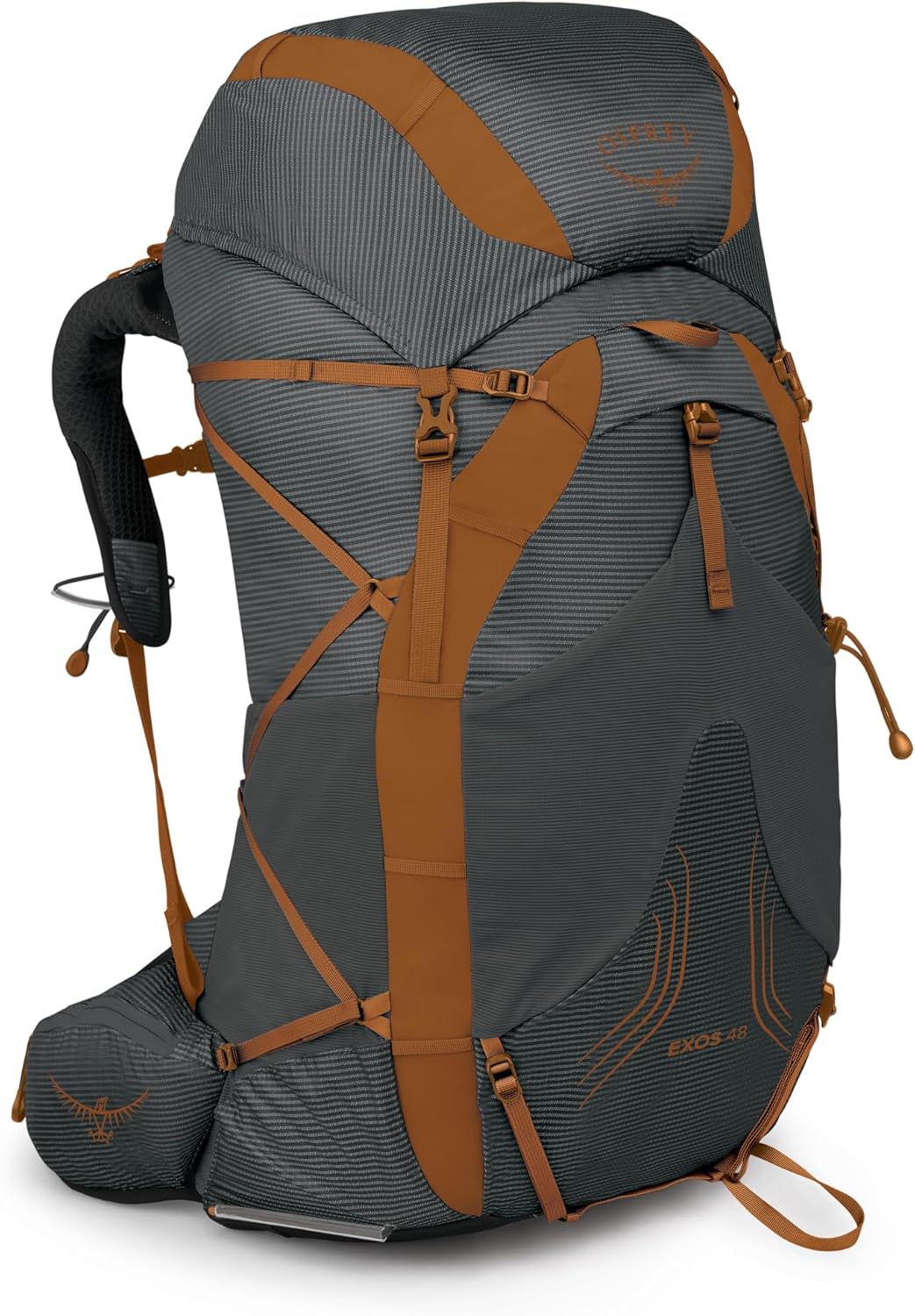
The linked Exos 48 listing gives2.77 lb, not the old 36 oz or under 2.5 lb claim. Its adjustable torso system and ventilated suspension are features to assess with your own loaded fit. Check the actual size, capacity and carried configuration; removing a lid changes both storage and weight. We have no comparative cooling or long-term durability test for this pick.
Pros
- Adjustable torso system
- Removable lid configuration
Limitations
- Published weight varies with size and configuration
- Loaded comfort requires a fit check
Complete the kit
Big Agnes Fly Creek UL2 HyperBead Tent
| Linked style | 2-person Fly Creek UL, HyperBead |
|---|---|
| Structure | Semi-freestanding; stake-supported foot end |
| Entry | Single front-entry door and vestibule |
| Weight basis | Listing overview2.25lb; compare trail and packed bases |
Consider it if
- A single front entry suits your group
- Your campsites support the required anchoring
Choose another option if
- You need two independent side doors
- You need a fully freestanding structure
The current route selects the2-person HyperBead Fly Creek UL, not the older HV description. The manufacturer calls this a semi-freestanding, single-door shelter. Its foot-end corners need staking for the intended shape; this is not a two-door freestanding tent. Listing features and overview use different weight figures, so compare the exact packed contents and manufacturer weight basis rather than combining them.
Pros
- Current HyperBead model
- Compact two-person format
Limitations
- Single shared entrance
- Anchoring and usable floor dimensions need checking
Complete the kit
Therm-a-Rest NeoAir XLite (WingLock)
| Linked model | Original NeoAir XLite with WingLock; not NXT |
|---|---|
| Listed Regular size | 72 ×20 ×2.5in |
| Listed insulation | R4.2 |
| Listed pad weight | 12oz; count carried accessories |
Consider it if
- The listed Regular dimensions fit you
- This specific generation suits the complete sleep system
Choose another option if
- You intended to buy NXT
- You need a wider usable surface
This is the same route checked in the sleeping-pad review: original XLite WingLock, not NXT. The linked Regular size has a nominal20-inch width; try usable space and hip support in your sleeping position. Do not transfer NXT thickness, noise or insulation claims to this listing.
Pros
- Low listed pad-only weight
- WingLock valve
Limitations
- Original generation differs from NXT
- Personal fit and accessories need checking
Complete the kit
Down Camping Blanket — Unverified Sleep Rating
| Actual route | Generic down camping blanket; not EE Revelation |
|---|---|
| Listing title weight | 1 lb 6 oz; verify actual package |
| Listing title materials | 650 fill-power down; 20D nylon shell |
| Sleep rating | No verified 20°F or standardized comfort rating |
Consider it if
- You want a blanket accessory with verified product details
- Your separate primary sleep system is already appropriate
Choose another option if
- You need a verified 20°F sleeping quilt
- You expected a custom Enlightened Equipment product
This Amazon route opens a down camping blanket, not an Enlightened Equipment Revelation quilt. The linked title does not establish an overnight temperature rating. Treat it as an accessory only after checking the actual product; do not use the previous20°F claim to choose a primary sleeping bag or quilt. Build a separate documented sleep system suitable for the expected conditions.
Pros
- Packable blanket format advertised
- Listing identifies down fill and nylon shell
Limitations
- Temperature performance unverified
- Not the brand/model previously named
Sawyer Squeeze Water Filter
| Weight | 3 oz |
|---|---|
| Pore size | 0.1 micron |
| Life | Follow current maintenance and replacement instructions |
| Best for | Most UL kits |
Buy this if
- Your source hazards match its documented coverage
- Want field-cleanable 3 oz filter
- Smartwater bottle setups
Skip if
- Need virus removal
- Want gravity-only group filter
- You need a verified lower-cost or lower-complete-weight option
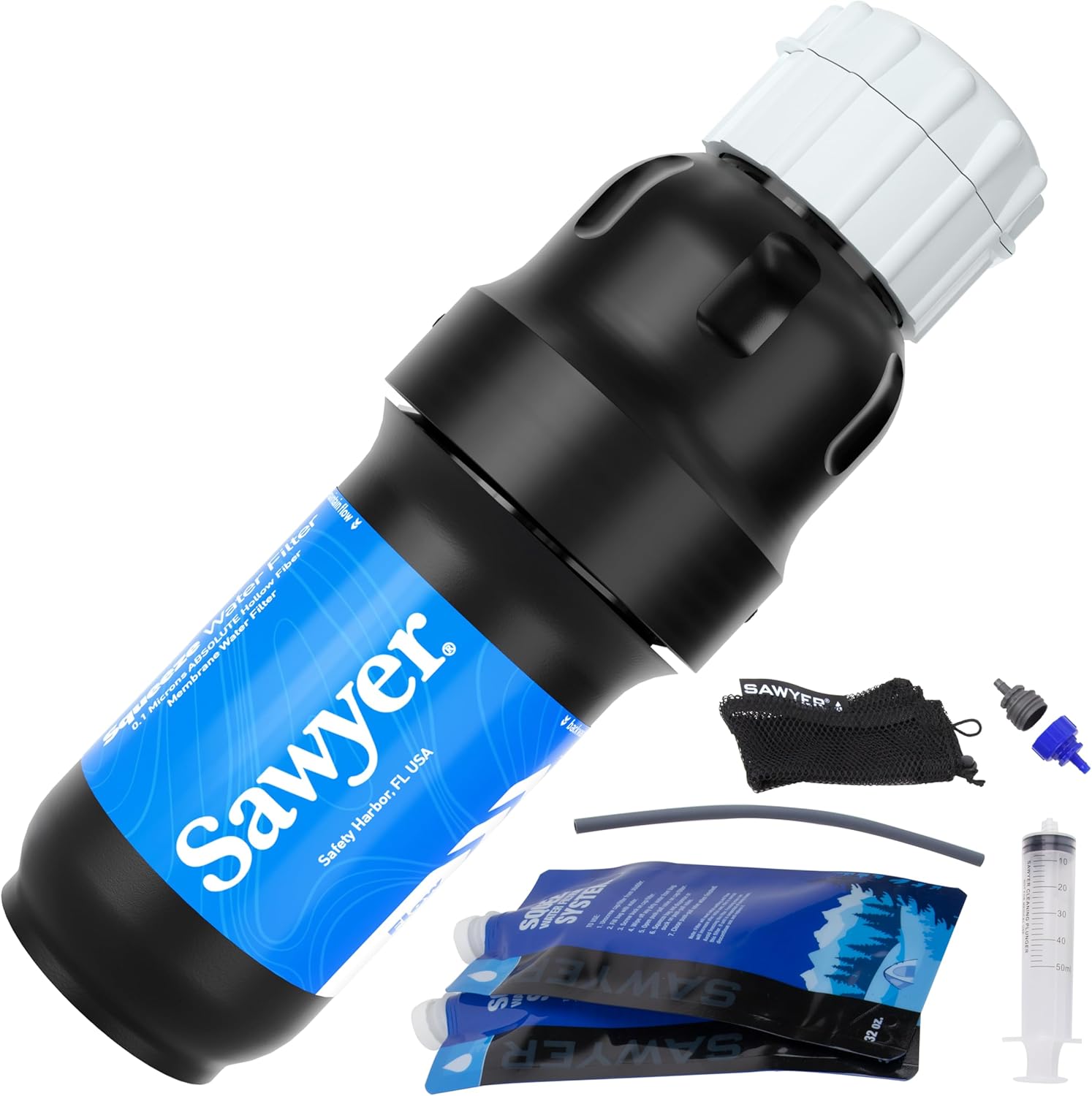
The Sawyer Squeeze is the default ultralight filter — three ounces, field-cleanable, and compatible with Smartwater bottles. Do not assume Aquamira drops provide verified virus protection. Match a drinking-water disinfectant’s labeled organism claims, dose and full contact time to your plan, or use an appropriate boiling method. Drops and tablets are not interchangeable products. Full water cluster: best water filter for camping .
Water-treatment references: CDC camping water guidance · Aquamira 1oz product claims. The current drops page does not establish the virus-backup claim previously made here.
Pros
- 3 oz squeeze filter
- Maintain and backwash it according to the supplied Squeeze instructions
- Backwash when flow diminishes and before or after storage as directed
Cons
- Does not remove viruses
- Squeeze bags wear over seasons
Complete the kit
BearVault Canister — Choose Exact Size
| Shopping route | BV425/BV450/BV475/BV500 family; confirm selection |
|---|---|
| Current selection | Page asks to select size; feature text describes BV425 |
| BV450 reference only | Manufacturer2lb1oz/940 g and7.2L; not all sizes |
| Acceptance | Check exact model against each land manager’s rules |
Consider it if
- The exact selected size fits your food and scented items
- That model is accepted throughout your route
Choose another option if
- You cannot confirm the selected size
- You expect one capacity or weight for every BearVault
The existing route opens the BearVault size family without a confirmed BV450 selection; its feature copy currently describes BV425. Do not assume the smallest option has BV450 capacity or use the old31 oz figure for every variant. The current BV450 manufacturer reference lists940 g and roughly 3–4 days of food for one person, but actual food volume varies. Verify the selected size and local acceptance before buying.
Pros
- Several capacities in the family
- Transparent body and tool-free lid design
Limitations
- Family page can show another size’s feature copy
- Certification alone does not establish local acceptance
Complete the kit
Jetboil Flash Cooking System
| Linked model | Flash 1.0L Carbon with turn-and-click ignition |
|---|---|
| Manufacturer system weight | 13.088 oz / 371 g; fuel separate |
| Published boil | 120seconds per16oz/0.5L; test conditions |
| Cup | 1L vessel; follow manual’s operating fill limits |
Consider it if
- You want an integrated water-boiling format
- The complete kit and approved fuel suit your trip
Choose another option if
- You need compatibility the manual does not permit
- You intend to use an outdoor stove in an enclosed space
The current Flash route uses the revised turn-and-click ignition system. Its published half-liter boil figure is120seconds, not the older100second claim; wind, temperature, fuel and water conditions change results. Fuel is sold separately. Use the supplied instructions for approved fuel, fill limits and pot locking, and operate outdoors only. No independent boil or ignition-reliability test is claimed here.
Pros
- Integrated burner and cup arrangement
- Turn-and-click ignition listed
Limitations
- Fuel adds weight and cost
- Published boil time is not a field guarantee
Complete the kit
Outdoor Research Helium Rain Jacket
| Linked title | Men’s Helium Rain Jacket |
|---|---|
| Generation and fabric | Not independently established for this route |
| Carried weight | Verify exact size; old6.3oz figure not confirmed |
| Fit and features | Confirm hood, pockets, layers and care instructions |
Consider it if
- You can verify the exact model and materials
- The hood and fit suit your planned layers
Choose another option if
- You need specifications the seller cannot document
- You expect a particular fabric from the family name alone
The current route identifies a men’s Helium Rain Jacket, but available listing details did not establish the exact generation, fabric or size-specific weight. The old manufacturer product URL now redirects to a collection, so do not transfer specifications from a newer Helium UL product. Check the selected unit’s documentation and fit over your layers. No comparative storm-performance claim is made.
Pros
- Recognizable model-family listing
- A shell category to compare
Limitations
- Exact generation and weight unresolved
- Weather features need model-specific confirmation
Build a complete carried-weight ledger
- List every required item before choosing replacements: shelter, a documented sleep system, pad, pack, clothing, water capacity/treatment, cooking, food storage, lighting, navigation and other route essentials.
- Use one weight basis for the selected size and actual carried configuration; add stakes, bags, repair parts, containers, chargers and other required accessories.
- Keep base weight separate from consumables. Add the expected food, water and fuel when checking the pack’s starting load.
- Leave unresolved weights blank until documented or weighed. Do not turn a model-family figure into a precise complete-kit total.
- The linked unrated blanket is not a verified replacement for a temperature-rated bag or quilt. Resolve that sleep-system gap before counting the kit as overnight-ready.
Compare the sleep-label checklist, full-trip food-storage checks and complete cook-kit list before adding a total.
Full Comparison Table
| Product | Published weight basis / uncertainty | Include or confirm | Buy |
|---|---|---|---|
| Osprey Exos 48 Backpack | Listing2.77 lb; confirm size/configuration | Selected pack size, lid and retained frame parts | Amazon → |
| Big Agnes Fly Creek UL2 HyperBead Tent | Compare exact trail/packed contents | Poles, stakes, guylines, sacks and any footprint carried | Amazon → |
| Therm-a-Rest NeoAir XLite (WingLock) | 12oz listed Regular pad; accessories separate | Actual pad size, pump/repair kit and storage sack | Amazon → |
| Down Camping Blanket — Unverified Sleep Rating | Title1 lb 6 oz; unrated blanket | No verified sleep rating; complete rated sleep system still needed | Amazon → |
| Sawyer Squeeze Water Filter | 3 oz | Actual filter, containers and cleaning accessories | Amazon → |
| BearVault Canister — Choose Exact Size | Select size; weight varies | Accepted exact model and full-trip food load | Amazon → |
| Jetboil Flash Cooking System | Manufacturer371 g; fuel separate | Approved fuel, required accessories and meal plan | Amazon → |
| Outdoor Research Helium Rain Jacket | Exact size weight unverified | Exact generation, size and documented weather features | Amazon → |
Common mistakes
- Treating eight categories as a complete overnight checklist.
- Comparing minimum weight with another product’s packed weight.
- Using a low base-weight target to omit required food storage or safety gear.
- Assuming certification means a container is accepted everywhere.
- Choosing pack or clothing size from a weight figure rather than fit.
- Confusing a filter with virus purification.
Frequently Asked Questions
What is a good base weight for ultralight backpacking?
How should women choose ultralight backpacking gear?
Is ultralight gear worth the cost?
Should I start with premium or budget gear?
Related Guides


