
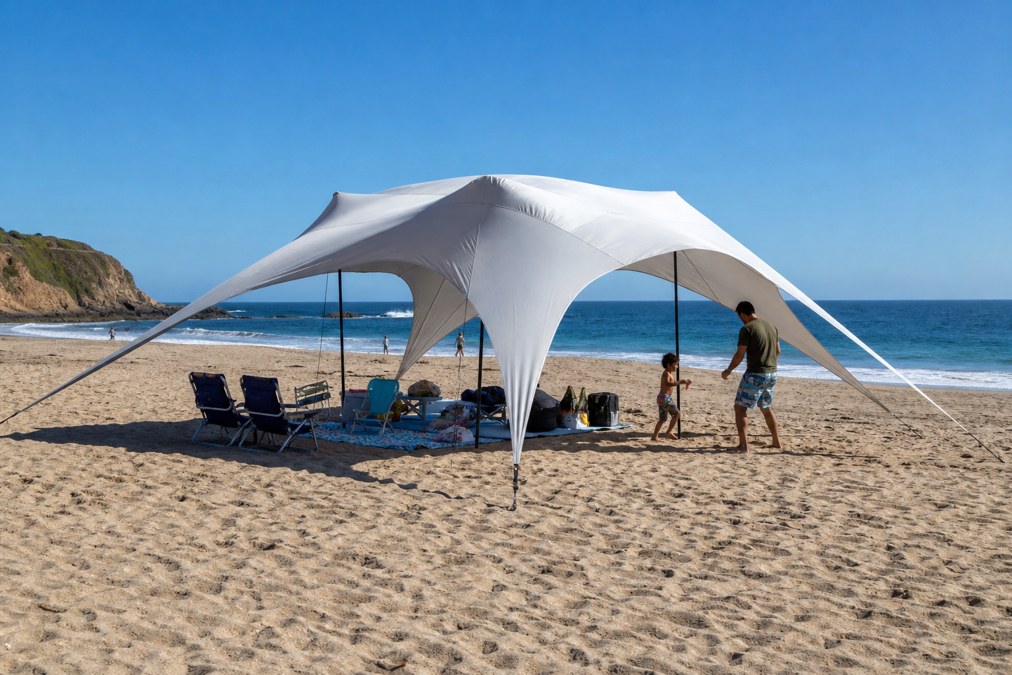
Family shade check: a beach canopy is a supervised shade area, not a storm shelter or a guarantee of a cool sleeping environment. Keep children in view, maintain airflow and use sun protection beyond the fabric. Check the exact product’s UPF documentation and anchoring/wind limits; a fabric rating does not rate the whole open shelter.
Best Beach Shade for Families in 2026 (Researched & Compared)
Quick answer: choose shade with verified fabric coverage and a setup suited to the site, but do not assume it is windproof or complete sun protection. Follow the exact anchoring and wind instructions, supervise children, maintain ventilation and leave before hazardous conditions develop.
These three shelters are compared by documented footprint, construction and setup requirements. No wind, setup-speed or family-use field trial is established.
Start here — pick your beach shade job
Comparison criteria
The comparisons are qualitative. Numeric scores are omitted because supporting evaluation records were not established. Consider the stated selection criteria alongside the exact product’s current specifications and your own needs.
How we ranked these
Compare the actual included shelter, usable shade, permitted anchoring and packed dimensions. Fabric UPF does not rate an entire open shelter or establish storm safety.
Which shade for your beach day?
Naps + sand-free gear zone
Compare supervised shade, floor layout and ventilation. A shelter is not a safe unattended sleep space.
Parking far from the sand
Compare packed size and the actual included canopy. The linked Neso is open-sided; side walls are not established.
Check occupied space and moving shade
Follow the selected canopy’s own anchoring instructions. Do not add improvised guy lines or assume its size gives superior wind performance.
Do a bit of everything
Start with the Coleman for most family days, then add a larger canopy later if you regularly host bigger groups.
Coleman Beach Shade vs Sun Ninja
Coleman Beach Shade
- Floored shade; continuous supervision
- Pole-supported setup; check the supplied instructions
- Smaller ~7.5×7.5 ft footprint
- No comparative wind result established
- Floored shade for continuously supervised use
Sun Ninja Beach Canopy
- ~10×10 ft for large groups
- Sand pockets + four poles
- No comparative wind result established
- Compare actual packed dimensions and setup requirements
- Best when the whole family shows up
Beach shade notes (category benchmarks)
- UPF 50+ fabric blocks most direct UV — still use sunscreen on legs and faces hit by sand glare.
- Shade does not eliminate UV reflected from sand and water or the risk of overheating. Follow the shelter maker’s orientation and anchoring instructions; maintain airflow and pack down before conditions exceed safe use. Use suitable clothing, sunglasses and sunscreen as directed. Babies under six months should stay out of direct sun; ask their clinician about sunscreen.
- Use only the anchoring system specified for the exact shelter and site. Reassess conditions and take it down before unsafe weather.
Product photos are on each card below — self-hosted on OutdoorsPapa (no duplicate URLs in this strip).
Decision rules
- Choose the Coleman Beach Shade if you want a floored, pole-supported shade with supervised use.
- Choose the Neso tent if you walk far from parking and need a lighter sand-anchor pack.
- Consider Sun Ninja when its actual open-canopy footprint and permitted setup suit your group; no better-wind-holding claim is established.
- Choose the shade arrangement for actual exposure and supervision, rather than assuming one shelter type is sufficient for every stop.
Compare the Actual Shade Layout
Compare the actual canopy, floor, ventilation and anchoring instructions. UPF fabric alone does not eliminate reflected UV or weather exposure.
Shade does not eliminate UV reflected from sand and water or the risk of overheating. Follow the shelter maker’s orientation and anchoring instructions; maintain airflow and pack down before conditions exceed safe use. Use suitable clothing, sunglasses and sunscreen as directed. Babies under six months should stay out of direct sun; ask their clinician about sunscreen.
What to Look For — Buyer’s Guide
Compare actual coverage, ventilation, anchoring and weather limits before choosing a family shelter.
Key Factors at a Glance
UPF 50+ fabric blocks about 98% of UV — side panels or flaps cut low-angle sun that umbrellas miss at midday.
Anchor performance depends on the exact design, sand or ground and wind conditions. Follow the maker’s setup and wind limits; do not infer a safe wind speed or storm protection from the number of poles or sandbags.
Compare the actual setup, ventilation and anchoring instructions. Do not use a beach shelter for unattended sleep.
A floor can separate gear from sand; measure the actual footprint and supervise children continuously.
The 3 Best Beach Shades for Families in 2026
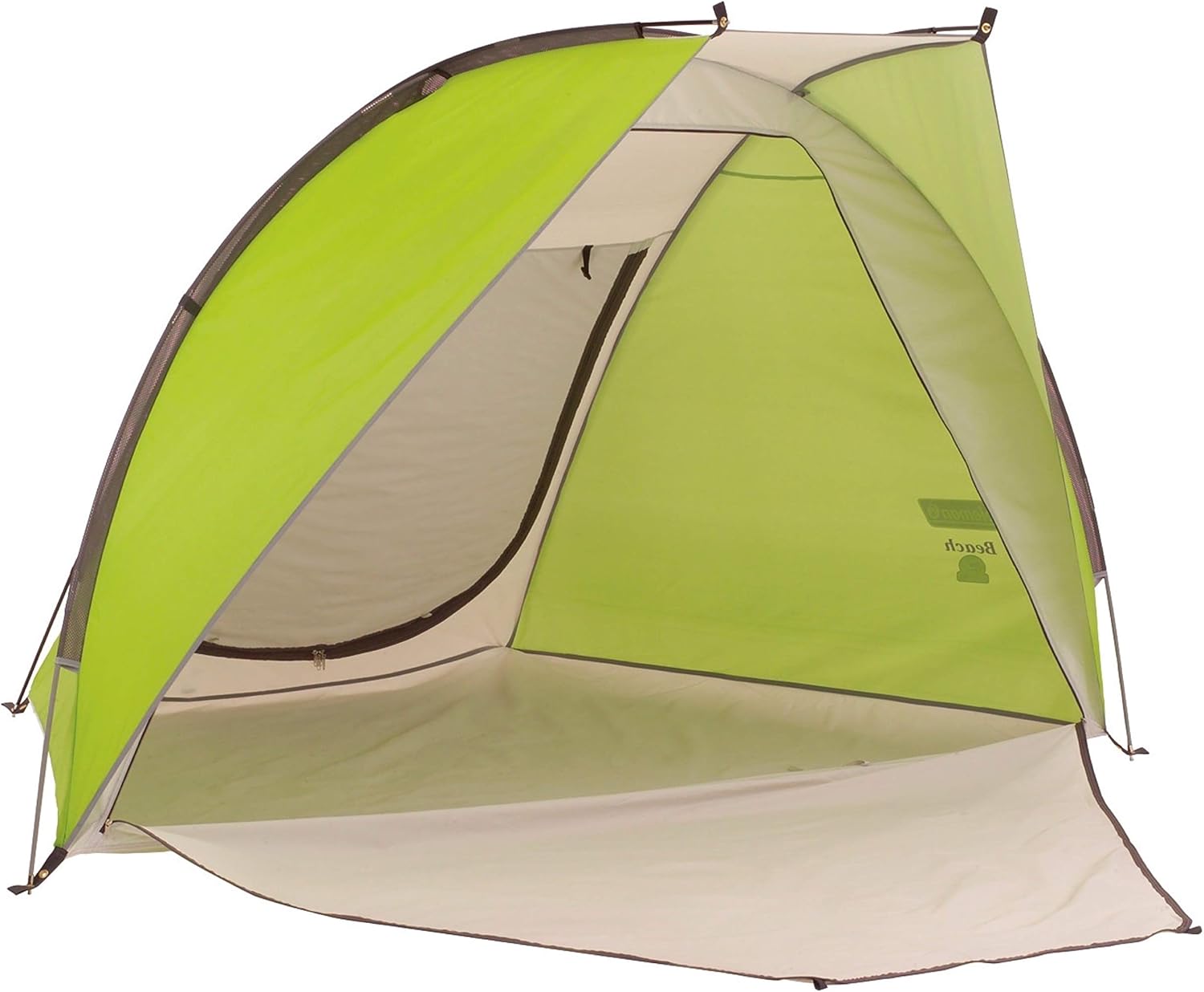
Coleman Beach Shade Canopy
| Coverage | Confirm exact supplied model/floor plan |
|---|---|
| Type | Pole-supported shelter + floor |
| UV | Claimed UPF 50+; full sun precautions |
| Best for | Supervised shade/changing; not unattended sleep |
Buy this if
- The actual selected version and documented requirements suit your planned use.
Skip if
- You need a size, function or performance assurance not established for this selection.
Pros
- Coverage: Confirm exact supplied model/floor plan
- Type: Pole-supported shelter + floor
Cons
- It is not an instant pop-up, waterproof storm shelter or unattended sleeping space for children.
- Check the actual supplied label, contents and instructions.
Complete the kit
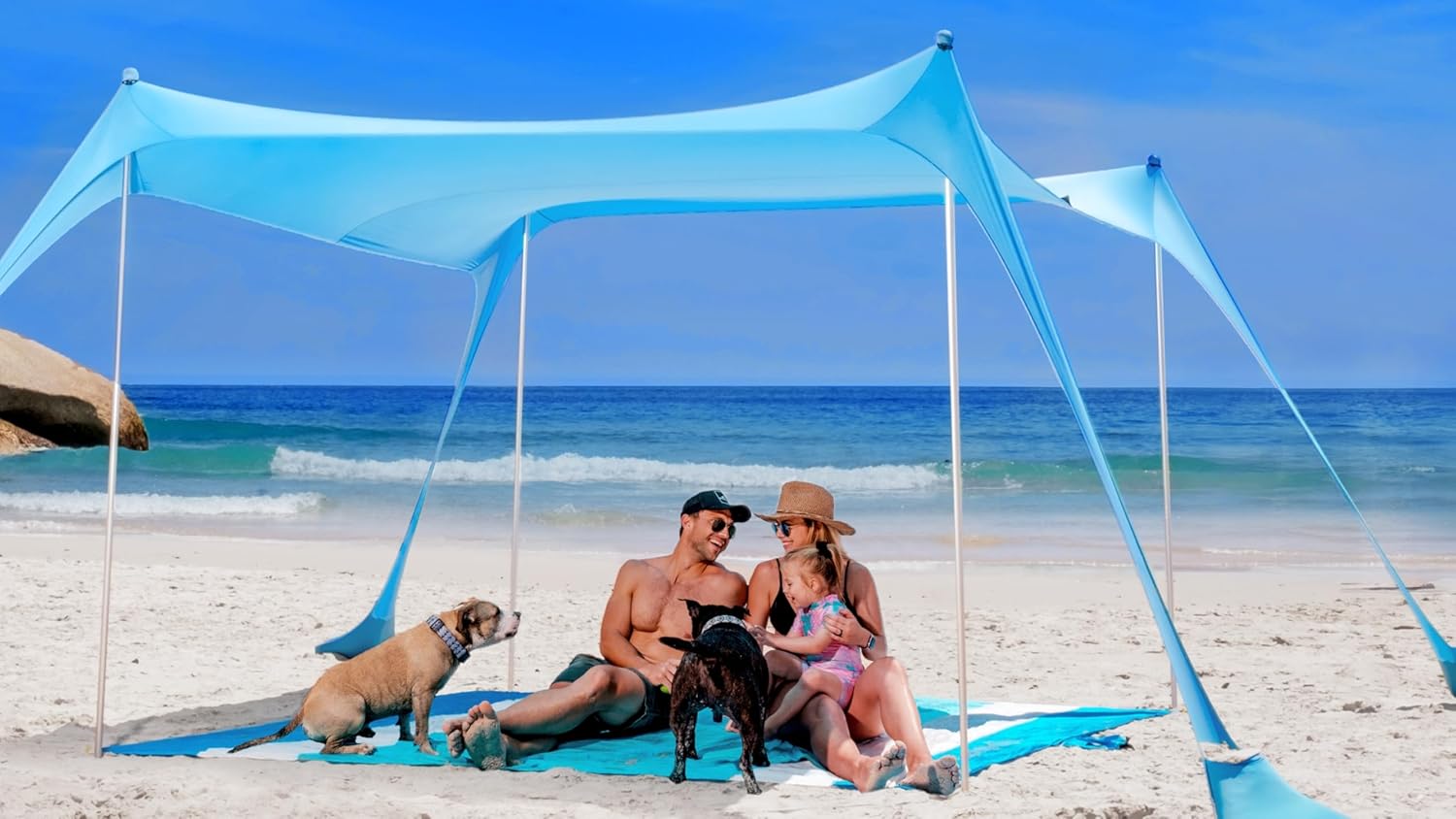
Neso Portable Beach Tent
| Coverage | Linked Rainbow 7×7 ft |
|---|---|
| Type | Portable beach tent |
| UV | UPF 50+ |
| Best for | Travel / quick setup |
Buy this if
- The actual selected version and documented requirements suit your planned use.
Skip if
- You need a size, function or performance assurance not established for this selection.
Pros
- Coverage: Linked Rainbow 7×7 ft
- Type: Portable beach tent
Cons
- Confirm included poles and setup requirements; no measured fastest pitch or guaranteed wind threshold is established here.
- Check the actual supplied label, contents and instructions.
Complete the kit
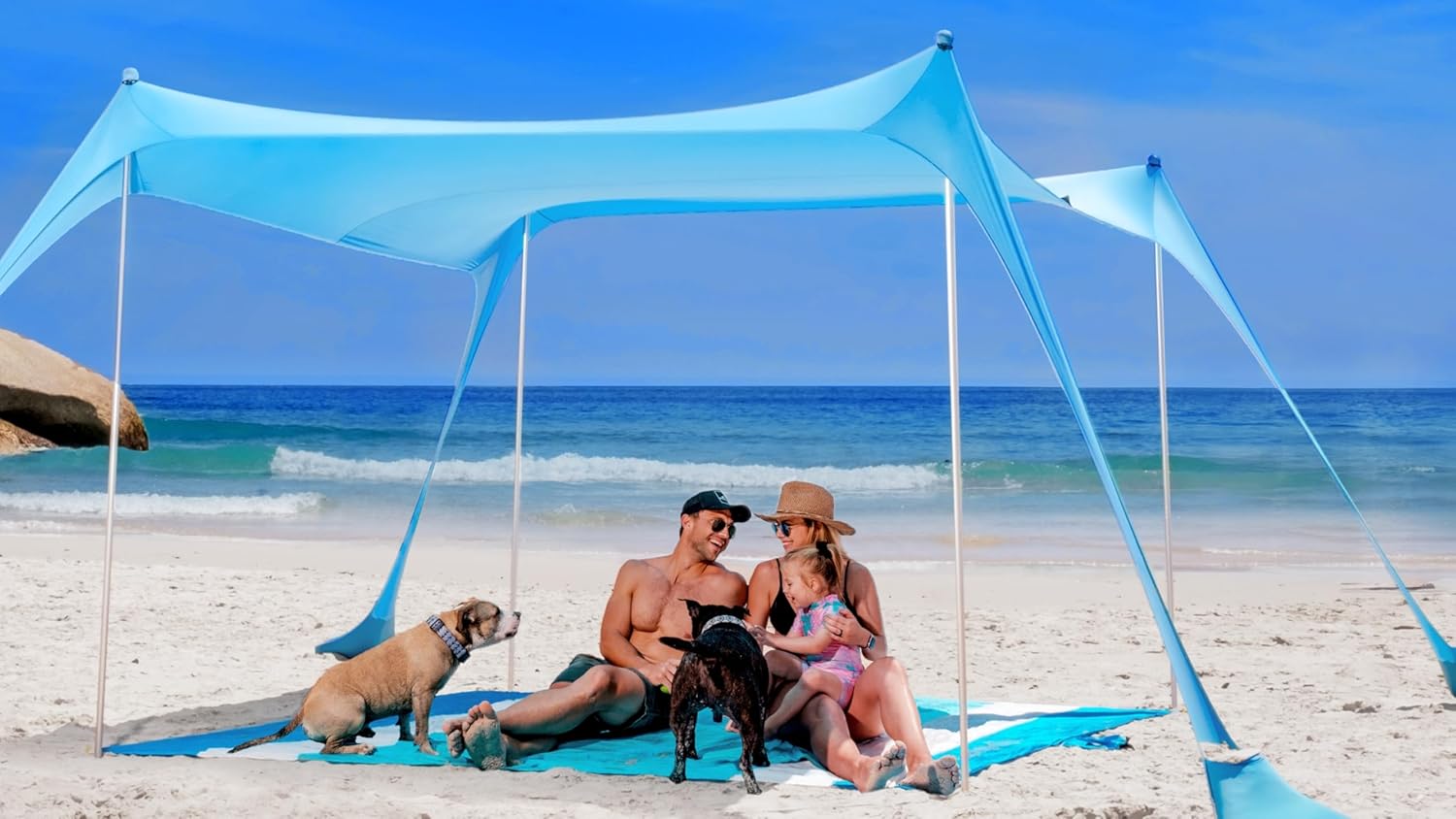
Sun Ninja Beach Canopy Tent
| Coverage | 10×10 ft |
|---|---|
| Type | 4-pole canopy |
| UV | UPF 50+ |
| Best for | Open 10×10 sunshade; respect weather limits |
Buy this if
- The actual selected version and documented requirements suit your planned use.
Skip if
- You need a size, function or performance assurance not established for this selection.
Pros
- Coverage: 10×10 ft
- Type: 4-pole canopy
Cons
- Four poles alone do not establish superiority in wind, and adding improvised guy lines is not a tested upgrade.
- Check the actual supplied label, contents and instructions.
Complete the kit
Manufacturer references checked 21 October 2026: Neso 1
Full Comparison Table
| Product | Coverage | Best For | Buy |
|---|---|---|---|
| Coleman Beach Shade Canopy | 7.5×7.5 ft | Supervised shade/changing | Amazon → |
| Neso Portable Beach Tent | 7×7 ft | Open canopy; verify packed kit | Amazon → |
| Sun Ninja Beach Canopy Tent | 10×10 ft | Large groups | Amazon → |
Common mistakes
- Relying on a single umbrella spike — Use the exact shelter’s supplied anchoring instructions and stop before conditions exceed them.
- Ignoring reflected UV off sand — Shade fabric helps overhead sun. Sunscreen still matters on exposed skin and kids’ faces.
- Measure people, chairs and gear within the shade at different sun angles; nominal floor area is not a capacity guarantee.
- Follow the exact shelter’s orientation and anchoring instructions. Do not improvise extra guy lines.
- Recheck the permitted anchors and changing ground/weather conditions as instructed; leave before the setup becomes unsafe.
Frequently Asked Questions
Beach umbrella vs pop-up beach tent?
How do you keep a beach shade from blowing away?
What UPF rating do I need for beach shade?
What size beach canopy for a family of four?
Can you leave a beach tent up all day?
Do beach shades need stakes on sand?
Related Guides


