
Car Battery to Power Outlet: What Actually Works
Why the no-inverter shortcut fails, what an inverter really does, and the safer setups for van life and home backup.

On this page
van and RV converters plus anyone wanting emergency backup power at home, hoping to skip the cost of an inverter.
planning a longer trip off-grid? see the camping gear hub for power and campsite kit.
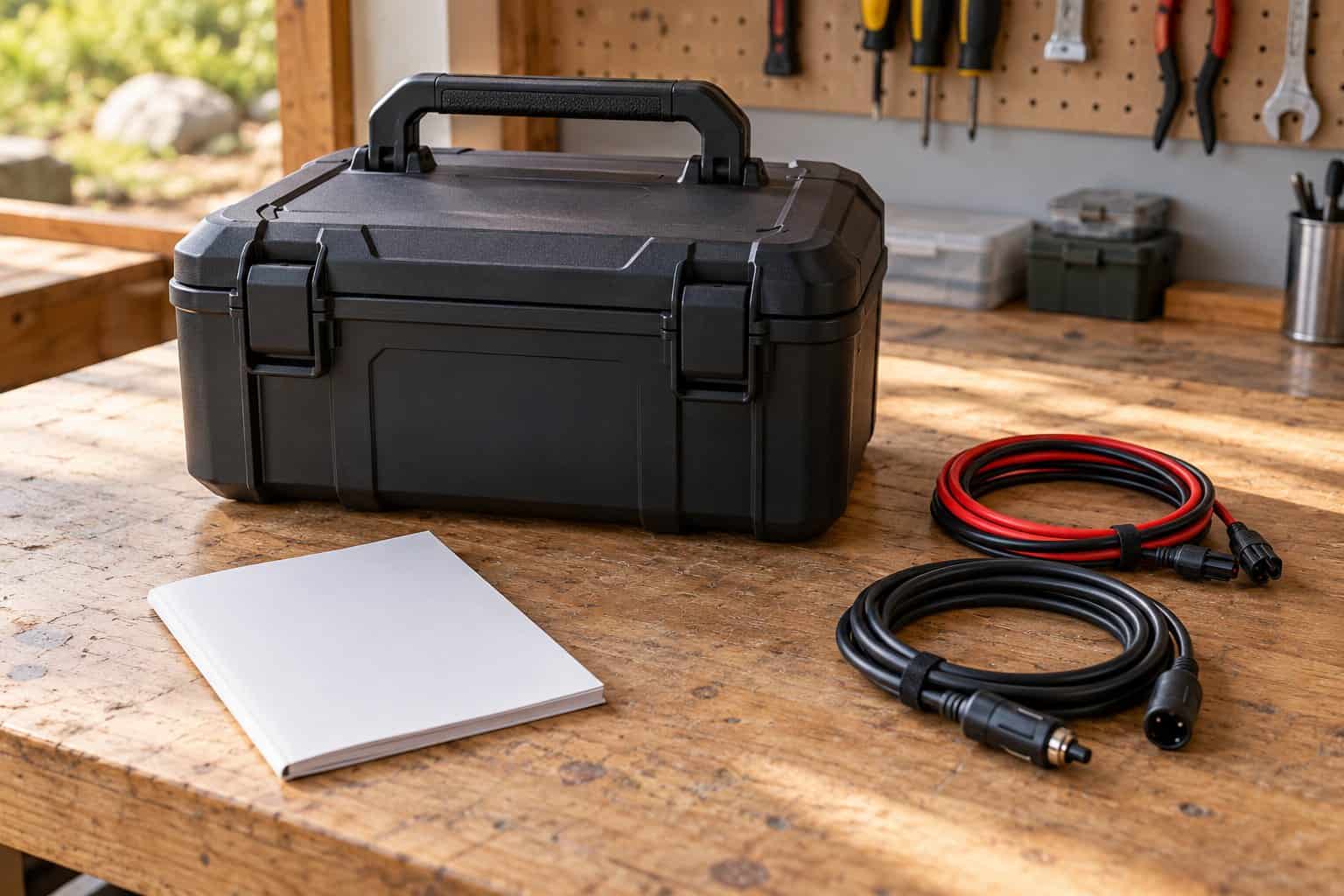
A typical car starter battery supplies nominal 12V DC. A household AC appliance needs a suitable inverter; a compatible DC accessory instead needs an appropriately rated protected DC supply or converter. A socket shape alone does not convert voltage or current type.
A starter battery is not a complete off-grid electrical system. Plan loads, usable capacity, charging and installation before selecting equipment; this guide is not a wiring procedure.
So how do you provide energy to the whole RV?
List the actual DC and AC loads, including starting surges, and decide what must run at the same time. A suitable auxiliary system may include batteries, charging, protected distribution and an inverter matched to the AC loads.
Match voltage, frequency, waveform and continuous/surge ratings to the equipment manuals. Neither inverter price nor waveform alone establishes runtime or safety. A transformer alone does not convert battery DC into AC.
Why Invert a Car Battery Into a Power Outlet?
An inverter may be useful for compatible AC equipment when a properly designed battery system is available. Direct DC or an appropriate DC converter can suit compatible devices without AC conversion. Choose the system from actual needs, not a generic claim that either route is always cheaper.
Do not backfeed a building outlet or improvise a connection to shore power. Permanent RV or household integration needs an appropriately qualified installer and the required isolation/protection arrangements.
What are the Things You Should Remember?
- Read the actual battery, inverter and appliance instructions.
- Have cable sizing, overcurrent protection, ventilation and grounding designed for the specific equipment.
- Do not expose or short battery terminals, and keep ignition sources away where battery gases may be present.
- Repeated parked loads can leave a starter battery unable to start the vehicle.
- Use a qualified installer for permanent wiring or uncertainty.
Manufacturer example — model-specific inverter installation requirements. Its specifications are not universal values for other equipment.
Make a load list before choosing equipment
For each device, record its required AC or DC input, voltage range, rated running power, any documented startup demand and intended hours of use. Mark which loads must operate together and which can wait. Give that list and the actual battery/charging details to the installer.
As arithmetic only, a 20W load running for three hours uses 60Wh at the load. That does not include conversion losses, standby consumption or a capacity reserve, and it does not establish how long a starter battery can run it or still start the vehicle.
Key Takeaways
For household AC, use a suitable inverter within a correctly designed system. For DC equipment, use compatible protected DC distribution or conversion. Measure loads and plan charging and capacity; do not treat a nominal 12V starter battery as a universal power outlet.
Car battery power FAQ
Related Guides


