
Camping Outfits for Women: Layers That Work
Base, mid, shell, and the right boots — how to dress for hot afternoons and cold nights without packing a second bag.

On this page
- Essentials for Building a Chic Camping…
- Camping Outfits for Ladies: Combining C…
- Outdoor Footwear: Balancing Function an…
- Accessorizing Your Camping Look
- Camping Outfit Ideas for Different Weat…
- Incorporating Outdoor Trends into Your…
- Camping Outfits for Different Activities
- Maintaining Your Camping Outfits
- Conclusion
- Camping clothing FAQ
women packing for a first camping trip, and anyone rebuilding an outdoor wardrobe that has to handle hot afternoons and cold nights in the same weekend.
sorting the rest of the kit? start with our camping gear guide.
Start with the actual forecast, exposure and activities. For a mild developed campsite, an example outfit is a comfortable walking top and trousers, well-fitting shoes and sun protection, with an insulating layer and suitable rain protection packed separately. This is an example, not an all-weather kit.
For a cool evening, change out of damp clothes and add dry insulation, socks and headwear suited to the conditions. For an exposed wet walk, reassess the route, shell construction and escape options; a fashionable layer does not establish weather protection.
Key Takeaways:
- Combine style and functionality when selecting camping fashion for women
- Choose comfortable and fashionable outdoor style pieces for your adventures
- Consider fabric choice, layering, and accessories when building a chic camping attire wardrobe
- Express your personal style while staying practical in women’s camping clothes
- Enhance your outdoor experience with confident and comfortable camping fashion choices
Planning reference: REI: functions of base, insulation and shell layers. Select the actual garments for your trip; the examples here are not a tested temperature system.
Essentials for Building a Chic Camping Wardrobe
When planning your camping wardrobe, focus on versatile outdoor clothing. Start with high-quality, moisture-wicking t-shirts and tanks. These keep you cool and dry on your adventures. Pair them with quick-drying pants or shorts made from lightweight fabrics like nylon or polyester.
These materials are comfy and easy to pack. They’re perfect for camping.
Choose layering pieces for the actual forecast, exposure and activities; the examples are not an all-weather system. A lightweight, insulated jacket or vest is great for cool nights. Check the actual shell’s fabric, seams, closures, hood and fit against the expected exposure. A waterproof label alone does not guarantee that you stay dry in every condition. And, don’t forget a cozy fleece or sweater for warmth.
Look for outdoor brands known for style and functionality when shopping. Brands like Columbia, Patagonia, and The North Face offer stylish and practical options. They use innovative materials and technologies for clothing that’s durable, stylish, and comfy.
Here are some essential items for your camping wardrobe:
- Moisture-wicking t-shirts and tanks
- Quick-drying pants or shorts
- Lightweight, insulated jacket or vest
- Waterproof rain jacket
- Cozy fleece or sweater
- Comfortable, supportive hiking shoes
- Versatile sandals for relaxing at the campsite
Focus on these key pieces for a wide range of stylish camping outfits. You won’t need to pack too much. The goal is to balance fashion and function. This way, you can enjoy the outdoors in style and comfort.
Camping Outfits for Ladies: Combining Comfort and Style
Finding the right balance between comfort and style is key for camping outfits. Choose lightweight, breathable fabrics and versatile layers. This way, you can make outfits that are both comfy and stylish for your outdoor adventures.
Lightweight, Breathable Fabrics for Outdoor Comfort
For comfort, pick fabrics that are light and breathable. These materials help keep your body temperature right and dry you out. Great options include:
- Merino wool: It’s odor-resistant, regulates temperature, and wicks away moisture.
- Bamboo: It’s soft, light, and great at keeping moisture away.
- Moisture-wicking synthetics: These fabrics dry fast and keep you cool and dry.
These fabrics let your skin breathe. This prevents sweat and humidity from making you uncomfortable. With the right fabrics, you can make outfits that are both stylish and comfy for camping.
Layering Pieces for Versatile Camping Outfits
Layering is crucial for adaptable camping outfits. It lets you adjust to the weather and mix and match pieces easily. Essential layering items include:
- Moisture-wicking base layers: Think tank tops, t-shirts, and long-sleeve shirts.
- Insulating mid-layers: Choose lightweight fleece jackets, flannel shirts, and vests.
- Protective outer layers: Go for waterproof jackets, windbreakers, and rain pants.
For example, wear a moisture-wicking tank top with quick-drying shorts and a lightweight flannel shirt for day. Add a fleece jacket or vest in the evening to stay warm by the campfire.
Mastering layering lets you create many stylish and practical camping outfits. With breathable fabrics and versatile layers, try the complete layers together and reassess the plan when conditions exceed their protection. Fabric labels and a three-layer list do not establish suitability for every activity.
Outdoor Footwear: Balancing Function and Fashion
Choosing the right outdoor footwear is key for camping outfits for ladies. You need shoes that are both functional and fashionable. They should let you move easily and look good. Think about your planned activities and the weather you’ll face when picking your shoes.
Sturdy, Supportive Hiking Boots for Rugged Terrain
If you’re an adventurous lady heading out on rough trails, get a good pair of hiking boots. Look for boots with strong support, stability, and grip. This will help you stay steady on your outdoor adventures. Keen, Merrell, and Columbia offer stylish yet practical hiking boots that match your camping style and protect your feet.
Here are key features to look for in hiking boots:
- An outsole appropriate to the actual surface; no non-slip guarantee
- Documented weather protection, suitable fit and drying needs; water can enter around openings
- Reinforced toe caps and heel counters for added protection
- Cushioned insoles and midsoles for comfort during long hikes
Stylish Sandals for Relaxing at the Campsite
After a busy day, you’ll want comfy shoes at the campsite. That’s where stylish outdoor sandals come in. Teva, Chaco, and Birkenstock make sandals that are both comfy and fashionable for camping.
Here’s what to consider in camping sandals:
- Adjustable straps or buckles for a secure, customized fit
- Contoured footbeds that provide arch support and cushioning
- Quick-drying materials that won’t weigh you down when wet
- Durable soles with good traction for navigating around the campsite
Check the actual fit and intended socks before walking; suitable sizing does not guarantee blister prevention. Try on hiking boots or sandals with the socks you’ll wear camping. Make sure your toes have room to move and your heel stays put.
Accessorizing Your Camping Look
Accessories are key to a stylish and useful camping outfit. They boost your look and add practical benefits for your outdoor adventures. By picking accessories that match your style and needs, you blend fashion with function easily.
A wide-brimmed hat is a must-have for camping. It shields your face and neck from the sun and adds style. Choose hats made from cotton or straw for breathability and comfort.
A colorful bandana is another great accessory. Wear it around your neck, as a headband, or on your backpack for a splash of color.
“The right camping accessories can make all the difference in your outdoor experience, providing both style and functionality.”
Choose sunglasses labelled UV400 or 100% UVA/UVB protection. Polarization can reduce reflected glare, but it does not by itself establish UV protection.
| Accessory | Function | Style Tip |
|---|---|---|
| Wide-brimmed hat | Sun protection | Choose a neutral color for versatility |
| Bandana | Versatile use | Opt for a bold print or bright color |
| Polarized sunglasses | Glare reduction; verify UV400 or 100% UVA/UVB protection separately | Select a classic shape that complements your face |
| Lightweight backpack | Storage and organization | Choose a color that complements your outfit |
When picking camping accessories, focus on durability and quality. A watch with a compass, altimeter, and barometer is useful for outdoor trips. Also, an insulated water bottle keeps drinks at the right temperature for hours, keeping you hydrated in style.
- Choose accessories that complement your camping outfits and personal style
- Prioritize functionality and durability when selecting outdoor fashion accessories
- Opt for accessories that serve multiple purposes to maximize their usefulness
By choosing camping accessories that are both stylish and practical, you can create a chic outdoor wardrobe. Pick items that show your style and support your outdoor activities.
Camping Outfit Ideas for Different Weather Conditions
When planning your camping wardrobe, think about the weather you’ll face. Choosing the right camping clothes for the weather keeps you comfy and safe. Here are some outfit ideas for warm and cool weather camping:
Cool and Breezy Outfits for Warm Weather Camping
For sunny, warm camping days, go for lightweight, breathable clothes. These let your skin breathe and keep you cool. Pack these items:
- Moisture-wicking t-shirts or tank tops
- Quick-drying shorts or skirts
- Lightweight, flowy dresses
- Breathable, UPF-rated fabrics for sun protection
- Wide-brimmed sun hats or caps
- Sunglasses with UV protection
Cozy, Insulating Layers for Chilly Nights
Even in the warm months, nights can get cold, especially in the mountains or near water. To stay warm by the campfire, bring these layers:
- Thermal base layers (long-sleeve tops and leggings)
- Fleece jackets or vests
- Insulated or quick-drying trousers suited to the forecast; avoid wet cotton/jeans for cold exposure
- Warm, wool socks
- Beanie or warm hat
- Gloves or mittens
Pack rain protection with documented construction, coverage and fit appropriate to the route. A water-resistant layer and a waterproof shell are different; expected shower duration alone does not establish adequate protection. Being ready for different weather lets you enjoy your camping trip in comfort and style.
| Weather Condition | Key Clothing Items | Fabric Recommendations |
|---|---|---|
| Warm and Sunny | T-shirts, shorts, dresses | Lightweight, moisture-wicking, UPF-rated |
| Cool and Chilly | Thermal base layers, fleece jackets, insulated pants | Wool, fleece, synthetic insulation |
| Rainy or Unpredictable | Route-appropriate rain shell; verify construction | Waterproof-breathable membranes, coated fabrics |
Incorporating Outdoor Trends into Your Camping Style
Outdoor fashion trends are all about earthy tones and natural textures. These styles are perfect for camping. They help you look great and blend in with nature.
Earthy Tones and Natural Textures
Colors like olive green, terracotta, and muted browns are big in outdoor fashion. They match the natural world and add a touch of sophistication to your look. Natural-fibre looks are a style option for suitable mild, dry use. Check the actual garment and conditions; linen, cotton or hemp does not establish cold/wet protection or a drying time.
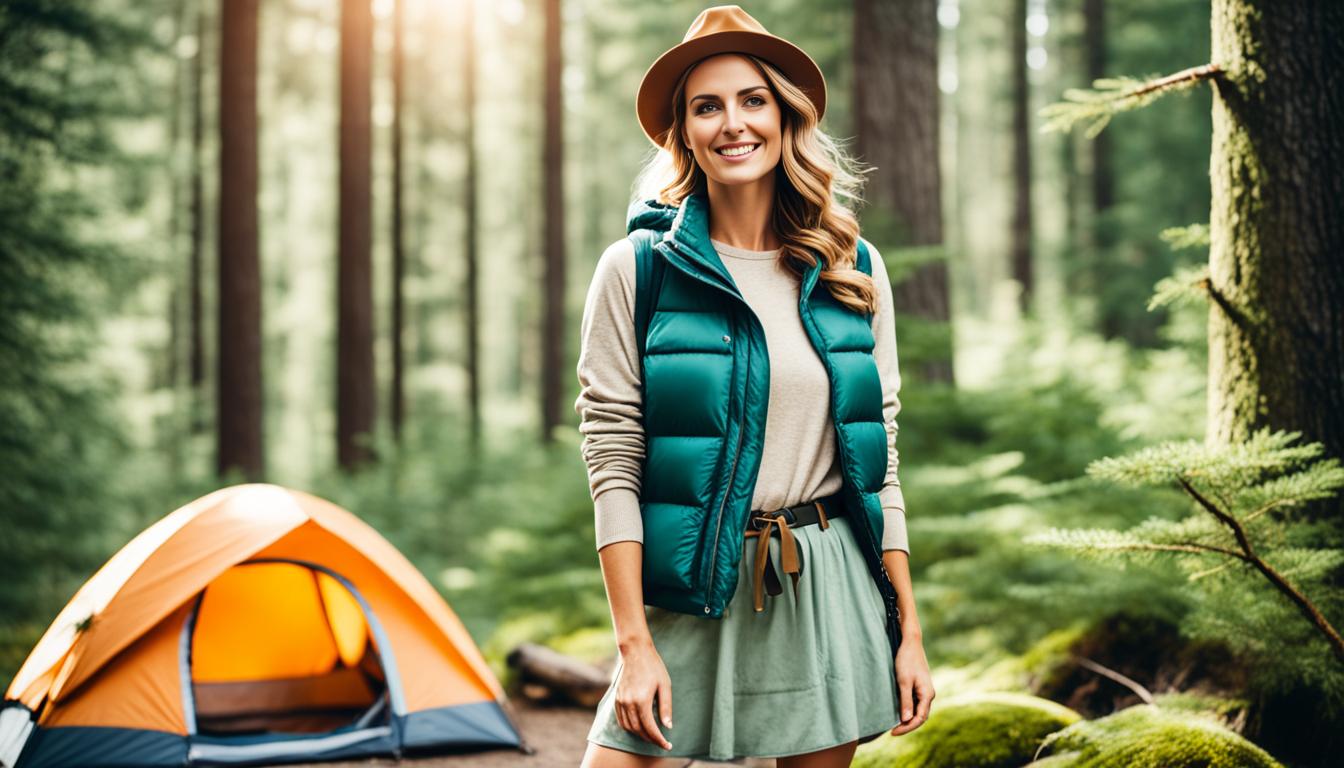
To add these trends to your camping style, try a linen shirt in olive green with khaki shorts and leather sandals. This mix is both stylish and practical, making you look great outdoors.
Vintage-Inspired Camping Gear and Clothing
Vintage camping style is back in a big way. It brings a nostalgic charm to modern outdoor fashion. Think classic flannel shirts, rustic leather backpacks, and enamel mugs. These items add adventure and timeless style to your look.
Embrace vintage camping style with these key pieces:
- A classic red and black buffalo plaid flannel shirt
- High-waisted denim shorts with a vintage wash
- A leather rucksack with brass hardware
- An enamel mug for sipping coffee around the campfire
| Vintage Camping Style Element | How to Incorporate |
|---|---|
| Flannel Shirts | Pair with denim shorts or jeans for a classic camping look |
| Enamel Mugs | Use for your morning coffee or evening hot cocoa around the campfire |
| Leather Backpacks | Opt for a rustic leather rucksack to carry your essentials in style |
| Vintage-Inspired Accessories | Add a vintage bandana, a classic wide-brimmed hat, or retro sunglasses |
By adding these outdoor fashion trends to your camping wardrobe, you’ll have a stylish and practical look. It celebrates nature and the adventure spirit.
Camping Outfits for Different Activities
When planning a camping trip, think about the activities you’ll do. Choosing outfits made for specific activities keeps you comfy, safe, and looking good. Let’s check out some outfit ideas for common camping activities.
Comfortable Hiking Attire for Ladies
Hiking is a top choice for many campers. The right clothes for women can make hiking more enjoyable. Pick clothes that wick away moisture and breathe well to stay cool and dry. A good outfit mix includes:
- Moisture-wicking leggings or hiking pants
- A lightweight, breathable top or t-shirt
- A wind-resistant jacket for added protection
- Comfortable, supportive trail running shoes or hiking boots
- A hat or visor to shield your face from the sun
Stylish Loungewear for Campfire Socializing
After a busy day, chilling by the campfire is the best. To stay stylish and comfy, bring some fashionable loungewear. Think about these pieces:
- A soft, oversized flannel shirt
- Stretchy leggings or joggers
- A warm, snuggly sweater or hoodie
- Slip-on shoes or cozy socks for easy on-and-off
- A beanie or knit hat for added warmth
Choose dry layers suited to the forecast. Cotton can be comfortable in mild, dry conditions but retains moisture; wool or suitable synthetic insulation is a safer planning choice for cold, wet exposure.
| Activity | Key Clothing Items | Fabric Considerations |
|---|---|---|
| Hiking | Leggings, breathable top, trail shoes | Moisture-wicking, quick-drying |
| Campfire Lounging | Flannel shirt, leggings, slip-on shoes | Soft, insulating, breathable |
By bringing outfits made for specific activities, you’re set for any moment of your trip. Whether you’re on the trails or by the fire, these outfits will keep you comfy, safe, and stylish.
Maintaining Your Camping Outfits
Proper care for your camping clothes is key to making your outdoor gear last longer. By following a few simple tips, you can keep your camping outfits in great shape. This means they’ll be ready for your next adventure in the outdoors.
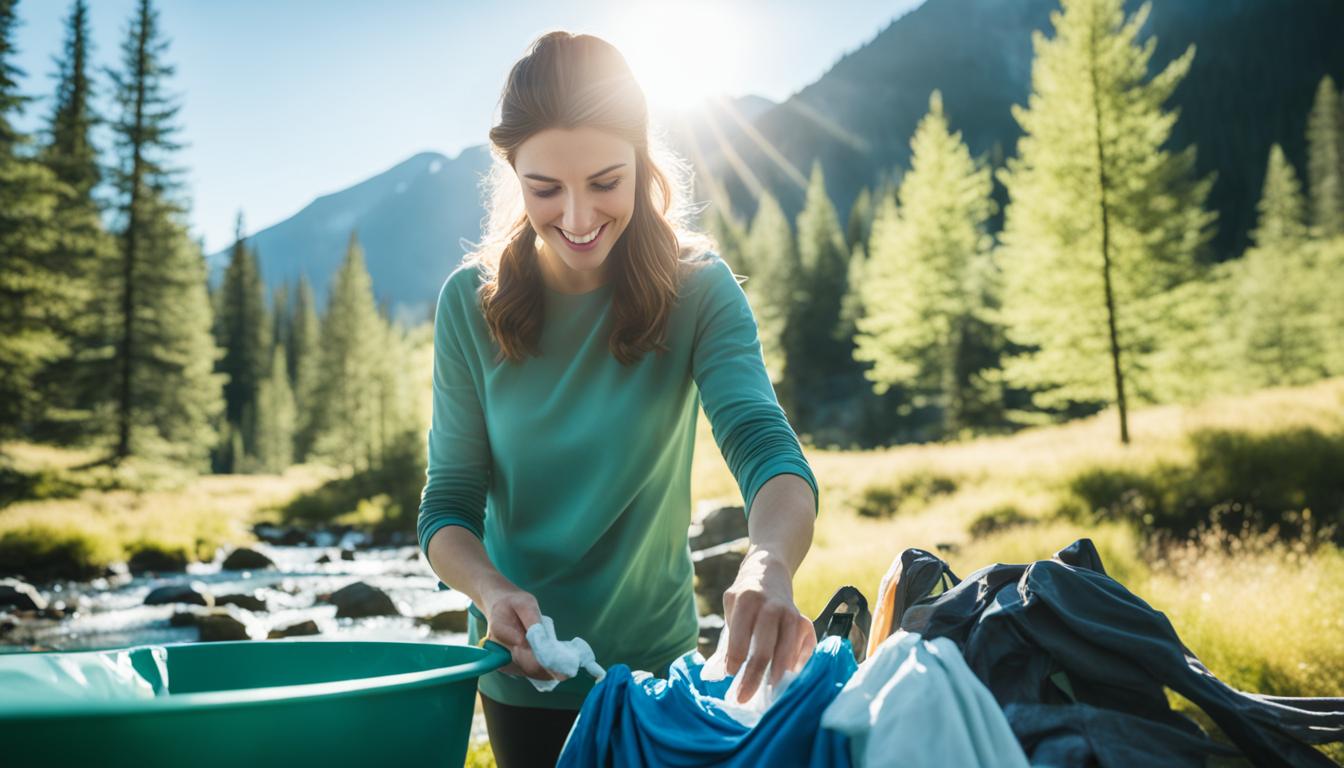
Read each item’s supplied care label before washing. Use only its permitted detergent, temperature and treatment; a shell, wool base layer and insulated garment may need different routines.
Use the drying method and temperature allowed for the exact item. Some treatments require specific heat activation and others prohibit it; do not infer a universal low-dryer or line-dry instruction.
Proper storage is also important for your camping clothes. Make sure to air out your gear and clothes after each use. This helps prevent mildew and bad smells. If you find any damage, like small tears or loose buttons, fix them right away to stop further damage.
- Use the exact label’s permitted wash settings
- Use the drying method permitted for the item
- Air out gear and clothing between trips
- Store camping outfits in a cool, dry place
Follow item-specific drying and storage directions. Do not seal damp clothing into airtight containers; inspect for damage before the next trip.
Conclusion
Making stylish camping outfits means finding the right mix of comfort, functionality, and style. Choose the right fabrics and layering pieces for outdoor fashion that keeps you comfy and confident. Also, pick high-quality items that last long and let you show off your style.
Colour and style are personal preferences. Choose an outfit you like after checking weather protection, fit and the weight you can carry; existing clothes may already meet those needs.
Before departure, try the complete outfit with your pack, check the weather and pack a dry change where the trip requires one. There is no need to buy every trend or a separate outfit for every activity.
Camping clothing FAQ
Related Guides


