
Best Hiking Boots for Plantar Fasciitis (Wide Feet) in 2026 (Researched & Compared)
Quick answer: With plantar fasciitis and wide feet, check comfortable heel cushioning, support and adequate width alongside an individual activity plan. This is a fit comparison of one mid boot and two trail shoes, not a clinical ranking or a promise that a particular model will relieve heel pain.
The NHS advises cushioned heels, good arch support and reducing prolonged walking during symptoms. Footwear is one part of care. Severe or worsening pain, pain that limits normal activity, tingling or loss of feeling needs clinical advice; also seek help if self-care has not improved symptoms after two weeks.
Check the actual fit before a longer walk. Use the related guides below for more detailed fit considerations.
Part of our Wide Feet Hiking Boots cluster · Hiking Gear Hub
Start here — match the format and fit
Selection criteria
No numerical comfort or medical-effectiveness score is presented. Published specifications do not establish personal fit.
How we compared these
We checked manufacturer specifications and the model headings behind the existing Amazon routes. This is a published-information comparison, not a documented field test or clinical trial. A model match does not establish the selected size, width or stock. Older-generation availability can change; confirm the actual offer before purchase.
Sources and fit references
Which PF shoe?
Check both feet
Use the socks you will hike in. Check toe clearance, joint pressure and a secure heel.
Verify the selected option
A model-family heading is insufficient. Read the selected size and width together.
Compare footwear formats
Consider waterproofing, grip and stiffness alongside fit. A higher collar alone is not proof of ankle protection.
Adjust the plan
Do not use a product recommendation to walk through pain or numbness. Seek appropriate clinical advice.
Brooks Cascadia 17 (Wide option) versus Keen Targhee III Mid Waterproof (Wide)
Brooks Cascadia 17 (Wide option)
- Published trail-specific support system
- DNA LOFT v2 cushioning
- No model-specific plantar-fasciitis benefit established
- Selected Wide availability needs confirmation
Keen Targhee III Mid Waterproof (Wide)
- Manufacturer offers a separate Wide option
- Waterproof mid-cut construction
- Sizing and width must be selected separately
- Waterproof construction may feel warmer than open mesh
Fit checks before a longer walk
- Check both feet with intended socks and any recommended insert.
- Confirm toe clearance on a gentle indoor slope where the return policy permits.
- A seam, toe cap or lacing panel should not press on a painful joint.
- Recheck heel hold without overtightening the forefoot. A painful width is not a break-in goal.
Decision rules
- Choose a comfortable fit without assuming cushion, stiffness or a width label proves a treatment benefit.
- Follow a clinician’s activity advice rather than using a new shoe as permission for a long hike.
- Check the whole shoe-and-insole fit; do not stack inserts unless instructed.
- Do not change to zero drop as a treatment recommendation from this article.
Plantar Fasciitis and Wide Hiking Fit
Width addresses pressure and fit; it does not diagnose the cause of heel pain. Cushioning, support, shoe stiffness and any prescribed insole must work together comfortably. These products have different constructions, but no comparative clinical evidence establishes a best model for plantar fasciitis here.
What to Look For — Buyer’s Guide
Start with the fit you can verify, then compare the construction your route requires. Check the seller’s return terms before a try-on; search results and model names do not establish the selected width.
Key factors at a glance
Use the manufacturer’s chart and the selected option; width labels are not universal.
Check upper seams, toe reinforcement and vertical clearance as well as side-to-side room.
A secure heel should not require crushing the forefoot. Inserts change available volume.
Compare weather protection and stiffness without treating either as a cure or injury guarantee.
The 3 Best Hiking Boots for Plantar Fasciitis (Wide Feet) in 2026
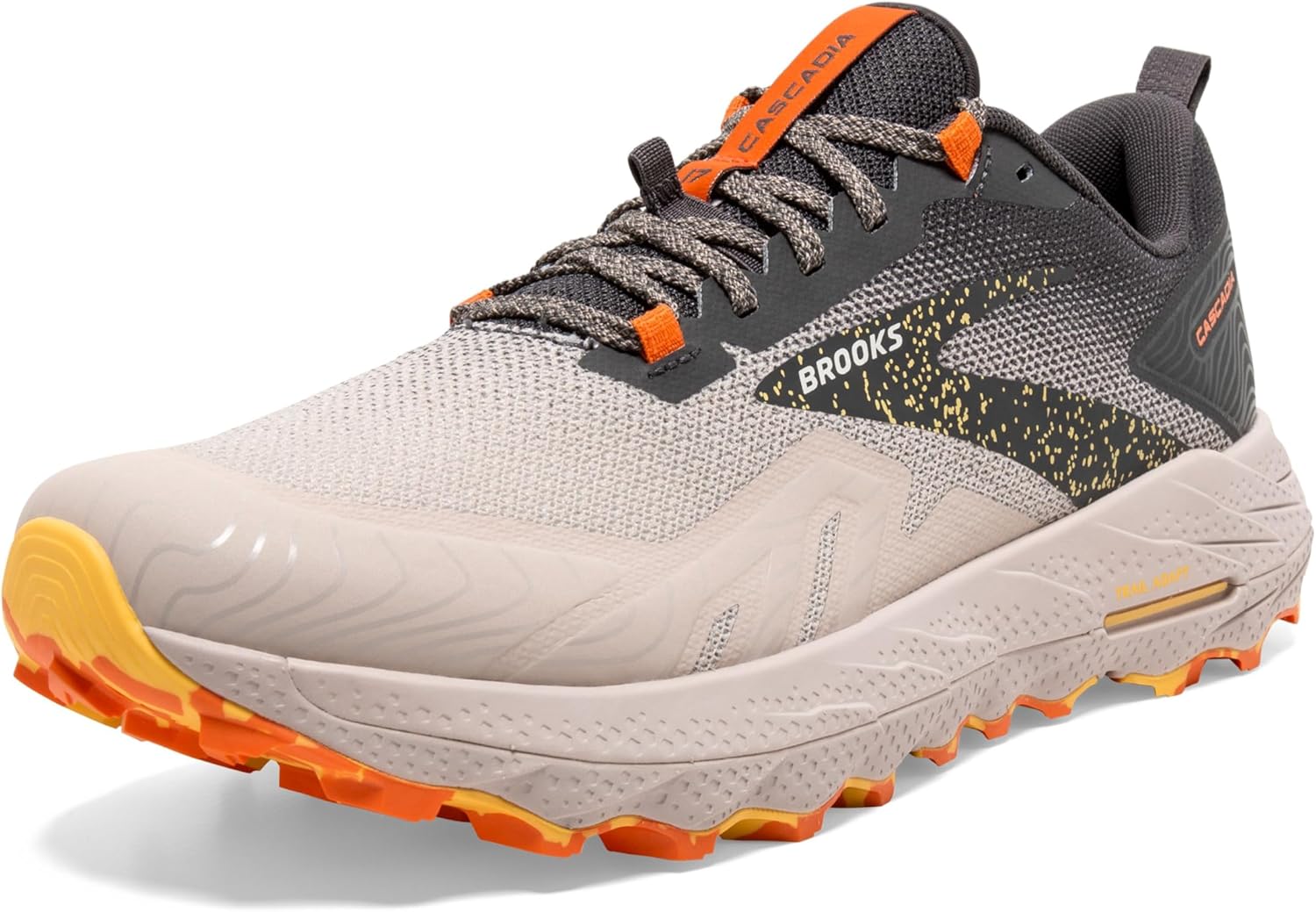
Brooks Cascadia 17 (Wide option)
| Support system | Trail Adapt System |
|---|---|
| Cushioning | DNA LOFT v2 |
| Width | Verify selected Wide option |
| Format | Low trail-running shoe |
Consider it if
- You want a cushioned low trail shoe
- The actual Wide pair and insole combination fit comfortably
Choose another option if
- You require a waterproof mid boot
- You expect a particular support feature to cure heel pain
Cascadia 17 uses Brooks’ Trail Adapt System and DNA LOFT v2 cushioning. The existing Amazon route identifies the men’s Cascadia 17; its heading does not establish a selected Wide pair. Confirm that option before ordering. These are product features, not evidence that this shoe treats plantar fasciitis or outperforms the other choices for heel pain. Check comfort with any insole your clinician has recommended, then follow your individual activity plan.
Pros
- Published trail-specific support system
- DNA LOFT v2 cushioning
Limitations
- No model-specific plantar-fasciitis benefit established
- Selected Wide availability needs confirmation
Complete the kit
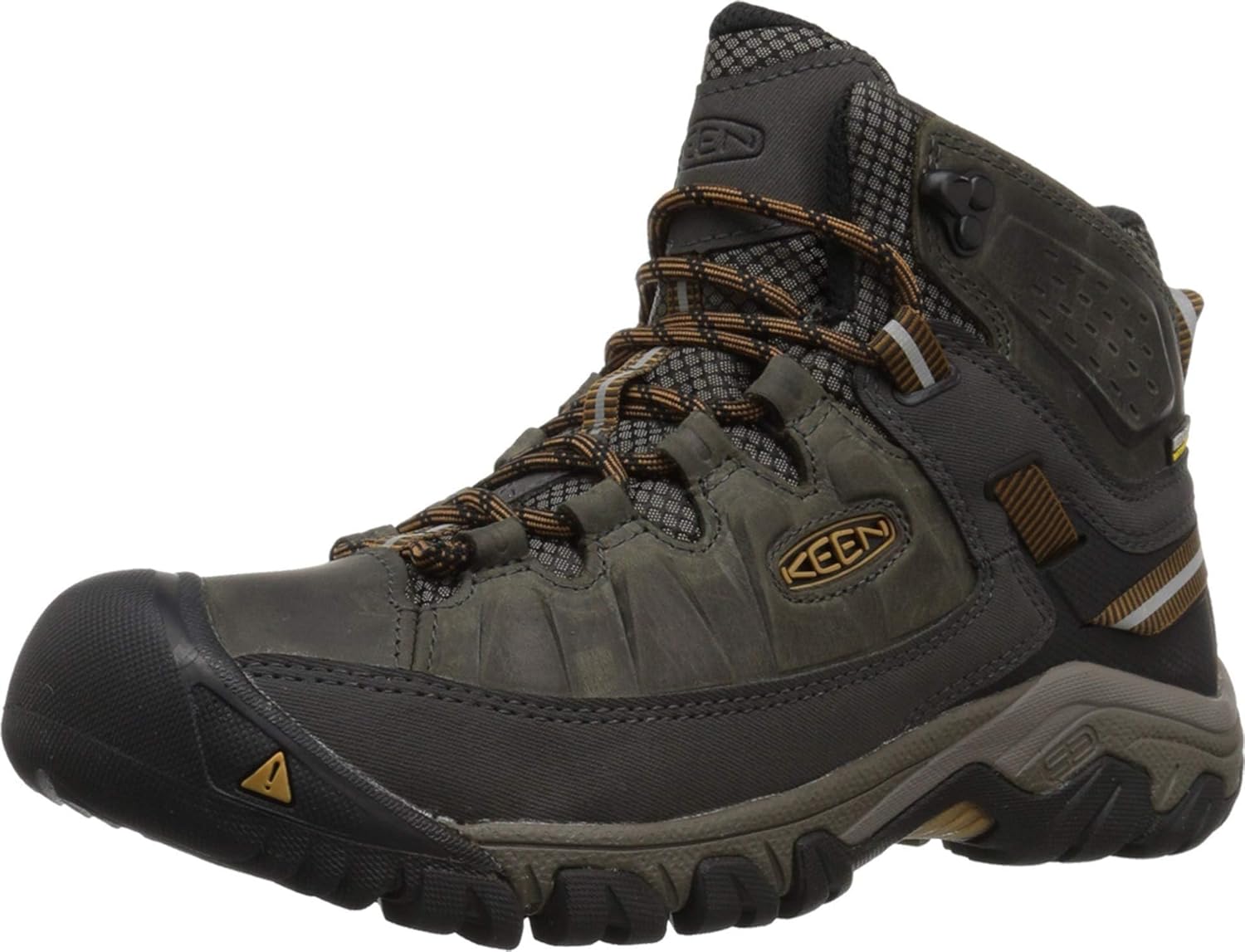
Keen Targhee III Mid Waterproof (Wide)
| Width | Select explicitly marked Wide |
|---|---|
| Membrane | KEEN.DRY waterproof |
| Format | Mid hiking boot |
| Fit check | Forefoot clearance and heel hold |
Consider it if
- You want a waterproof mid boot
- The selected Wide pair fits both feet without pressure
Choose another option if
- You need extra-wide sizing unavailable in the listing
- You prefer a low-cut non-waterproof trail shoe
The Targhee III Mid Waterproof has a separately marked Wide option. Confirm the selected size and width before ordering: the model name alone does not establish a Wide pair. Try it with your hiking socks and check that the heel stays secure without tightening the forefoot over a pressure point. Its waterproof mid-cut construction is a different choice from a mesh trail shoe; neither format guarantees comfort or prevents blisters.
Pros
- Manufacturer offers a separate Wide option
- Waterproof mid-cut construction
Limitations
- Sizing and width must be selected separately
- Waterproof construction may feel warmer than open mesh
Complete the kit
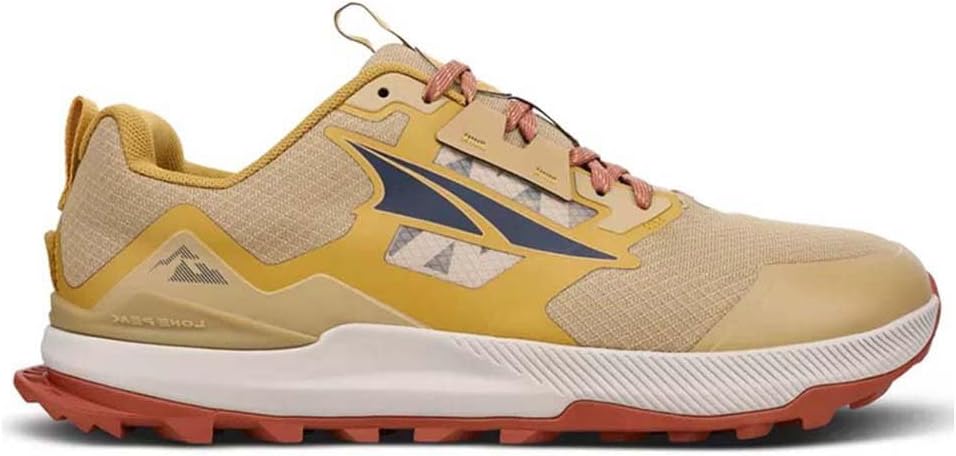
Altra Lone Peak 7
| Toe box | Original FootShape |
|---|---|
| Width | Check Standard versus Wide separately |
| Drop | Zero drop |
| Format | Non-waterproof low trail shoe |
Consider it if
- You prefer a non-waterproof low trail shoe
- Its toe-box shape fits without joint pressure
Choose another option if
- You need a waterproof mid boot
- You need a width the selected pair does not offer
The Lone Peak 7 uses Altra’s Original FootShape toe-box design, Altra EGO cushioning and a MaxTrac outsole. Toe-box shape is not a width measurement: a Standard pair is not automatically Wide or 4E. Check the actual selected width and space at the joint as well as heel hold. Zero drop is a geometry choice, not a treatment for bunions or heel pain; a major change from your usual footwear deserves a cautious trial.
The Amazon link is for the shoe only; no aftermarket insole is included or recommended as a universal treatment. Ask your clinician about an insert if needed and check the complete fit. Do not switch to zero drop to treat heel pain on the basis of this comparison.
Pros
- Distinct Original FootShape toe-box design
- Non-waterproof low-cut format
Limitations
- FootShape does not establish Wide sizing
- Zero drop may differ substantially from your usual shoes
Complete the kit
Full Comparison Table
| Product | Support Feature | Width | Buy |
|---|---|---|---|
| Brooks Cascadia 17 (Wide option) | Trail Adapt System | Separate Wide option; verify selected size/width | Amazon → |
| Keen Targhee III Mid Waterproof (Wide) | KEEN.DRY waterproof mid cut | Separate Wide option; verify selected size/width | Amazon → |
| Altra Lone Peak 7 | Original FootShape | FootShape is not a width selection; verify actual fit | Amazon → |
Common mistakes
- Assuming a shoe name proves Wide sizing: read the selected option.
- Buying excess length to solve a narrow forefoot or loose heel: try a different shape.
- Expecting painful pressure to disappear with break-in: reassess before a long walk.
- Treating a comfort score or product feature as medical evidence: these picks are not clinical treatments.
Frequently Asked Questions
Can I hike with plantar fasciitis?
Do I need custom orthotics for hiking?
Wide boots or cushioned trail shoes for heel pain?
Should I hike through plantar-fasciitis pain?
Related Guides


