
How to Have a Hot Shower When Camping
Every method that actually works — solar bags, propane heaters, battery pumps, and the navy shower — matched to your trip and weather.
On this page
- The essential gear for a hot camping sh…
- Every method for heating water camping…
- How to set up your camping shower corre…
- Water conservation — making your supply…
- Backpacking shower tips — when weight i…
- Winter camping shower tips
- How to dispose of your camping shower w…
- Staying fresh without a shower — altern…
- Recommended products in 2026
- Hot camping shower FAQ
- The bottom line
weekend car campers, van lifers, and backpackers who want a genuinely hot wash outdoors — matched to trip type, weather, and how much gear they can carry.
pair your shower water with a clean supply — see how to filter water while camping.
Most camping guides treat a hot shower like a luxury you either have or go without. The reality is that getting a hot shower when camping is easier than most people think — it just requires knowing which method fits your trip type, and packing the right gear before you leave.
This guide covers every method that actually works: solar bags, propane tankless heaters, immersion heaters, battery pumps, and what to do when you have no equipment at all. We have included honest comparisons, a setup checklist, water conservation data, and full Leave No Trace guidance. Whether you are a weekend car camper, a van lifer, or heading into the backcountry for a week, there is a hot water solution here for your situation.
- Weekend car camping: Solar shower bag or propane tankless heater
- Van life / extended trips: Propane heater (e.g. Camplux) or RinseKit PRO + HyperHeater
- Backpacking / hiking: Battery pump shower + stove-heated water, or sponge bath
- Winter camping: Propane tankless heater only — solar will not work reliably
- No gear / emergency: Navy shower with stove-heated water in a bucket
The essential gear for a hot camping shower
Before comparing methods, here is what every hot shower setup needs regardless of the heating method you choose. Missing any one of these is how you end up with a lukewarm trickle of water and no privacy.
A water heating method
This is the core decision. Your options range from free (campfire and pot) to under $60 (solar shower bag) to $80–$200 (propane tankless heater). The right choice depends on how long your trip is, how cold the weather is, and whether you are car camping or carrying gear on your back. The full comparison is below.
A portable camping shower or pump
Once the water is hot, you need a way to deliver it. Options include gravity-fed solar bags (built-in delivery), battery-powered pumps (pressurised spray from a bucket), and pump-style systems like the Ivation Portable Outdoor Shower. A good camping shower nozzle makes the difference between a trickle and something that feels like a real shower.
A camping shower tent or privacy shelter
One of the most overlooked items in any camping shower setup. A popup shower tent gives you a private, enclosed space to wash properly — and most double as a changing room, which is genuinely useful. Look for sturdy poles, a floor (or drainage holes), and a weight under 2kg. Natural privacy works too: a grove of trees, a van door, or a rocky outcrop are all valid options depending on your campsite. The key is planning your camping shower privacy ideas before you arrive, not scrambling to find cover when you are already wet.
The right toiletries
This matters more than most people expect. Regular soap and shampoo contain chemicals that persist in soil and damage waterways. Any camping shower without running water means your grey water goes onto the ground — so biodegradable camping soap is not optional, it is an ethical requirement. Brands like Dr. Bronner’s, Sea to Summit, and Campsuds are widely available and work well. Pair these with a quick-dry microfibre towel and a small shower caddy to keep everything organised.
Camping shower setup checklist
Pack this list before every trip. Takes 5 minutes and prevents the moment you arrive and realise you forgot the showerhead.
OutdoorsPapa.com
Every method for heating water camping — compared honestly
Here is the full breakdown of every realistic way to get how to get hot water camping without electricity — and one option that does use electricity if you have a power source.
Camping shower methods compared — which is right for you?
Choose based on your trip type, budget, and whether you have access to electricity or propane.
| Method | Best for | Water temp | Cost |
|---|---|---|---|
| Solar shower bag | Weekend car campers, sunny weather | Warm (sun-dependent) | $10–$60 |
| Propane tankless heater | Car camping, van life, longer trips | Hot on demand | $80–$200 |
| Immersion heater + bucket | Budget campers, versatile use | Hot (slow — 20–40 min) | $15–$40 |
| Battery-powered pump shower | Backpackers, quick rinses | Ambient (add hot water manually) | $25–$80 |
| Camping stove + bucket | Backcountry, no-gear fallback | Very hot (you control) | Gear you have |
| Heated camp sink | Day hikes, face/hand wash | Warm | $30–$70 |
OutdoorsPapa.com
Method 1: Solar shower bag
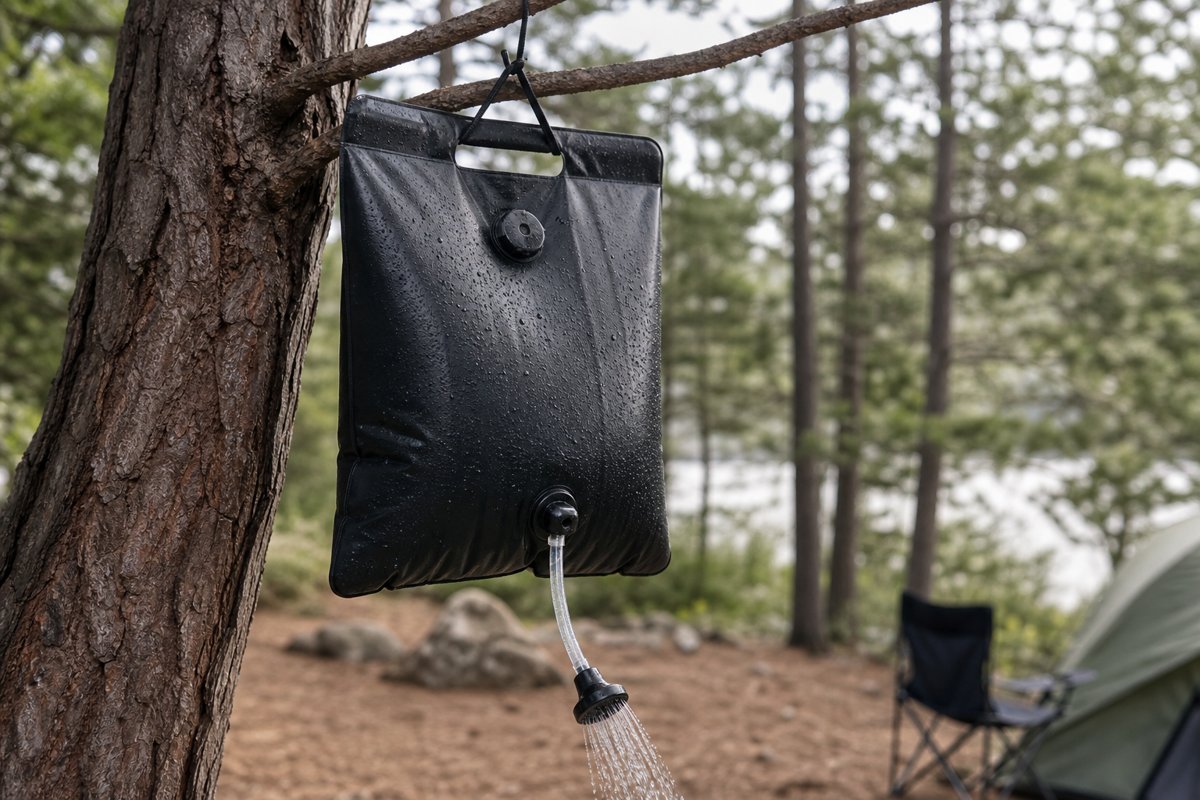
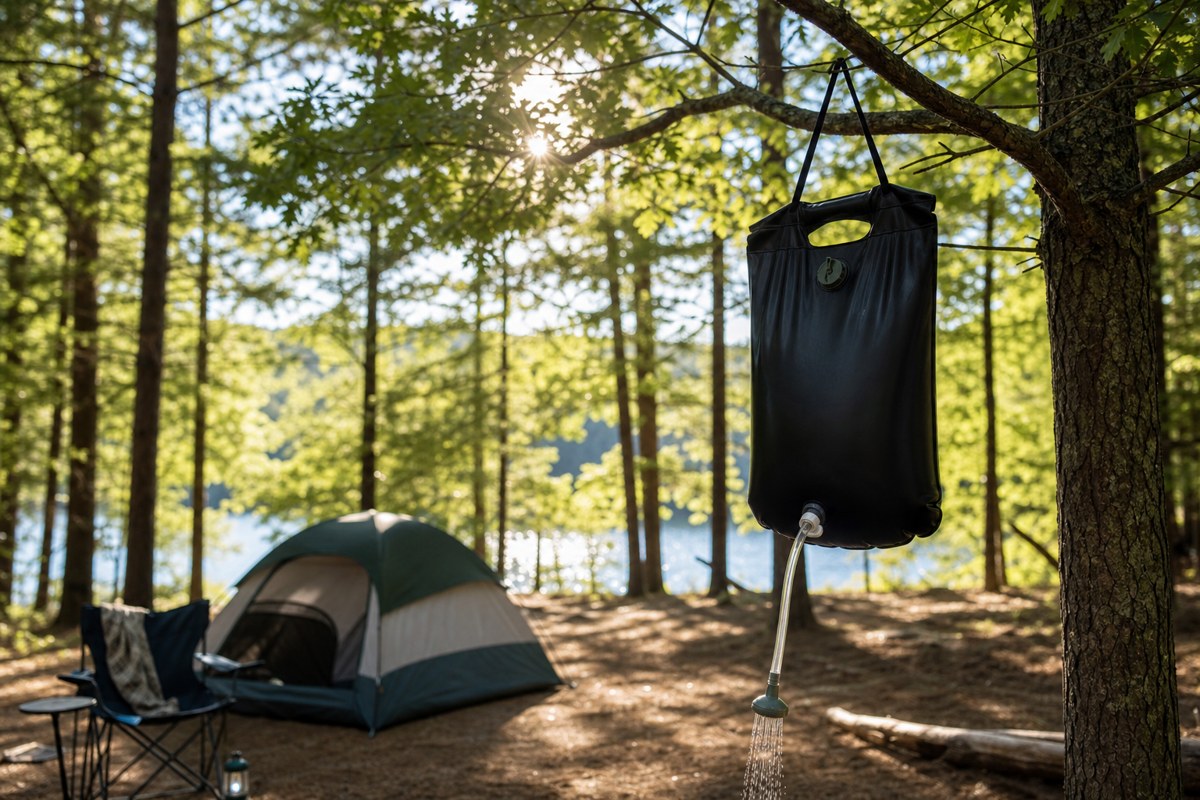
The solar shower bag is the most accessible camping shower idea for beginners. Fill a black bag (typically 5–10 litres) with water, leave it in direct sunlight for 2–5 hours, hang it from a tree or hook, and gravity delivers a warm flow through the attached nozzle. They weigh almost nothing, pack flat, and cost between $10 and $60.
The honest limitations: solar shower bags are weather-dependent. On an overcast day, you will get lukewarm water at best. In winter or at altitude, they barely warm at all. They also have low pressure — you are relying on gravity — which means rinsing shampoo out of thick hair takes patience.
Solar shower bag how long to heat: In full summer sun, a 5-litre bag reaches comfortable shower temperature (around 38–42°C) in 2–3 hours. A 10-litre bag takes 3–5 hours. Position the absorbent (dark) side directly toward the sun between 10am and 3pm for best results. Placing it on a sun-warmed rock rather than the ground speeds up heating significantly.
Best for: Weekend car camping in warm weather, or as a backup method when your primary setup fails.
Method 2: Propane tankless water heater
For car camping, van life, or any setup where you have vehicle access, a propane tankless heater is the upgrade that feels closest to a real shower. Units like the Camplux Portable Outdoor Water Heater or the Eccotemp L5 connect to a standard propane tank, draw water from a bucket or jerry can, and deliver hot water on demand — no waiting, no weather dependence.
How they work: when water flows through the unit, a propane burner ignites automatically and heats the water as it passes through. Water temperature is adjustable. Flow rates are typically 6–12 litres per minute, which is strong enough to feel like a proper shower. Most units require 2 D-cell batteries to ignite the burner.
The propane vs solar camping shower decision comes down to trip length and conditions. Propane gives you reliable hot water any time; solar gives you free hot water when the sun cooperates. Many experienced campers bring both: solar for fair-weather use, propane as the reliable backup.
Safety note: Propane heaters use an open flame and must be used in ventilated outdoor areas. Never use inside a tent, enclosed shelter, or vehicle.
Best for: Car camping, extended trips, cold weather, van life.
Method 3: Immersion heater
An immersion heater camping shower setup is one of the most underrated budget options. A coil-style immersion heater (sometimes called a bucket heater or travel immersion heater) drops directly into a bucket of water and heats it over 20–40 minutes. Most run on 110V/120V AC power, which means you need a hookup, generator, or power inverter — but 12V DC versions exist for car battery use.
The main advantage is versatility: the same bucket of hot water works for a shower, washing dishes, or a foot soak. The main disadvantage is time — you cannot have hot water on demand the way a propane heater delivers it.
Best for: Budget camping with a power source, or campers who want one tool that handles both showering and cooking water needs.
Method 4: Battery-powered pump shower
A battery-powered pump like the Ivation Portable Outdoor Shower draws water from any container and pressurises it through a showerhead. You heat the water separately (via stove, campfire, or immersion heater), pour it into a bucket, and the pump delivers it. This is the best portable camping shower with hot water option for backpackers who want real pressure without a propane setup.
The 2026 RinseKit PRO with HyperHeater 2.0 takes this concept further: a self-contained 3.5-gallon tank with a built-in electric pump plus a 12V heater that brings water to around 110°F in under 30 seconds from a car outlet or portable battery. It is heavier than a solar bag but delivers the closest thing to a home shower available in the camping market right now.
Best for: Backpackers, car campers who want pressurised flow, van life setups with a 12V power source.
Method 5: Camping stove and bucket (no-gear fallback)
The original camping shower without running water method. Boil water on your camp stove, mix with cold water to reach a comfortable temperature, and use a battery pump or small cup to rinse. Not elegant, but completely effective for a quick clean when the main shower setup fails or you are deep in the backcountry with minimal kit.
The navy shower technique (detailed in the water conservation section below) makes this approach genuinely workable with just 1–2 gallons of water.
How to set up your camping shower correctly
Choosing the right spot
The Leave No Trace principle for camping showers is clear: shower at least 200 feet (60 metres) from any lake, river, stream, or spring. This protects aquatic ecosystems from even biodegradable soaps and personal care products. In practice, 200 feet is roughly 70 adult paces — more than most people would naturally walk from their campsite.
Choose flat, well-drained ground where water can disperse into soil rather than pool. Avoid showering directly onto plants or root systems. If your campsite is in a high-traffic area, use established washing areas if available.
Setting up privacy
For car camping shower setups, a popup shower tent is the easiest solution. Most models take 30–60 seconds to set up, include a floor drain or can be staked to the ground, and fold flat for storage. Weight typically runs 1.5–2.5kg — negligible in a car.
Camping shower privacy ideas for when you do not have a tent: position yourself so the sun or a natural feature (rock face, dense bush, vehicle) is between you and the campsite. Early morning and late evening showers when fewer people are around are practical alternatives. Communicating your setup to camping companions beforehand also removes any awkwardness.
Hanging and rigging your shower
Solar bags and gravity-fed setups need height — at least 1.8 metres off the ground for comfortable rinsing. A tree branch, vehicle roof rack, purpose-made shower hook, or trekking pole tripod all work. For propane setups, the heater can sit on the ground; only the showerhead needs to be elevated.
Water conservation — making your supply last
How much water for a camping shower is always the limiting question for off-grid setups. A standard home shower uses 17–20 gallons of water. Camping fundamentally cannot match that — but with the right technique, you will not miss it.
How much water does a camping shower actually use?
Water is your most precious resource off-grid. Here is how different shower setups compare — and how to stretch every drop.
| Shower method | Gallons used | Water-saving tip |
|---|---|---|
| Standard home shower (baseline) | 17–20 gal | Not applicable — for reference only |
| Propane portable shower (5 min) | 8–12 gal | Use low-flow nozzle, turn off while lathering |
| Solar shower bag (5 min) | 2–5 gal | Gravity pressure is naturally low — efficient by design |
| Pump shower with hot water bucket | 2–4 gal | Best control — turn pump off while lathering |
| Navy shower technique (any method) | 1–2 gal | Wet → off → lather → rinse. Saves up to 80% vs free-running |
| Sponge bath (no shower) | 0.5–1 gal | Best option for backpacking or water-scarce environments |
OutdoorsPapa.com
The navy shower technique explained
The navy shower (also called a military shower) is the most water-efficient approach for any camping shower water conservation situation. The sequence: turn water on to get fully wet (15–20 seconds). Turn water off. Apply soap and shampoo completely. Turn water back on to rinse everything off (30–60 seconds). Total water used: under 2 gallons. Most campers who try this for the first time are surprised how clean they feel — the technique is about soap contact time, not water volume.
Backpacking shower tips — when weight is everything
For backpacking shower tips that actually work without adding significant pack weight:
- Deodorant wipes and no-rinse body wash are the lightest option. Products like Sea to Summit Wilderness Wipes and Campsuds No-Rinse Shampoo weigh almost nothing and are effective for multi-day trips.
- A 5-litre solar bag weighs about 180g empty and lies flat in a pack. Fill it at water sources, drape it over your pack during the hiking day to heat, and you have a warm rinse at camp.
- Mini battery pumps like the Ivation weigh around 300g and convert any pot of hot stove water into a pressurised shower. Useful for week-long trips where morale matters.
- Sponge bath camping alternative: A microfibre cloth, a small amount of biodegradable soap, and a cup of warm water handles hygiene for most single overnight trips. Focus on high-sweat areas and you will stay comfortable without any shower at all.
Winter camping shower tips
Cold-weather showering requires a different approach. Solar bags become impractical below about 15°C ambient temperature. The reliable options for winter camping shower tips are:
- Propane tankless heater: Performs regardless of ambient temperature. Prioritise units with a high BTU rating (40,000+ BTU) to ensure consistent hot water when incoming water is cold.
- Insulated bucket + immersion heater: A neoprene-wrapped bucket retains heat much longer. Heat a full 5 litres, wrap the bucket, and use the navy shower technique.
- Time it wisely: Shower in the middle of the day when ambient temperature peaks, never in the evening in sub-zero conditions. Wet hair at night in freezing weather is a genuine cold-injury risk.
- Enclosed shower tent: In winter, the shower tent is essential — not just for privacy, but to block wind chill and retain body heat during the wash.
How to dispose of your camping shower water correctly
How to drain camping shower water is one of the most overlooked aspects of camping hygiene. Grey water (any water that has been used for washing) must be handled carefully under Leave No Trace principles:
- Never drain directly into streams, lakes, or rivers — even biodegradable soap takes time to break down and can harm aquatic life.
- Find a spot at least 200 feet from any water source, trail, or campsite.
- Scatter the water broadly over a wide area of dry soil rather than dumping in one spot. This speeds up evaporation and reduces impact.
- Strain out any food particles or hair before dispersing (a small kitchen strainer works well).
- In high-traffic or fragile ecosystems, consider carrying grey water out if designated disposal points are available.
Staying fresh without a shower — alternatives that work
Sometimes a full shower is not practical — the campsite is too exposed, water is scarce, or you are too tired after a 20km hiking day. How to stay clean camping without shower:
- Biodegradable camping wipes: Sea to Summit Wilderness Wipes, Surviveware, and similar brands are large, thick, and genuinely clean effectively. Two wipes handle a full body wipe-down.
- Dry shampoo: Lightweight, no water needed. Works well for 1–2 day trips before a proper wash is available.
- Foot and hand hygiene first: If resources are very limited, prioritise clean hands (critical for food prep) and feet (blister prevention). Everything else is comfort, not safety.
- Swimming: If you are near clean water — a lake, river, or ocean — a swim with biodegradable soap applied and rinsed in a separate area away from the water source counts as a wash. Leave 200 feet between where you soap up and where you rinse in the natural water.
Recommended products in 2026
The camping shower market has improved significantly. These are the standout options across price ranges in 2026:
- Budget: Advanced Elements Summer Shower (5 gallon solar bag, $30) — reliable, well-built, temperature indicator included.
- Mid-range propane: Camplux Portable Outdoor Water Heater ($85–$120) — consistent 6 LPM flow, easy ignition, compact design.
- Premium: RinseKit PRO + HyperHeater 2.0 (~$300 combined) — electric pump, 3.5-gallon tank, heats to 110°F in under 30 seconds from 12V source. The best all-in-one system currently available.
- Backpacker: Ivation Portable Outdoor Shower ($30) — lightweight battery pump that works with any water container. Pairs perfectly with a 5-litre solar bag for off-grid hot showers.
- Privacy shelter: Sportneer Portable Shower Tent ($35) — under 2kg, 60-second setup, drainage holes in floor, handles wind well.
Hot camping shower FAQ
The bottom line
Getting a hot shower when camping is genuinely achievable on any budget and in any conditions — the key is matching the method to the trip. A solar bag is all you need for a sunny weekend car camp. A propane heater is worth the investment for anything longer or colder. And the navy shower technique means even a single pot of stove-heated water gets you surprisingly clean when you have nothing else.
Pack your setup checklist before every trip, commit to Leave No Trace grey water disposal, and use biodegradable soap without exception. The rest is just technique — and now you have all of it.
Related Guides


