
Best Fishing Equipment for Beginners in 2026 (Researched & Compared)
Quick answer: a spincast rod-and-reel combo, a basic tackle box, and a pair of fishing pliers cover most first trips to the lake — add line, hooks, and weights and you are ready to fish from shore or dock.
Beginners do not need a dozen rods. We compared easy-casting combos, organized tackle storage, and essential tools for hook removal so you can skip the tackle-shop overwhelm and get on the water faster. The full starter kit — line, hooks, weights, bobbers, and lures — is explained below.
Start here — pick your first purchase
Scoring rubric (weights)
Overall score = weighted average of the four bars. Amazon star averages are not the score.
How we ranked these
We scored each pick on how fast a first-time angler can use it without instruction, whether it covers more than one species and water type, whether it survives a season of bank fishing and truck-bed transport, and whether the price makes sense for gear you may upgrade later. Beginner gear that gets fished beats premium gear that gets babied.
Which gear for your first trips?
Kids or first-timers, ages 6+
Push-button casting with zero tangles — the fastest route from parking lot to first bluegill.
Panfish, bass, trout
One combo, a tray of tackle, pliers — the classic shore kit that fits in one hand.
Not sure you’ll like it?
Many libraries and state agencies loan tackle free — start there, buy the combo after the third trip.
Upgrading from the starter
Move to a spinning combo and specialized tackle once casting is second nature.

The Beginner Kit, Piece by Piece
A license comes first: in most U.S. states anglers 12 and older need one for public water, and license fees fund the habitat and stocking work that keeps fishing good. Then build the kit in this order — each item earns its place on the first trip.
Rod and reel
Spincast (push-button) reels are the learn-to-fish standard — no bird’s nests, no bail to flip mid-cast. Spinning reels cast farther and scale as skills grow but take practice. Fiberglass rods are forgiving and cheap; graphite is lighter and more sensitive but pricier. Medium power handles most freshwater fish. Rods run 2 to 14 feet — short for panfish, long for distance casting.
Line
Start with monofilament, 6–12 lb test: 6–8 lb for trout and panfish, 8–12 lb for walleye and bass. Mono is cheap, stretchy (forgiving when a fish surges), and easy to knot. Braid is stronger and more sensitive but harder to knot; fluorocarbon is near-invisible underwater and usually becomes a leader later, not a first spool. Match line color to the water — clear or light green — and carry spare line: tangles are part of learning.
Hooks, weights, swivels, bobbers
- Hooks: J-hooks in sizes 1/0 to 3/0 cover bass, trout, and panfish. Too big and small fish can’t bite; too small and big fish swallow it.
- Weights: split shot and a few sliding (egg) sinkers cover most shore fishing; tungsten costs more but feels bottom better than lead.
- Swivels: small barrel swivels stop line twist when fishing spinners — cheap insurance for mono.
- Bobbers: fixed bobbers stay put for shallow water; slip bobbers slide for depth. Fish 6–10 lb mono under a bobber.
Lures
Live bait catches first fish, but a small lure box accelerates learning: in-line spinners (1/8–1/4 oz) for panfish and trout, a couple of jerkbaits or crankbaits that imitate baitfish, and soft plastics (3–4 in paddle tails, 2.5–3 in grubs) rigged Texas or wacky style. Bright spinner blades catch bigger fish on dark days; smaller lures work best in cold, shallow water.
Tools and storage
Needle-nose pliers remove hooks without harming fish, fishing shears trim line cleanly, and a two-tray tackle box keeps hooks, weights, and lures sorted. Skip the fish finder and cooler until the third or fourth trip — sonar is a tool for water you already know how to fish.
Shore notes that matter
- Check your state’s license rules before the trip — most states sell short-term licenses online, and kids under 12 usually fish free.
- Barbless hooks or crushed barbs make catch-and-release easier while you’re learning hook removal.
- Wet your hands before handling fish — dry hands damage the slime coat that protects them.
- Library and state-agency tackle-loaner programs exist in many states: free rods for first trips.
The three store-bought picks below complete the kit.
Buying order — decision rules
- Buy the Zebco 33 first — the combo is the kit; everything else fits inside it.
- Add the Plano 2-tray second — loose hooks and weights in pockets end trips early.
- Add the Booms pliers third — the first deep-hooked fish makes the case for them.
- Skip electronics, coolers, and specialty rods until you’ve fished a full season.
What to Look For — Buyer’s Guide
Match each piece to the water you’ll actually fish — one versatile setup beats three specialized ones at this stage.
Key Factors at a Glance
Spincast to learn, spinning to grow — baitcasters come after a full season.
6–8 lb mono for panfish and trout; 8–12 lb for bass and walleye.
1/0–3/0 J-hooks cover most freshwater beginners’ fish.
Two-tray boxes organize a starter kit; bags are for anglers who walk in.
The 3 Picks That Complete the Kit
(not Amazon stars)
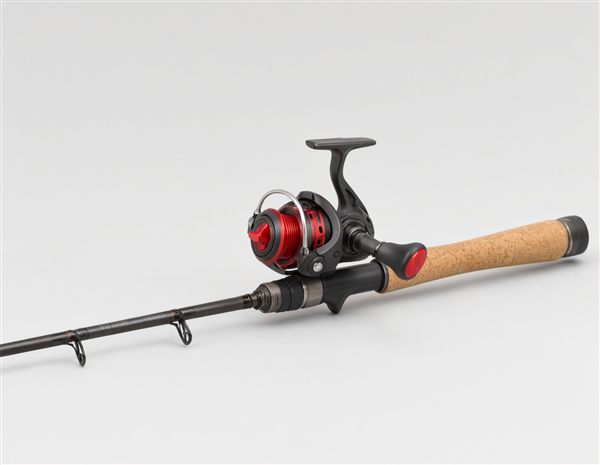
Zebco 33 Spincast Combo
| Reel | Spincast (push-button) |
|---|---|
| Rod | 5’6″ medium glass composite |
| Pre-spooled | 10 lb monofilament |
| Best for | Panfish, trout, bass (shore/dock) |
Buy this if
- This is your (or a kid’s) first rod ever
- Tangle-free casting matters more than distance
- You want to fish the day it arrives
Skip if
- You already cast a spinning reel confidently
- You fish heavy saltwater from a boat
The Zebco 33 is the classic learn-to-fish combo — push the button, cast, release. No bird’s nests for new anglers. First-timers typically cast independently within a single session on a push-button reel — the learning curve is minutes, not days. The pre-spooled 10 lb mono means it fishes out of the box, and the glass composite rod shrugs off car doors and dock edges. The trade is distance and growth: spinning gear casts farther and scales better, so expect to graduate after a season — the 33 stays in the truck as the loaner.
Pros
- Easiest casting mechanism made
- Arrives ready to fish
- Affordable replacement parts
Cons
- Limited casting distance vs spinning
- Not for heavy saltwater
Complete the kit
(not Amazon stars)
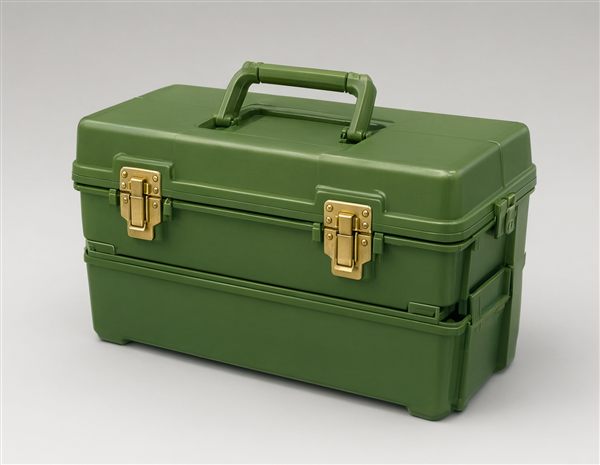
Plano 2-Tray Tackle Box
| Trays | 2 lift-out with dividers |
|---|---|
| Build | Impact-resistant plastic, brass latches |
| Depth | Deep bottom for bulk boxes |
| Best for | Hooks, weights, lures, tools |
Buy this if
- Your tackle currently lives in pockets
- Two trays match a starter kit exactly
- You fish from a car or boat, not a hike-in
Skip if
- You walk in to spots — get a soft tackle bag
- You own more than a starter kit’s worth of lures
The two-tray Plano is the box most anglers started with, and it’s still the right one: lift-out trays with movable dividers sort hooks by size and weights by type, and the deep bottom holds the pliers, spool, and bulk bait. The latches actually latch — a detail that separates boxes that survive a truck bed from ones that spill in the first season. For a beginner kit it is exactly enough organization; the upgrade to a bag or a multi-tray box comes when the lure count outgrows two trays, which is a good problem.
Pros
- Movable dividers fit any tackle mix
- Brass latches that stay shut
- Price of a few lures
Cons
- Hard case — not for hike-in fishing
- Two trays fill fast once you buy lures
Complete the kit
(not Amazon stars)
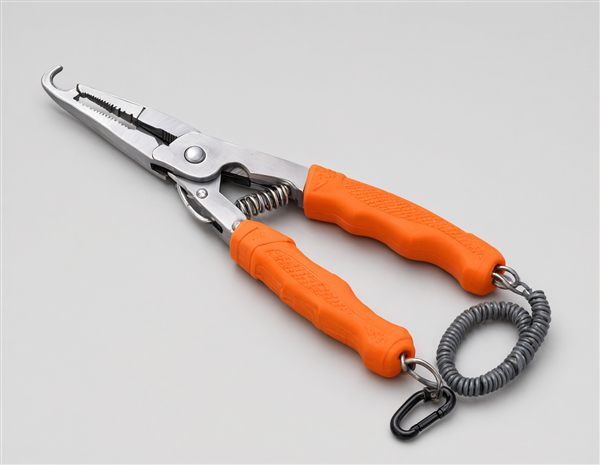
Booms Fishing H1 Fishing Pliers
| Tip | Split-ring opener |
|---|---|
| Cutter | Built-in side line cutter |
| Material | Stainless steel, anti-corrosion coating |
| Extras | Lanyard and sheath included |
Buy this if
- You’ll remove hooks from caught fish
- You change lures and split rings often
- One tool should cut line too
Skip if
- You only barbless-hook catch-and-release
- You already carry a multi-tool
The H1 covers the three plier jobs a beginner actually has: pulling hooks, opening split rings when changing lures, and cutting line — the side cutter beats teeth and nail clippers. The stainless build with corrosion coating survives wet hands and a season in the box, and the included lanyard keeps them from ending the trip at the bottom of the lake. The split-ring tip is the feature you didn’t know you needed until the first lure swap. For saltwater every-weekend anglers, aluminum long-nose pliers are the upgrade; for a starter kit these are right-sized.
Pros
- Split-ring tip for lure changes
- Line cutter built in
- Lanyard and sheath included
Cons
- Stainless, not aluminum — heavier
- Coating needs a rinse after saltwater
Complete the kit
Full Comparison Table
| Product | Type | Best For | Buy |
|---|---|---|---|
| Zebco 33 Spincast Combo | Rod + reel | First-time anglers, kids | Amazon → (paid link) |
| Plano 2-Tray Tackle Box | Storage | Hooks, weights, lures | Amazon → (paid link) |
| Booms Fishing H1 Pliers | Tools | Hook removal, rigging | Amazon → (paid link) |
Common beginner mistakes
- Buying a rod before a license — most states require one for public water from age 12; buy it online the same day as the combo.
- Starting with baitcast gear — backlash tangles end trips; spincast or spinning first, baitcaster after a season.
- One hook size for everything — a 1/0–3/0 assortment matches the fish you’ll actually catch from shore.
- Skip the swivels with spinners — mono twists into a coil after an hour; a 10-cent barrel swivel prevents it.
- Tackle shop overwhelm — buy the three picks here, fish a month, then add lures one at a time as you learn water.
Frequently Asked Questions
What fishing gear do I need as a beginner?
Spincast vs spinning rod for beginners?
Do I need a fishing license?
What fishing line should a beginner use?
Why does hook size matter?
Fixed or slip bobber for beginners?
Where can I find more fishing guides?
Related Guides


