
Best Surfing Rash Guards in 2026 (Researched & Compared)
Quick answer: a correctly fitting rash guard can add covered-skin UV protection and reduce friction, but it does not guarantee prevention of rash or sunburn. Check the exact garment’s coverage and documented UPF, and use additional sun protection and suitable thermal gear for conditions.
Below are the 3 best surfing rash guards in 2026 — ranked for UPF coverage, stretch fit, and board-rash prevention using published specs and owner-review patterns.
Long-sleeve UPF 50 beats sunscreen alone on dawn patrol sessions.
Start here — pick your surf job
Comparison criteria
Qualitative comparison; numeric ratings omitted because supporting evaluation records were not established.
How we ranked these
We compared published UPF ratings, fabric weight (4–6 ozpolyester/spandex fabric specification), seam construction (flatlock vs welded), and consistent owner-review patterns for paddle stretch and board-rash chafe. Rankings reflect buyer jobs (daily driver vs travel spare vs performance fit) — not claimed session-by-session field trials.
Which rash guard for your session?
Regular dawn patrol
Confirm the actual UPF label, coverage, fit and seam placement. Follow the garment’s own care instructions.
Warm-water board-bag spare
Pack a quick-dry long sleeve for UV on reef trips. Thinner fabric is fine when water stays above ~75°F and you want a cheap backup.
Aggressive turns / long reefs
Confirm the actual shirt’s fabric and seam construction. Flashbomb wetsuit features and a measured chafing reduction are not established for this older rash guard.
Local + occasional trips
Buy Basic Skins as the default and add a cheap Quiksilver spare for travel — cheaper than two premium tops.
O’Neill Basic Skins vs Rip Curl Flash Bomb
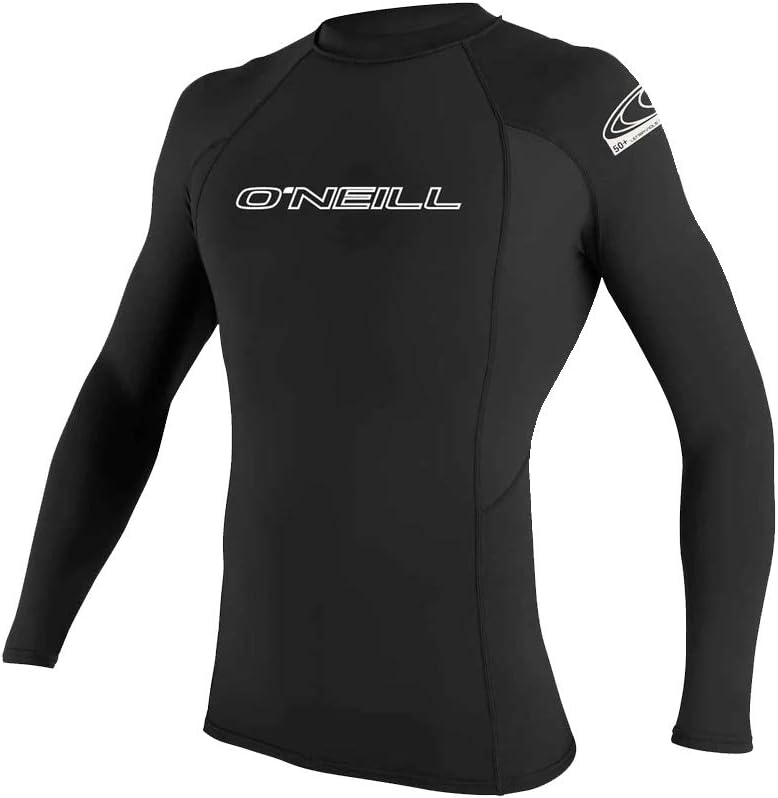
O’Neill Basic Skins UPF 50
- Stronger all-around value
- 6 oz midweight daily-driver fabric
- Flatlock seams under boardshorts
- Snug but not full compression
- Best default for most surfers
Rip Curl Flash Bomb
- Older shirt: fabric/seams unverified
- Shirt seam construction unverified for long reef chafe
- Same UPF 50 class coverage
- Check actual material and delivered offer
- Best if performance fit matters
Care & fit notes (category benchmarks)
- UPF fabric still needs sunscreen on face, hands, and any exposed legs — the top only covers what it covers.
- Use the exact garment size chart and check unrestricted paddling and comfortable coverage. Do not automatically size up between sizes; both loose folds and excessive compression can cause problems.
- Rinse salt after every session and hang dry — fabric softener and dryer heat kill lycra stretch faster than surf wax.
Product photos are on each card below — self-hosted on OutdoorsPapa (no duplicate URLs in this strip).
Decision rules
- Choose O’Neill Basic Skins if you want one midweight UPF 50 rashie for regular local sessions.
- Choose Quiksilver All Time if warm-water travel and price matter more than 6 oz durability.
- Choose Rip Curl Flash Bomb if its actual garment label, fit and intended use meet your needs; wetsuit features are not established.
- Skip a wetsuit unless water is cool enough that lycra alone leaves you shivering between sets.
Why a Surf Rash Guard Matters
Wax, deck grip, and repeated paddling rub skin raw — a rash guard is cheaper insurance than weeks of healing. UPF 50+ fabric also blocks UV when sunscreen rinses off between sets.
Choose actual sleeve coverage, fit and construction for your use. A rash guard does not establish adequate thermal protection at a universal water-temperature threshold.
What to Look For — Buyer’s Guide
Match each category to your trip length and climate — one proven pick per slot beats buying overlapping gear twice.
Key Factors at a Glance
UPF 50+ blocks 98% of UV — critical for dawn patrol and cloudy days when sunscreen washes off in the lineup.
Long sleeves protect arms and torso from board rash; short sleeves trade UV coverage for cooler feel above 75°F water.
Check where the actual seams contact skin and clothing during movement; no universal seam style guarantees freedom from chafing.
4–6 ozpolyester/spandex fabric specification dries fast and packs small; heavier rashies feel more like a thin wetsuit top in wind.
The 3 Best Surfing Rash Guards in 2026
O’Neill Basic Skins UPF 50 Rash Guard
| UPF | Maker family 50+; verify supplied label |
|---|---|
| Fabric | Maker 3342 family:6 ozpolyester/spandex |
| Seams | Maker flatlock; verify version |
| Best for | Daily surf |
Buy this if
- The actual selected version and documented requirements suit your planned use.
Skip if
- You need a size, function or performance assurance not established for this selection.
Pros
- UPF: Maker family 50+; verify supplied label
- Fabric: Maker 3342 family:6 ozpolyester/spandex
Cons
- Verify the actual label and fit; fabric coverage does not protect uncovered skin or guarantee no chafing.
- Check the actual supplied label, contents and instructions.
Complete the kit
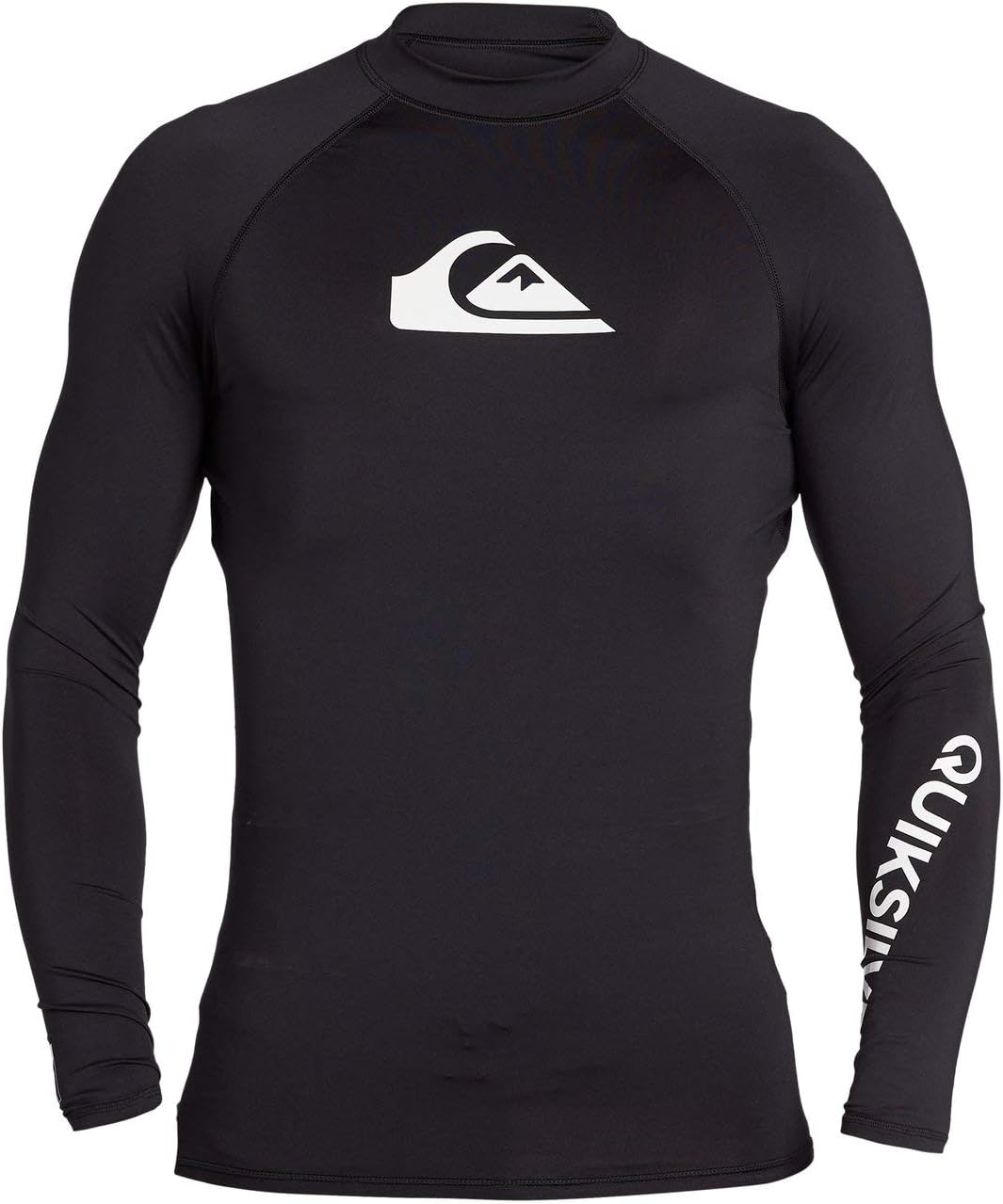
Quiksilver All Time Rash Guard
| UPF | 50 |
|---|---|
| Fabric | AllTime stretch polyester family; verify composition |
| Fit | SelectedMedium/Black; snug family fit |
| Best for | Warm-water value |
Buy this if
- The actual selected version and documented requirements suit your planned use.
Skip if
- You need a size, function or performance assurance not established for this selection.
Pros
- UPF: 50
- Fabric: AllTime stretch polyester family; verify composition
Cons
- No field comparison establishes fastest drying, unlimited chlorine resistance or that it is the lowest-priced option.
- Check the actual supplied label, contents and instructions.
Complete the kit
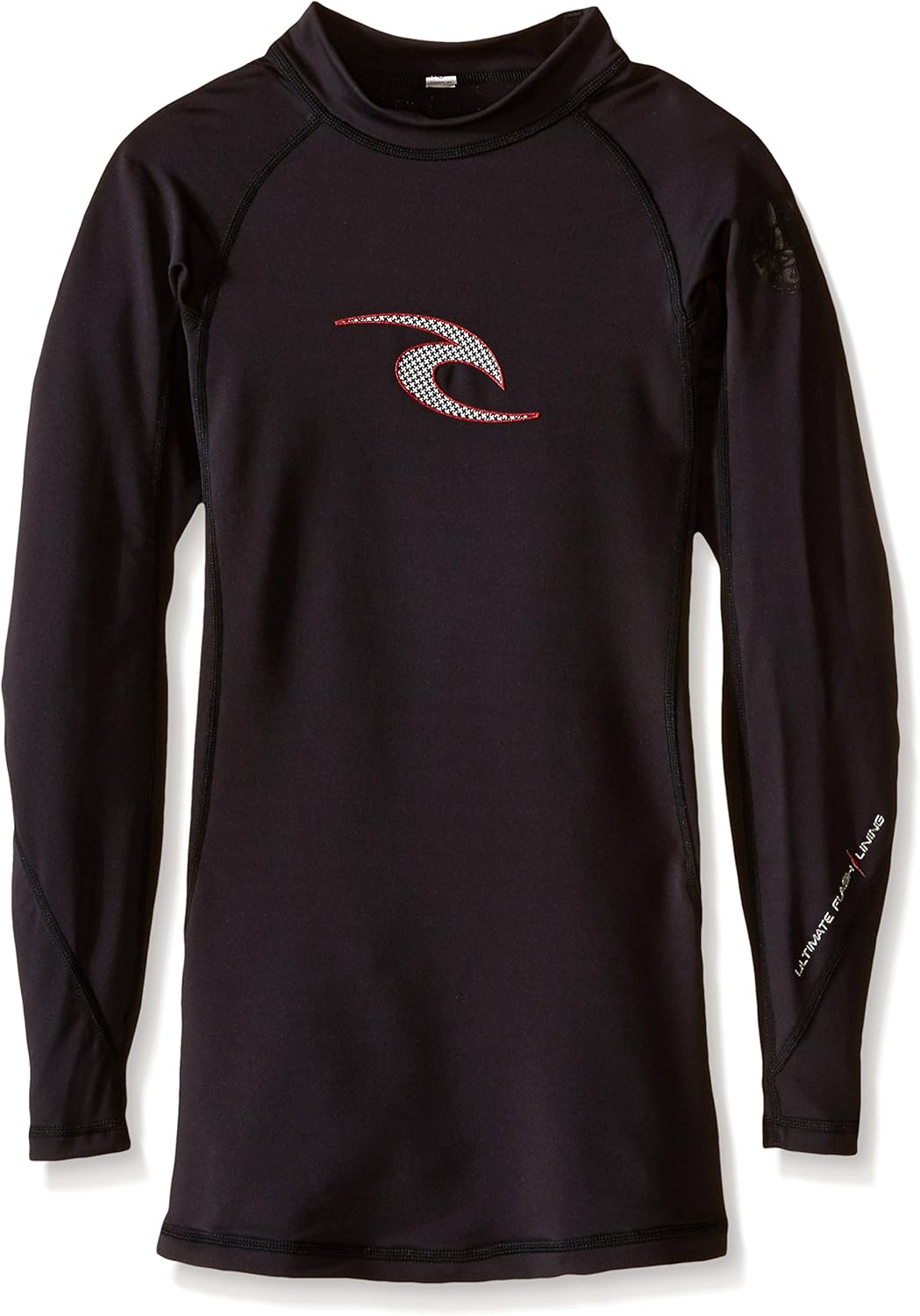
Rip Curl Flash Bomb Rash Guard
| UPF | Exact shirt rating needs confirmation |
|---|---|
| Stretch | Do not transfer E4 wetsuit-neoprene specs |
| Seams | Exact shirt construction unverified |
| Best for | Confirm actual garment; not thermal wetsuit protection |
Buy this if
- The actual selected version and documented requirements suit your planned use.
Skip if
- You need a size, function or performance assurance not established for this selection.
Pros
- UPF: Exact shirt rating needs confirmation
- Stretch: Do not transfer E4 wetsuit-neoprene specs
Cons
- Do not treat the shirt as thermal wetsuit protection or promise a measured reduction in chafing.
- Check the actual supplied label, contents and instructions.
Complete the kit
Manufacturer cross-check, 21 October 2026: Basic Skins 3342 family · AllTime family; exact generation may differ
Full Comparison Table
| Product | Type | Best For | Buy |
|---|---|---|---|
| O’Neill Basic Skins UPF 50 Rash Guard | Long sleeve; maker 3342 familyUPF50+ | Check actual label and fit | Amazon → |
| Quiksilver All Time Rash Guard | Long sleeve; statedUPF50 | Confirm actual version and care | Amazon → |
| Rip Curl Flash Bomb Rash Guard | Older long-sleeve shirt; label unresolved | Do not transfer wetsuit specifications | Amazon → |
Common mistakes
- Combine protective clothing with label-directed sunscreen on exposed skin. Neither a rash guard nor sunscreen alone guarantees complete protection; check fit, coverage and reapplication needs.
- Buying too loose a fit — Extra fabric bunches under your chest on pop-ups and causes more chafe than a snug rashie.
- Skipping the fresh-water rinse — Salt and chlorine break down lycra elastic. Rinse after every session.
- Using a thick rashie under a tight wetsuit — Thin tops reduce neck chafe; 6 oz bulk can restrict paddling inside a steamer.
- Choosing short sleeves only for UV — Arms burn and wax-rub fast on dawn patrols — long sleeve covers more of the job.
Frequently Asked Questions
Rash guard vs wetsuit — which do I need?
Long sleeve or short sleeve for surfing?
Does UPF 50 matter if I wear sunscreen?
How should a surf rash guard fit?
How do I wash and care for a rash guard?
Can I wear a rash guard under a wetsuit?
Related Guides


