

Best Trolling Motor for the Money in 2026 (Tested & Reviewed)
Quick answer: transom-mount 55 lb thrust motors with variable speed and battery meter cover most johnboats and kayaks — Minn Kota and Watersnake lead for quiet approach and value.
Four motors, four jobs: a jonboat workhorse, the cheapest way onto the water, one built for salt, and a bow mount that holds position in wind.
Pick your boat, then your motor
Scoring rubric (weights)
Weights reflect what actually keeps you fishing: an underpowered motor fails you before a cheap one does.
How we ranked these motors
We matched thrust ratings to real boat weights using the 2 lb per 100 lb rule plus a wind margin, then checked that every pick still has a live Amazon listing and that the product name on the page matches what we recommend. Mount type, shaft length, and battery compatibility were compared against how people actually fish rather than spec sheets. We do not claim on-water testing we did not do — these picks come from spec comparison and owner-reported run time.
Which motor for which boat
14–16 ft aluminum with a battery box
You want headroom for wind and a full livewell. Pair with a 100+ Ah deep-cycle battery.
A boat you carry to the water
Light enough to transport, 30 lb thrust is plenty for a paddle-sized hull, and it costs the least of the four.
Bay boat, marsh, or anything salt
The corrosion-resistant build and telescoping tiller are what survive salt and standing to steer.
You want to hold position in wind
Spot-Lock holds GPS position while you retie or rig, and the bow mount pulls instead of pushes for finer control. Needs a bow deck and usually 24 V wiring.
Endura Max vs Riptide — which do you actually need?
Minn Kota Endura Max (freshwater)
- 55 lb thrust, 36 in shaft
- Composite shaft, dock-tough
- Cheapest way to move a jonboat
- Freshwater only — hardware corrodes in salt
- Best for lakes and rivers
Minn Kota Riptide (saltwater)
- Corrosion-resistant build
- Telescoping tiller for standing
- Built for brackish and coastal water
- Costs more than an Endura
- Best for anyone fishing salt
Thrust and battery notes
- Use 2 lb of thrust per 100 lb of loaded boat, then add about 25% for wind and current on open water.
- Never run a trolling motor off a starting battery. Deep-cycle marine batteries are built to be drawn down; starting batteries are not.
- A 100 Ah deep-cycle battery at half throttle on a 55 lb motor is roughly four to six hours of trolling, less into wind.
- Product photos on each card are self-hosted on OutdoorsPapa — no external gallery strip.
Product photos are on each card below — self-hosted on OutdoorsPapa (no duplicate URLs in this strip).
Decision rules
- Choose the Endura Max 55 if you fish lakes and rivers from a jonboat or skiff and want one motor that handles wind.
- Choose the Endura C2 30 if you fish from a kayak or canoe, or want the lowest-cost way onto the water.
- Choose the Riptide if any part of your season is salt or brackish — the corrosion hardware is the whole point.
- Choose the Terrova bow mount if you need Spot-Lock or precise positioning from a boat with a bow deck — that is a different budget and a different install.
Why Thrust Matching Matters More Than Brand
A trolling motor that is undersized for your boat will not hold position in wind no matter how well it is built. Motor size is a math problem first: roughly 2 lb of thrust per 100 lb of loaded boat, plus a margin for wind and current. Only after that does mount type, shaft length, and speed control decide which motor is actually pleasant to fish from.
These four picks cover the four jobs people actually have — moving a jonboat, moving a kayak, surviving saltwater, and holding position on a bass boat. If you are just getting started, our fishing gear for beginners guide covers rods and tackle before you get to the motor.
What to Look For — Buyer’s Guide
Match each category to your trip length and climate — one proven pick per slot beats buying overlapping gear twice.
Key Factors at a Glance
2 lb per 100 lb of loaded boat, plus ~25% margin for wind and current.
Deep-cycle marine only. Size amp-hours to your usual trolling speed and trip length.
Transom clamps on and costs less. Bow mounts add positioning control for a lot more money.
Match to your transom height so the prop stays submerged in chop.
The 4 Best Trolling Motors for the Money in 2026
(not Amazon stars)
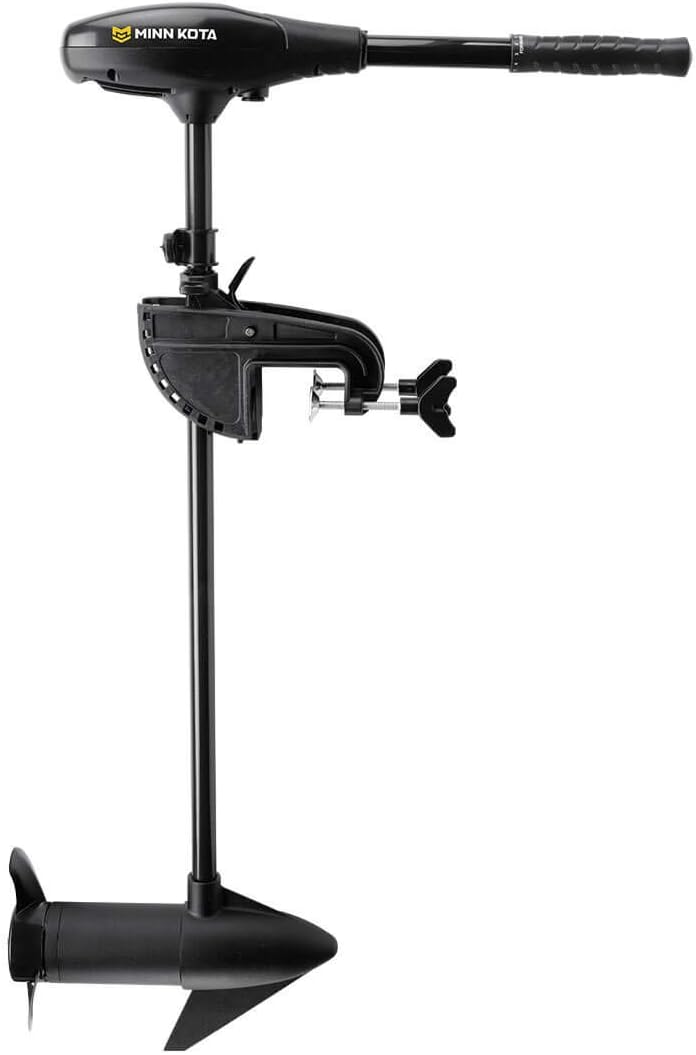
Minn Kota Endura Max Transom Trolling Motor
| Thrust | 55 lb |
|---|---|
| Shaft | 36 in composite |
| Mount | Transom |
| Water | Freshwater |
Buy this if
- You fish lakes and rivers from a 14–16 ft aluminum boat
- You want thrust headroom for wind
- You want one motor that just works
Skip if
- You fish salt or brackish water
- You need variable speed for slow presentations
- You are powering a kayak — the 30 lb is enough
Minn Kota Endura motors survive years of dock bumps and weed-clogged props — the default on rental johnboats for good reason. Match thrust to boat length: 30–40 lb for kayaks and canoes, 45–55 lb for 14–16 ft aluminum boats. Deep-cycle marine battery separate — never run a trolling motor on a starting battery.
Pros
- 55 lb thrust moves a loaded jonboat
- 36 in composite shaft shrugs off docks
- Battery meter on select models
- Freshwater-tough at a low price
Cons
- Not built for saltwater
- Five forward speeds, not variable
- Battery sold separately
Complete the kit
(not Amazon stars)
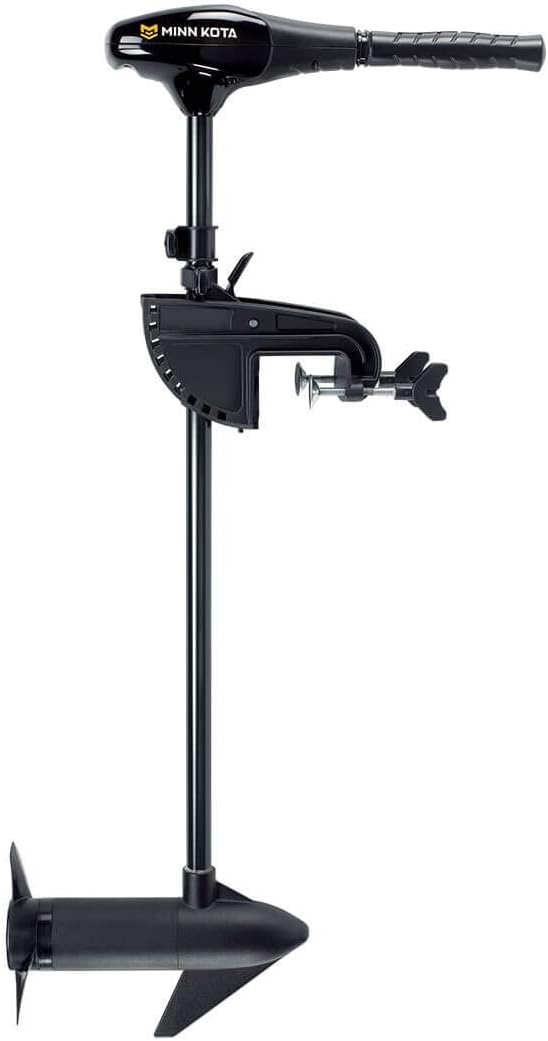
Minn Kota Endura C2 30 Trolling Motor
| Thrust | 30 lb |
|---|---|
| Shaft | 30 in |
| Mount | Transom |
| Water | Freshwater |
Buy this if
- You fish from a kayak or canoe
- You want the cheapest reliable way onto the water
- Your boat is light and you launch by hand
Skip if
- You run a loaded aluminum boat in wind
- You need to hold position in current
- You fish salt
The Endura C2 30 covers kayaks and small jonboats at lower cost than the 55 lb Endura Max — same indestructible composite shaft and five forward speeds in a lighter thrust package for skinny-water fishing.
Pros
- Light enough for a kayak or canoe
- Lowest cost of the four
- Same composite shaft as its bigger sibling
- Five forward speeds
Cons
- 30 lb thrust is not enough for a loaded 16 ft boat
- No battery meter
- Freshwater only
Complete the kit
(not Amazon stars)
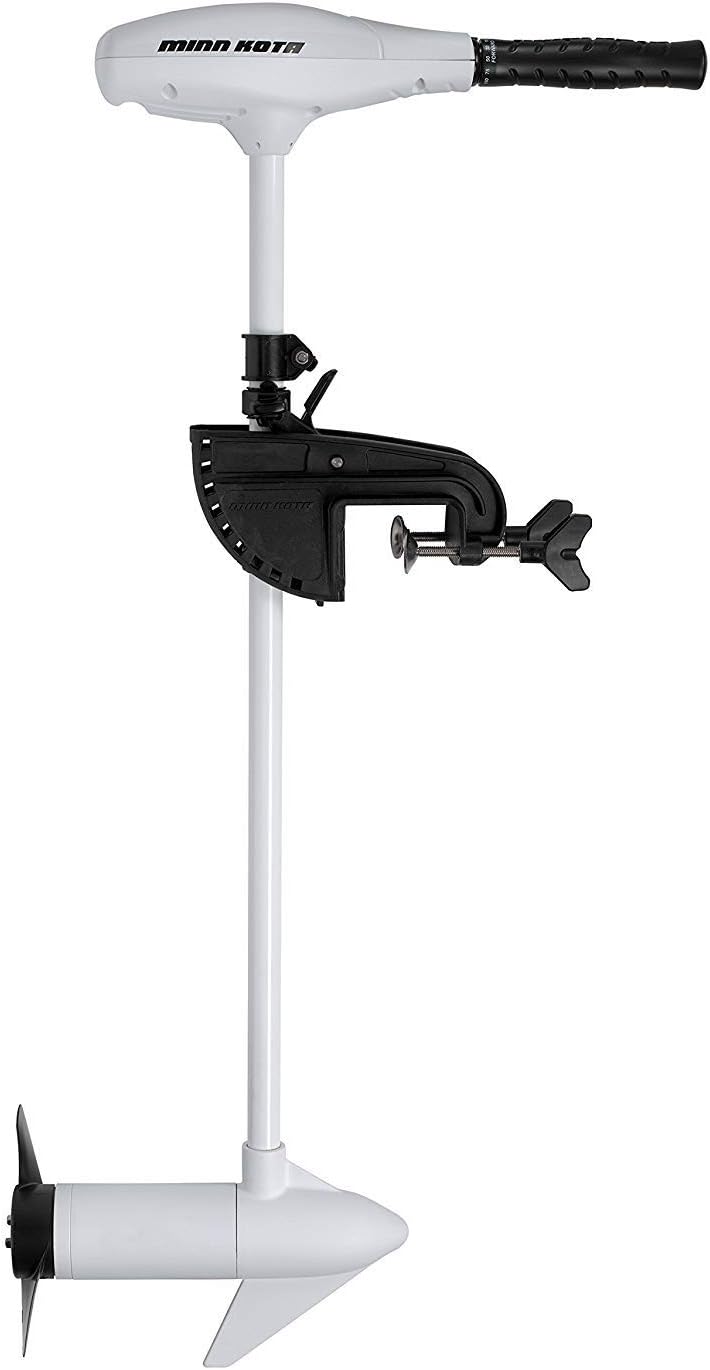
Minn Kota Riptide Transom Trolling Motor
| Thrust | Varies by model |
|---|---|
| Mount | Transom |
| Tiller | Telescoping |
| Water | Saltwater-rated |
Buy this if
- You launch into brackish marsh, bay, or surf
- You steer standing up
- You are tired of replacing corroded motors
Skip if
- You only fish lakes and rivers
- Budget is the deciding factor
- You want the lightest motor for a kayak
Riptide builds add corrosion-resistant hardware for brackish and coastal use — pair with a sealed deep-cycle marine battery and rinse the lower unit after salt days to extend prop and shaft life.
Pros
- Corrosion-resistant for salt and brackish
- Telescoping tiller for standing to steer
- Built to survive coastal seasons
- Digital Maximizer on some models
Cons
- Costs more than a freshwater motor
- Heavier than the Endura line
- Overkill if you never leave fresh water
Complete the kit
(not Amazon stars)
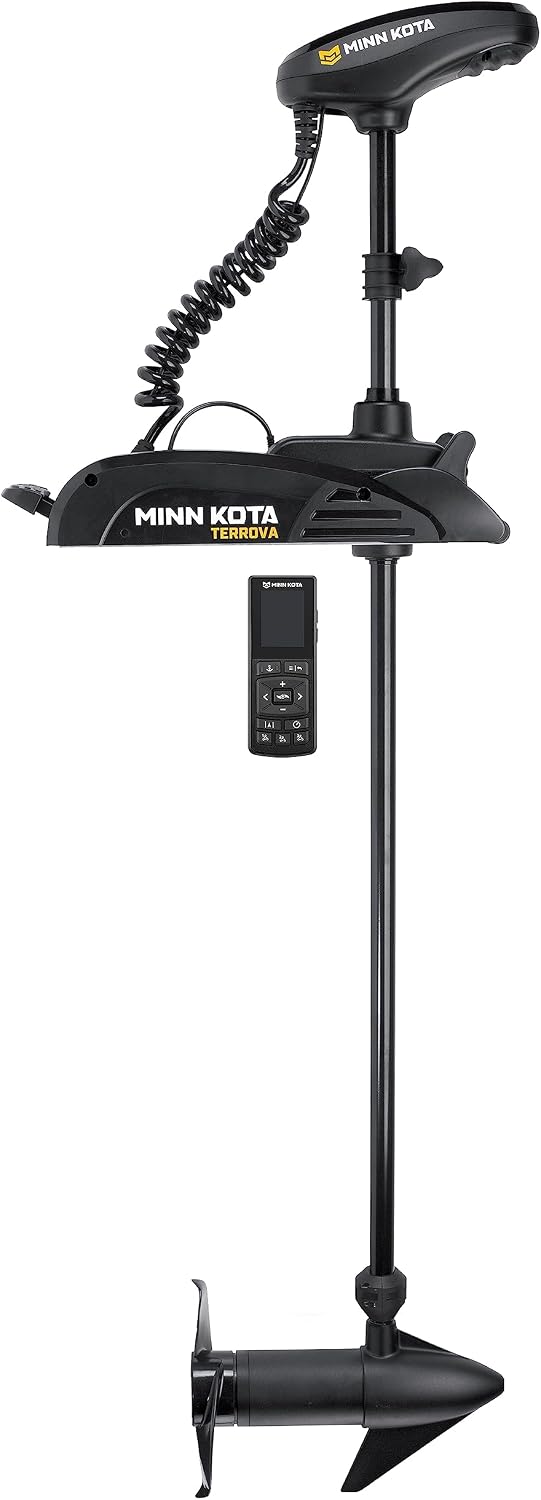
Minn Kota Terrova Bow-Mount Trolling Motor
| Thrust | 55 lb (24 V models higher) |
|---|---|
| Shaft | 54 in |
| Mount | Bow |
| Water | Freshwater |
Buy this if
- You fish bass or walleye from a boat with a bow deck
- You want to hold position while you retie or rig
- You are tired of fighting wind with a tiller
Skip if
- You fish from a kayak or canoe
- Your boat has no bow platform
- You want the cheapest way onto the water
The Terrova is the pick when you are tired of fighting wind with a tiller. Spot-Lock holds GPS position within a few feet while you rig rods or retie, and the electric-steer foot pedal frees both hands. It costs several times what a transom mount does, and you need a bow platform plus 24 V wiring on most 80 lb setups — but for bass and walleye fishing it is a different sport. Skip it on a kayak or a small jonboat with no bow deck.
Pros
- Spot-Lock holds GPS position in wind and current
- Bow mount pulls the boat for finer control
- Electric-steer foot pedal frees both hands
- Quiet enough to work shallow fish
Cons
- Costs several times a transom mount
- Needs a bow deck and usually 24 V wiring
- Overkill on a kayak or small jonboat
Complete the kit
Full Comparison Table
| Product | Mount | Best For | Buy |
|---|---|---|---|
| Minn Kota Endura Max Transom Trolling Motor | Transom | Jonboats, skiffs | → (paid link) |
| Minn Kota Endura C2 30 Trolling Motor | Transom | Kayaks, small boats | → (paid link) |
| Minn Kota Riptide Transom Trolling Motor | Transom | Coastal, heavy boats | → (paid link) |
| Minn Kota Terrova Bow-Mount Trolling Motor | Bow | Bass boats, spot-lock fishing | → (paid link) |
Common trolling motor mistakes
- Running a starting battery — It will sulfate and die early. Deep-cycle marine only.
- Buying too little thrust — A 30 lb motor on a loaded 16 ft boat will not hold position in wind.
- Ignoring shaft length — Too short and the prop cavitates in chop; measure transom height to waterline.
- Skipping the freshwater rinse after salt — Salt destroys seals and hardware — even on saltwater-rated motors.
- Assuming all transom mounts are equal — Tiller length and speed control matter more than thrust once you are fishing.
Frequently Asked Questions
Transom vs bow mount trolling motor?
How much thrust do I need?
Can I run a trolling motor on a starting battery?
How long will a trolling motor run on one battery?
Do I need variable speed or is five forward speeds enough?
How do I maintain a trolling motor after saltwater use?
Related Guides


