
Bear Safety While Camping: Practical Habits That Work
Store food correctly, keep the site clean, carry EPA-registered spray in grizzly country, and know black vs grizzly response.
On this page
car campers and backpackers in black-bear or grizzly country who want practical habits — not folklore — for food storage, spray use, and encounter response.
pick storage that matches your route in our
bear-resistant food storage guide.
Also read: For bear deterrents around a home or cabin, see How to Repel Bears on HowToRepel.com. Backcountry storage gear: bear-resistant canisters.
Most bear problems at camp start the same way: food smell, messy trash, and a tent that smells like dinner. Bear safety while camping is less about clever tricks and more about boring habits — store food correctly, keep the site clean, and give wildlife a reason to walk past you.
This guide covers what pulls bears into camp, the habits that keep them out, how to use bear spray, and what to do if one shows up. It is information for campers and backpackers in bear country — not a product roundup.
If you are still filling gear gaps before a trip, start with first-time camping basics, then come back here for the bear-specific plan.
Why bears come into campsites
Bears follow calories. A campsite that smells like food is an easy meal compared with digging for roots or chasing prey. Common bear attractants:
- Food and leftovers. Cooking odors, open packages, grease on a stove, and scraps in a trash bag all travel farther than most people expect.
- Trash and dishwater. Food wrappers, grease dumped on the ground, and strained dishwater poured near the tent keep bears interested long after dinner.
- Scented toiletries. Toothpaste, deodorant, sunscreen, lip balm, and scented soap count as “food” to a hungry nose. Store them with the food, not in the sleeping bag.
- Pet food. Dog kibble and treat bags are a major camp attractant. Same rules as human food.
- Carcasses and berry patches. A dead animal near a site, or a thick berry patch, means bears already have a reason to visit that area.
Fuel odors and bug spray are secondary compared with food and trash, but keep them out of the tent anyway. The goal is simple: nothing that smells interesting belongs where you sleep.
How to keep bears away while camping
Pick a better campsite
Avoid berry thickets, fresh carcasses, and obvious bear trails. Look for dry, open ground with good sight lines, and leave yourself an exit path that is not blocked by brush.
In backcountry sites, use a loose “bear triangle”: sleep, cook, and store food in three separate spots, ideally about 70–100 yards (roughly 70 adult paces) apart when terrain allows. If a bear finds the food stash at night, it should not walk straight into your tent.
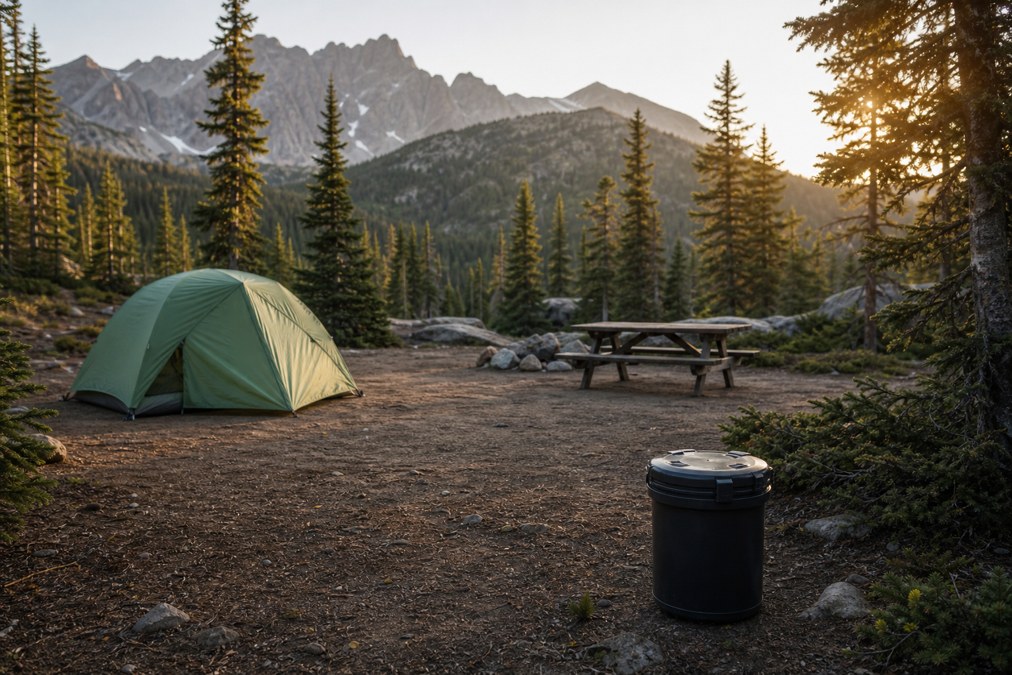
Car campgrounds with food lockers are different — use the locker, keep the picnic table clean, and still treat the tent as a no-food zone.
Store food the way the land unit requires
Hard-sided bear-resistant food canisters are required in many parks and forests for a reason: they keep paws and jaws from opening dinner. Canisters are not fully smell-proof, but they stop easy access. A bear hang only works where trees, branch height, and local rules allow — and a bad hang is worse than a good canister.
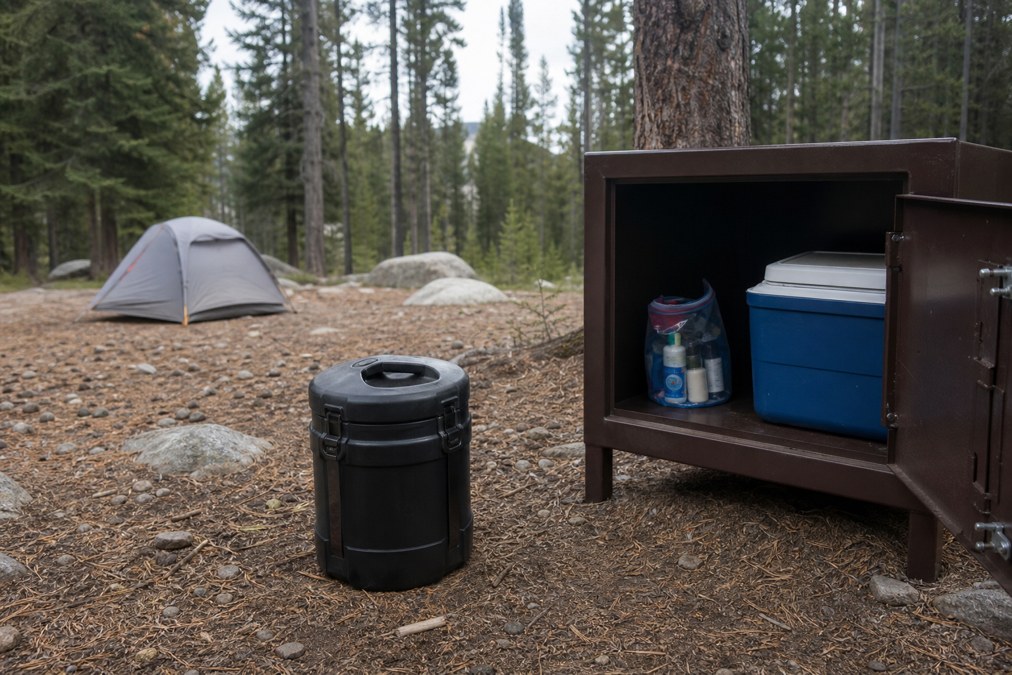
What belongs in storage overnight:
- All food and leftovers
- Trash and food wrappers
- Cookware with residue
- Toothpaste, sunscreen, and other scented toiletries
- Pet food and treats
Place the canister on flat ground away from cliffs and water, and far from the sleeping area. Never store the canister or hung bag in or under the tent. Food storage in bear country is the single habit that prevents most nighttime camp visits.
Change out of cooking clothes
Clothes that absorbed dinner smell stay at the cooking area or go into the food-storage system — not into the sleeping bag. Wash hands and face after cooking. Use unscented soap when you can; heavily perfumed cleaners add another scent trail.
Clean camp before you sleep
Pack out trash every evening, not just at checkout. Wipe the table, scrape the stove, and do a ground sweep for microtrash (foil corners, bar wrappers, twist ties). Low-waste habits help: washable dishes beat a pile of greasy disposable plates that sit overnight in a bag.
Keep food out of the tent
This is the non-negotiable rule. Snacks, gum, wrappers, and “just one bar” all belong in storage. If you wake hungry at 2 a.m., get up and go to the cooking area — do not nibble in the bag.
Carry bear spray and know how to use it
In grizzly country — and anywhere agency guidance recommends it — carry EPA-registered bear spray where you can reach it in a second, not buried in a pack. Practice removing the safety clip at home so you are not fumbling in the dark.
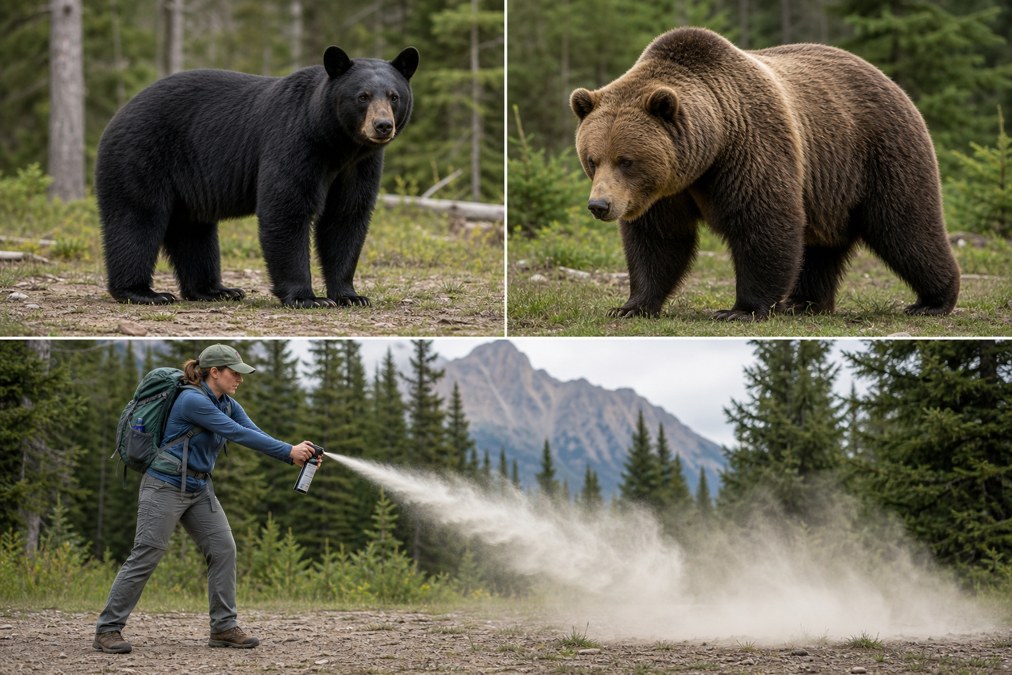
Deploy when the bear is close enough that a cloud can reach its face (often described as within about 25–30 feet / ~10 yards for many canisters — read your label). Aim slightly downward toward the face, account for wind, and leave yourself an escape path. Bear spray is a deterrent, not a reason to get closer.
Keep dogs leashed
A free-roaming dog can find a bear, bark it into a chase, and lead it straight back to camp. Leash rules protect the dog and everyone else at the site. A dog is not a substitute for food storage or spray — see our notes on dogs and bear deterrence for the limits of that idea.
Black bear vs grizzly: what to do
Agency guidance varies by species and by whether the bear is defensive or predatory. Learn which bears live where you are camping before you go. This comparison is a field memory aid — always follow the rules posted by the park or forest you are visiting.
| Situation | Black bear | Grizzly / brown bear |
|---|---|---|
| How to ID | Taller ears, straighter face profile, no pronounced shoulder hump; color ranges from black to cinnamon | Pronounced shoulder hump, dished face, longer claws; often larger overall |
| If you see it at a distance | Stay calm, do not run, talk in a low steady voice, back away slowly, give it an exit path — never approach for photos | |
| If it charges (defensive) | Hold ground if you can; deploy bear spray when in range; look large and make firm noise | Deploy bear spray when in range; do not run; ready to drop if contact is imminent and spray is not an option |
| If it makes contact | Fight back with whatever you have — aim for the face | Play dead for a defensive surprise: face down, hands protecting the neck, legs slightly apart; stay down until the bear leaves |
| Play dead vs fight back | Do not play dead with a black bear that is attacking — fight back | Play dead for defensive contact; if the attack continues and looks predatory (persistent, quiet stalking, entering a tent at night), fight back |
| Cubs nearby | Leave even more space; never get between a sow and her young | |
Bear spray works on both black and brown bears when deployed correctly at the right distance. These are general patterns, not a substitute for local agency guidance.
What not to do
- Do not feed bears — on purpose or by leaving a messy camp. Food-conditioned bears become dangerous to the next group.
- Do not run or climb a short tree as a default plan. Bears climb and sprint far faster than people.
- Do not stare it down or crowd it. Leave an escape route for the bear and for yourself.
- Do not leave coolers or grocery bags on a picnic table overnight at a drive-in site. Use lockers or hard-sided vehicles only where rules allow.
- Do not rely on pine cleaners, music, or folklore as your food-storage plan. Clean camp and proper storage do the real work.
For the wider risk picture — weather, navigation, and other wildlife — see dangers of camping in the woods and our personal safety while camping guide.
Bear safety FAQ
Bottom line
Bear safety while camping is mostly prevention: choose a sensible site, store food and scented gear correctly, clean up before dark, leash pets, and carry bear spray where it belongs. If you meet a bear, slow down, follow local species guidance, and give the animal a way out. You are a visitor in their habitat — leave no reason for them to visit yours.
Related Guides


