
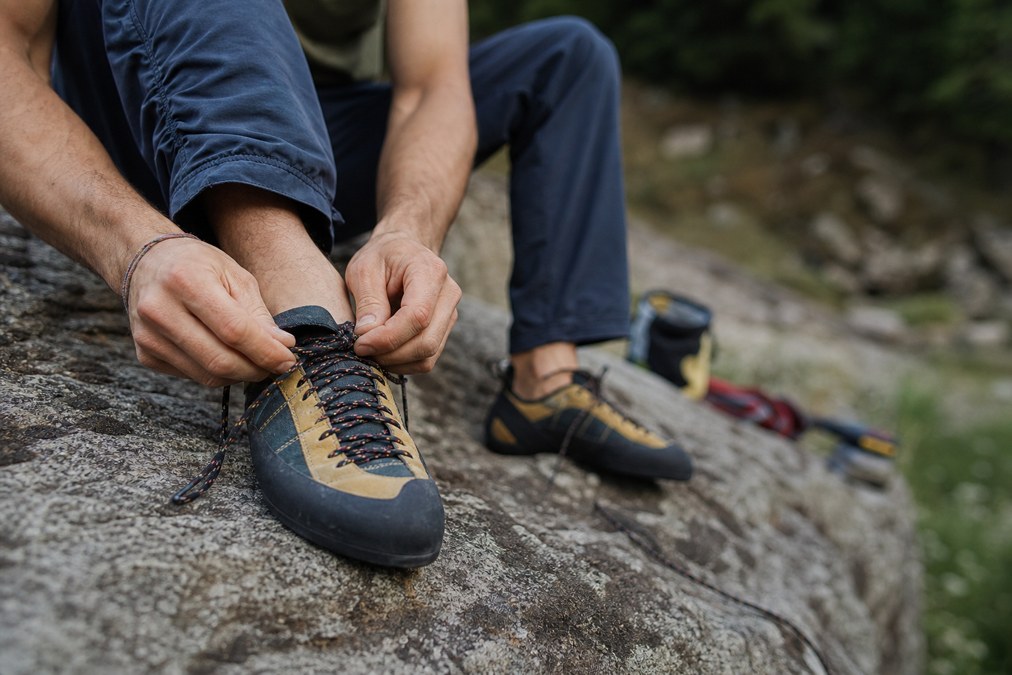
Best All-Around Rock Climbing Shoes in 2026 (Tested & Reviewed)
Quick answer: La Sportiva Tarantulace and Scarpa Vapor V balance gym comfort and outdoor edge precision.
Three shoes, three stages: your first pair, a performance shoe for steep sport routes, and a durable budget option.
All-around shoes should work for 2-hour gym sessions without toe agony.
Pick your climbing, then your shoe
Scoring rubric (weights)
Beginners over-buy downturn. Comfort and edging matter far more than aggressiveness in your first year.
How we ranked these shoes
We compared last shape and asymmetry against climbing style, then checked rubber compound and sole thickness for the terrain each shoe targets. Every pick had to still have a live Amazon listing with a product name matching what we recommend. We do not claim on-rock testing we did not do — these picks come from spec comparison and climber-reported fit.
Which shoe for which climber
Two-hour gym sessions, occasional outdoor day
A flat last with a roomy toe box means you keep them on instead of pulling them off between routes.
Steep routes where edges are small
A moderate downturn and stiffer sole transfer force onto tiny footholds you cannot stand on otherwise.
You expect to burn through your first pair
Thicker rubber and a lower price make the learning curve cheaper — resole later if you stick with it.
Tarantulace vs Vapor V — which do you actually need?
La Sportiva Tarantulace (beginner)
- Flat last, minimal asymmetry
- Laced for full-foot fit tuning
- Comfortable for long gym sessions
- Less precise on steep, small edges
- Best for your first year
Scarpa Vapor V (performance)
- Moderate downturn for steep terrain
- Stiffer sole edges harder
- Better on sport routes and overhangs
- Less comfortable standing around
- Best once you climb harder grades
Sizing and break-in notes
- Buy snug with toes flat or barely curled. Painful is not a sizing strategy, it is a reason to stop climbing.
- Shoes stretch about half a size. Leather stretches more than synthetic; synthetic holds its shape better.
- Resole as soon as rubber wears through to the rand. Letting it go means the rand wears and the shoe is done.
- Keep them out of a hot car — heat and glue do not get along.
Product photos are on each card below — self-hosted on OutdoorsPapa (no duplicate URLs in this strip).
Decision rules
- Choose the Tarantulace if you are new, climb mostly in the gym, and want one shoe for everything.
- Choose the Vapor V if you climb steep sport routes and need precision on small edges.
- Choose the Evolv Defy if cost and durability matter more than performance and you expect to wear them out learning.
- Skip all three if you climb exclusively indoors on slabs and never leave the gym — a cheaper flat shoe does that job.
Why Your First Shoe Should Not Be Aggressive
Climbing shops push downturned shoes because they look like climbing shoes. In practice, a beginner spends most of their time on vertical and slabby terrain where a flat last edges just as well and stays comfortable for a whole session. Aggressive asymmetry only pays off on steep ground with small footholds — the terrain you grow into, not the terrain you start on.
Fit beats brand. Every shoe here fits a slightly different foot shape, so try the same size in two models if you can. Build the rest of your rack with our beginner climbing harness guide.
What to Look For — Buyer’s Guide
Match each category to your trip length and climate — one proven pick per slot beats buying overlapping gear twice.
Key Factors at a Glance
Flat for beginners and all-day comfort. Downturned only for steep, precise terrain.
Snug with toes flat or barely curled. If it hurts, it is too small to learn in.
Stickier compounds grip better but wear faster. Thicker soles last longer.
Velcro for gym speed, laces for tuning fit across the whole foot.
The 3 Best All-Around Rock Climbing Shoes in 2026
(not Amazon stars)
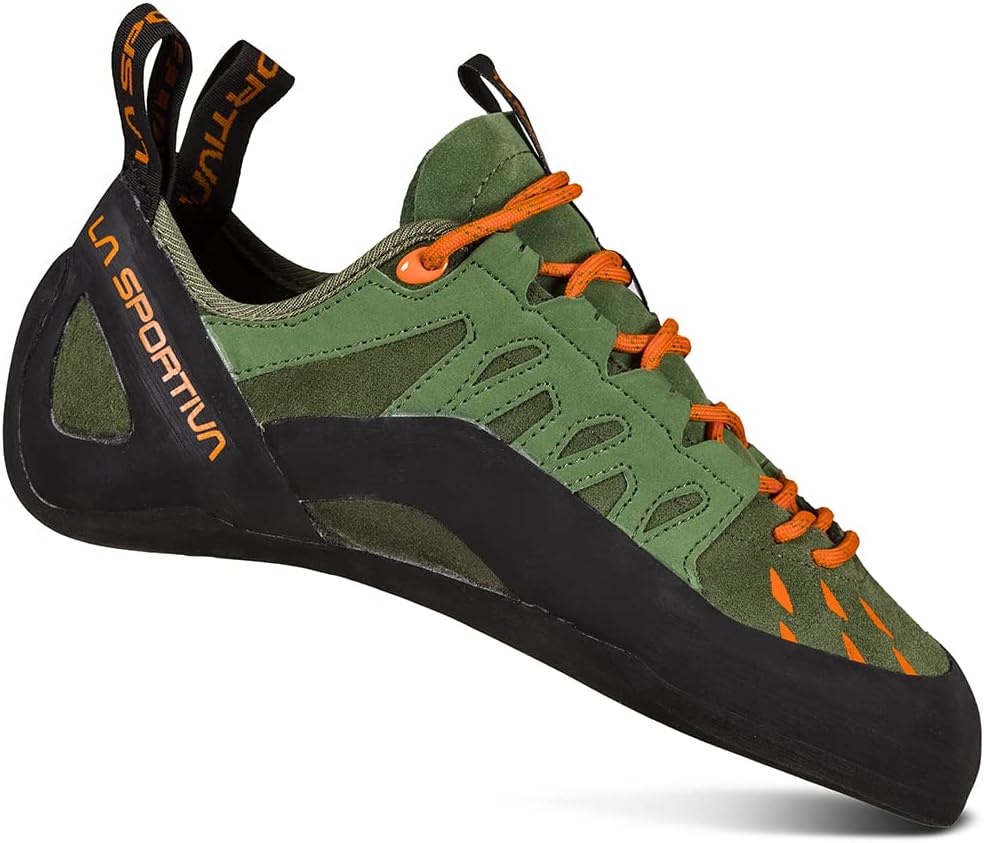
La Sportiva Tarantulace
| Last | Flat, minimal asymmetry |
|---|---|
| Rubber | FriXion RS |
| Closure | Lace |
| Best for | Gym + beginner outdoor |
Buy this if
- You are new to climbing
- You climb mostly indoors with occasional outdoor days
- You want one shoe that stays comfortable
Skip if
- You climb steep sport routes
- You need maximum edge precision
- You already know your performance size
Size at street shoe for first pair — downsize as foot strength improves.
Pros
- Flat, comfortable last for long gym sessions
- Laced closure tunes fit across the foot
- FriXion RS rubber grips plastic and granite
- Forgiving for beginners
Cons
- Less precise on steep, small footholds
- Not a performance shoe once you progress
- Leather upper can stretch
Complete the kit
(not Amazon stars)
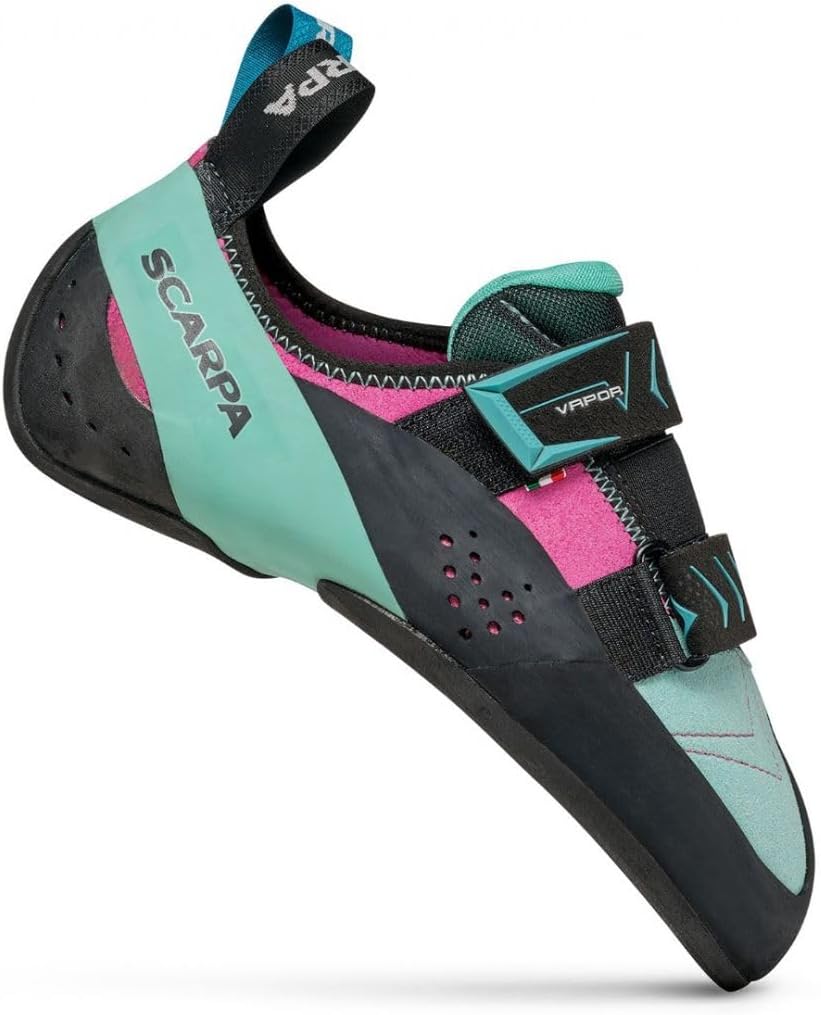
Scarpa Vapor V
| Last | Moderate downturn |
|---|---|
| Sole | Stiff for edging |
| Closure | Velcro strap |
| Best for | Sport climbing |
Buy this if
- You climb sport routes and overhangs
- You need precision on small footholds
- You are past the beginner grades
Skip if
- You mostly climb slabs and vertical
- You are buying your first pair
- Comfort is your priority
A moderate downturn adds precision on outdoor sport routes while staying tolerable for two-hour gym sessions.
Pros
- Moderate downturn edges small footholds
- Stiffer sole transfers force on steep terrain
- Precise on sport routes
- Good rubber for demanding conditions
Cons
- Less comfortable standing around
- Overkill for slab and beginner terrain
- Costs more than an entry shoe
Complete the kit
(not Amazon stars)
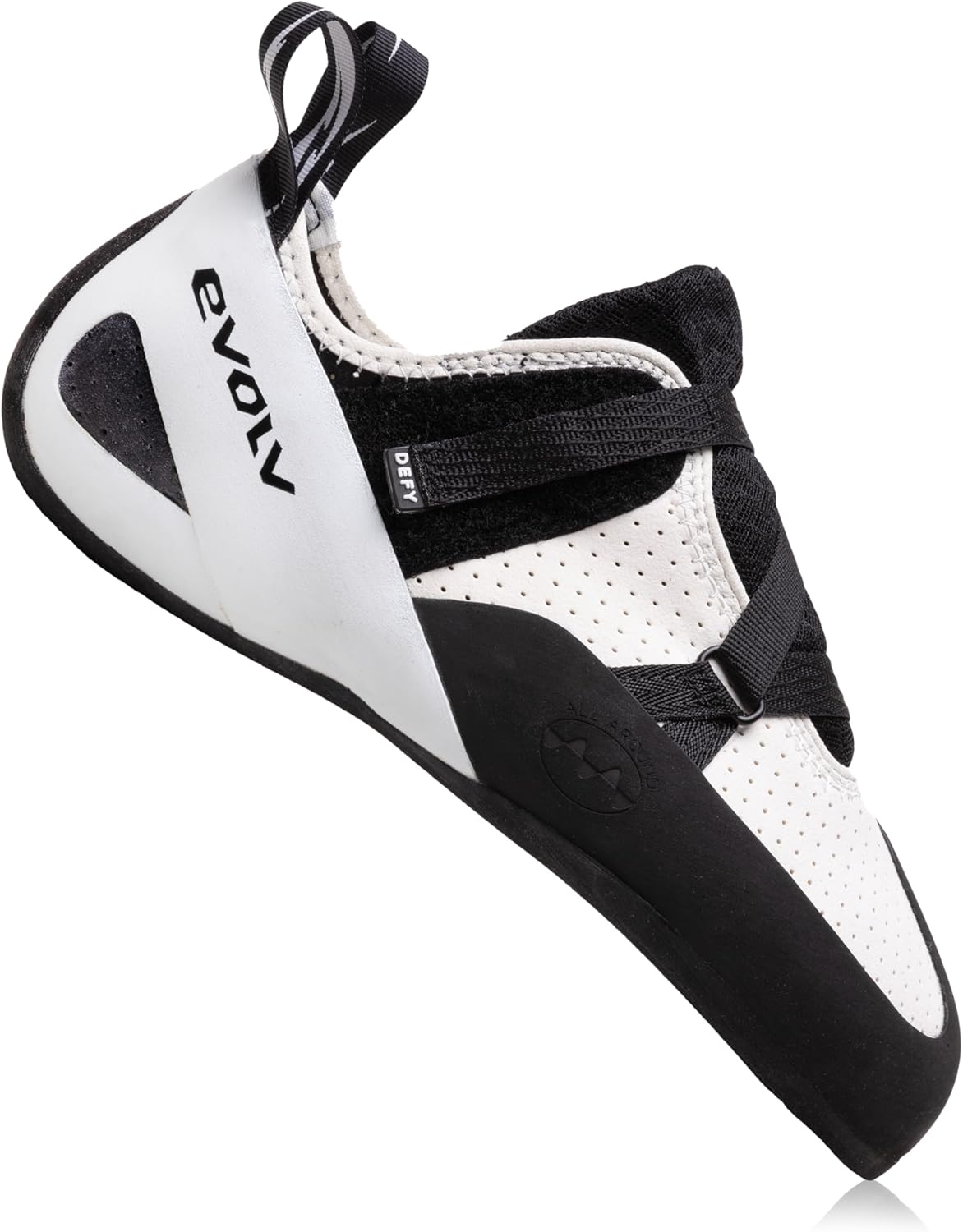
Evolv Defy
| Last | Flat |
|---|---|
| Rubber | Trax SAS |
| Closure | Velcro |
| Best for | Beginners, gym |
Buy this if
- You want a low-cost first pair
- You climb in the gym several times a week
- You expect to wear them out learning
Skip if
- You need precise edging
- You climb outdoors on demanding rock
- You want premium rubber
Velcro speeds gym turnover and the flat last keeps toes comfortable while you learn footwork fundamentals.
Pros
- Low cost for a first pair
- Trax SAS rubber is durable
- Flat, forgiving last
- Good value if you expect to wear them out
Cons
- Less sticky than premium rubber
- Not a precision shoe
- Fewer fit adjustments
Complete the kit
Full Comparison Table
| Product | Type | Best For | Buy |
|---|---|---|---|
| La Sportiva Tarantulace | Flat | Gym + outdoor | → (paid link) |
| Scarpa Vapor V | Moderate | Sport | → (paid link) |
| Evolv Defy | Flat | Beginners | → (paid link) |
Common climbing shoe mistakes
- Sizing down aggressively — Pain does not make you better. It makes you take the shoes off and learn less.
- Buying aggressive shoes first — Downturn helps on steep terrain only. On a beginner's footholds it just hurts.
- Wearing them outside on the walk-in — Dirt and grit embed in the rubber and kill friction on the wall.
- Ignoring the resole window — Once rubber is through to the rand, the shoe is a write-off. Resole early.
- Leaving them sealed and damp in a bag — That is how they grow mold and peel the glue. Air them out.
Frequently Asked Questions
What size climbing shoe should I buy as a beginner?
Do I need different shoes for gym and outdoor climbing?
How long do climbing shoes last?
Should I wear socks with climbing shoes?
Should I get laced or Velcro climbing shoes?
How tight should a beginner climbing shoe fit?
Related Guides


