
Best Backpack for Long-Distance Hiking in 2026 (Researched & Compared)
Quick answer: a 60–70L internal-frame pack with adjustable hip belt and ventilated back panel carries multi-day loads comfortably — the Osprey Atmos AG 65 leads for fit and airflow on week-long trails.
Below are the 3 best backpacks for long-distance hiking in 2026 — ranked for fit, ventilation, and load support using published specs and owner-review patterns (not invented multi-week field tests).
This guide covers pack fit, capacity, and frame types — not a full ultralight kit. For a complete sub-10 lb gear list, see Best Ultralight Backpacking Gear. On a budget? See Budget Ultralight Backpacking Gear.
This guide covers pack fit, capacity, and frame types for long-distance hiking — not a full ultralight kit. For a complete sub-10 lb gear list, see Best Ultralight Backpacking Gear . On a budget? See Budget Ultralight Backpacking Gear .
Start here — pick your pack job
Scoring rubric (weights)
Scores use published specs and category benchmarks — not invented multi-week field tests.
How we ranked these
We compared capacity bands, suspension/fit features, ventilation design, load-transfer hardware, and consistent owner-review patterns for multi-day backpacking packs. Rankings reflect buyer jobs (comfort vs ounces vs heavy haul) — not fake trail diaries.
Which pack for your trip?
5–7 days, humid climbs
Prioritize ventilated mesh and an adjustable hip belt as food weight drops mid-trip.
Fast-and-light town-to-town
You still need ~60L for food carries, but want a lighter frame than premium AG packs.
Heavy insulation or base camp
Past ~40 lb, capacity and load lifters beat mesh ventilation and shaving ounces.
Sub-10 lb base weight build
This page is pack-only. Pair a lighter shelter/sleep system from the UL guides.
Atmos AG 65 vs Blaze 60
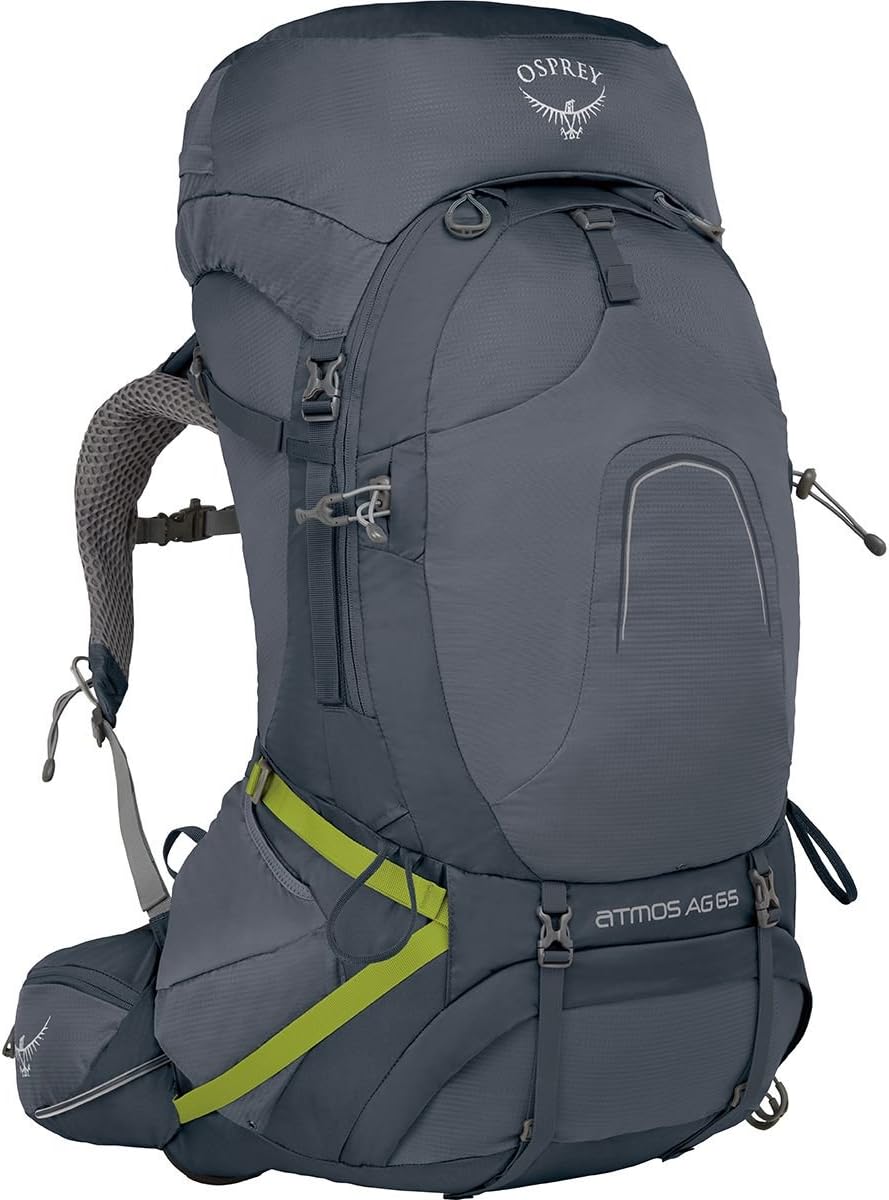
Osprey Atmos AG 65
- Anti-Gravity ventilated mesh
- Fit-on-the-fly hip belt
- Best week-long comfort
- Higher price / slight weight
- 65L food-carry flexibility
Granite Gear Blaze 60
- Lighter framed hauler
- 60L thru-hike volume
- Robic nylon durability
- Less padded on heavy loads
- Better value on a budget
Pack-fit notes (category benchmarks)
- Hip belt should sit on the iliac crest and carry most of the weight — shoulder straps stabilize, they should not hang the load.
- Torso length fit matters more than brand loyalty; an adjustable harness that matches your torso beats a “lighter” wrong-size pack.
- 65L is the common sweet spot for 5–7 day loads; 100L+ is for winter/group hauls, not summer ultralight kits.
Product photos are on each card below — self-hosted on OutdoorsPapa (no duplicate URLs in this strip).
Decision rules
- Choose Atmos AG 65 if you want the most comfortable ventilated pack for week-long loads.
- Choose Blaze 60 if ounces and value matter more than premium AG mesh.
- Choose Xenith 105 if winter, family, or base-camp hauls push past ~40 lb.
- Build the rest of the kit via the ultralight pillar or budget UL child — do not treat this page as a full gear list.
Why Backpack Fit Matters on Long Trails
A poorly fit pack destroys shoulders by mile five and turns a week-long hike into a bail-out. Hip-belt carry, torso length match, and a ventilated back panel matter more than shaving a few ounces when you are hauling food, water, and shelter for multiple days.
Long-distance hiking packs sit in a sweet spot between ultralight daypacks and expedition rigs. You need enough volume for resupply flexibility, adjustable harnesses for changing load weights, and durability for repeated strap tightening on rocky, wet trails.
Building a full sub-10 lb kit? Start with the ultralight backpacking gear pillar or the budget ultralight child — this page is pack-only.
What to Look For — Buyer’s Guide
Match each category to your trip length and climate — one proven pick per slot beats buying overlapping gear twice.
Key Factors at a Glance
Most hikers need 55–70L for 5–7 days without resupply; ultralight kits compress into 40–50L, while winter loads may require 70L+.
The belt should carry 70–80% of weight on your iliac crest — get torso length measured and adjust after food weight changes mid-hike.
Floating mesh panels like Anti-Gravity reduce sweaty back contact on humid climbs; stiffer frames transfer load better on flat terrain.
Internal frames keep weight close to your center of gravity; expedition packs add beefier hip belts and load lifters for 40+ lb loads.
The 3 Best Backpacks for Long-Distance Hiking in 2026
(not Amazon stars)
Osprey Atmos AG 65 Backpack
| Capacity | 65L |
|---|---|
| Suspension | Anti-Gravity mesh |
| Hip belt | Fit-on-the-fly adjustable |
| Best for | Week-long backpacking |
Buy this if
- Week-long trips with 55–70L food/gear loads
- Want ventilated mesh back on humid trails
- Need adjustable hip belt as food weight drops
Skip if
- Strict ultralight base weight under ~10 lb
- Need 100L+ for winter/group base camp
- Budget is the main constraint
The Atmos AG 65 is the pack we recommend when someone asks for one bag that handles 5–7 day trips without destroyed shoulders. The floating mesh back panel is built for humid climbs where sweat builds fast, and the adjustable harness dials in fit after food weight changes mid-hike.
Pros
- Anti-Gravity floating mesh back panel
- Fit-on-the-fly adjustable hip belt
- 65L capacity handles week-long loads
- Excellent ventilation on humid climbs
Cons
- Premium Osprey pricing
- Mesh panel adds slight weight vs ultralight frames
Complete the kit
(not Amazon stars)
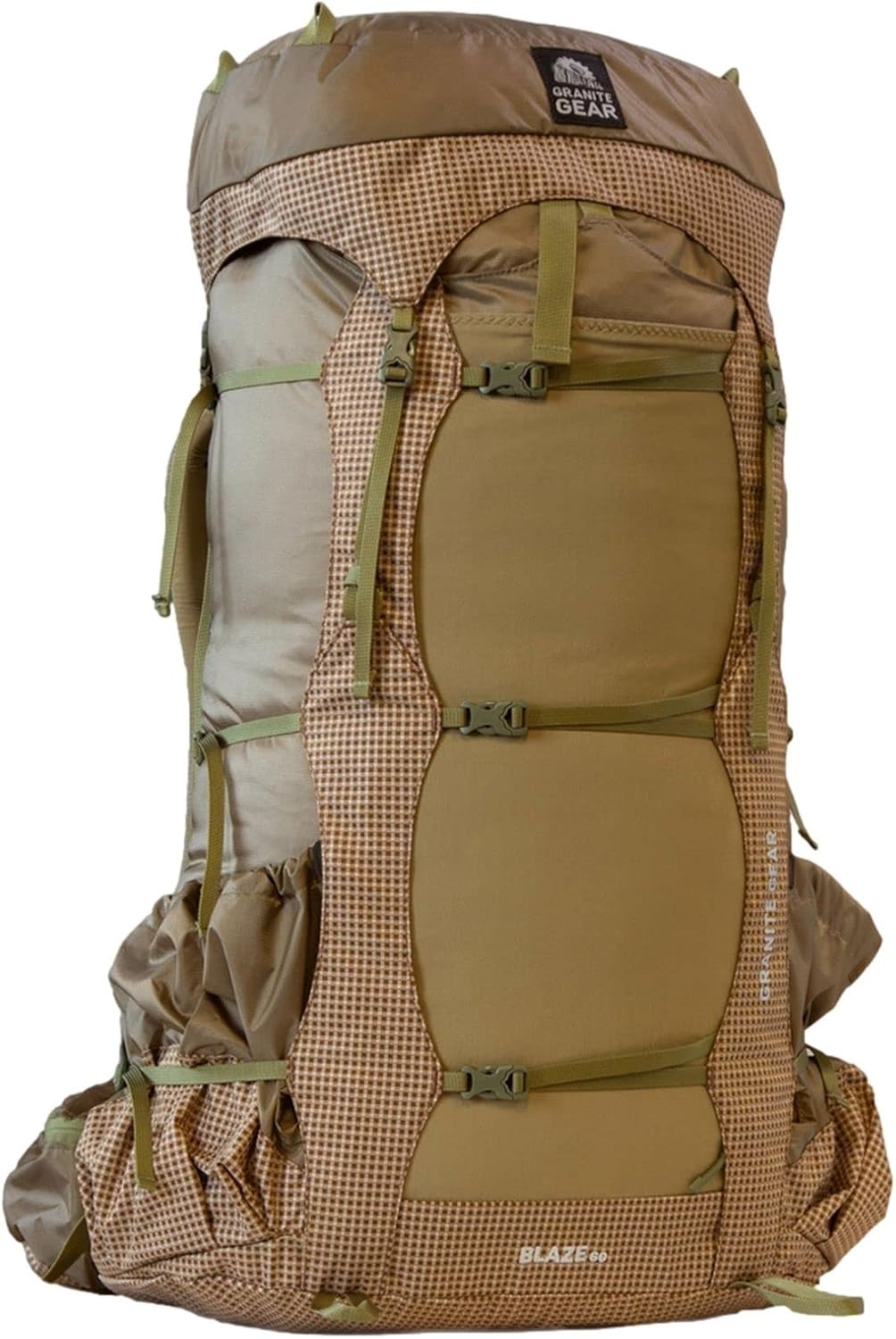
Granite Gear Blaze 60 Backpack
| Capacity | 60L |
|---|---|
| Frame | Lightweight internal |
| Fabric | Robic nylon |
| Best for | Fast-and-light thru-hikes |
Buy this if
- Thru-hike / section-hike food carries between towns
- Want 60L without Atmos-level suspension weight
- Prefer simpler organization and lower price
Skip if
- Heavy loads past ~35–40 lb most days
- Want maximum ventilated mesh comfort
- Need expedition volume for winter kits
The Blaze 60 strips ounces without sacrificing frame support — a strong pick for fast-and-light thru-hikers who still need 60 liters for food carries between towns.
Pros
- Lightweight frame for fast-and-light hikers
- 60L capacity in a simpler design
- Durable Robic nylon construction
- Lower price than premium suspension systems
Cons
- Less padding than Atmos AG on heavy loads
- Minimal organization compared to cabin-style packs
Complete the kit
(not Amazon stars)
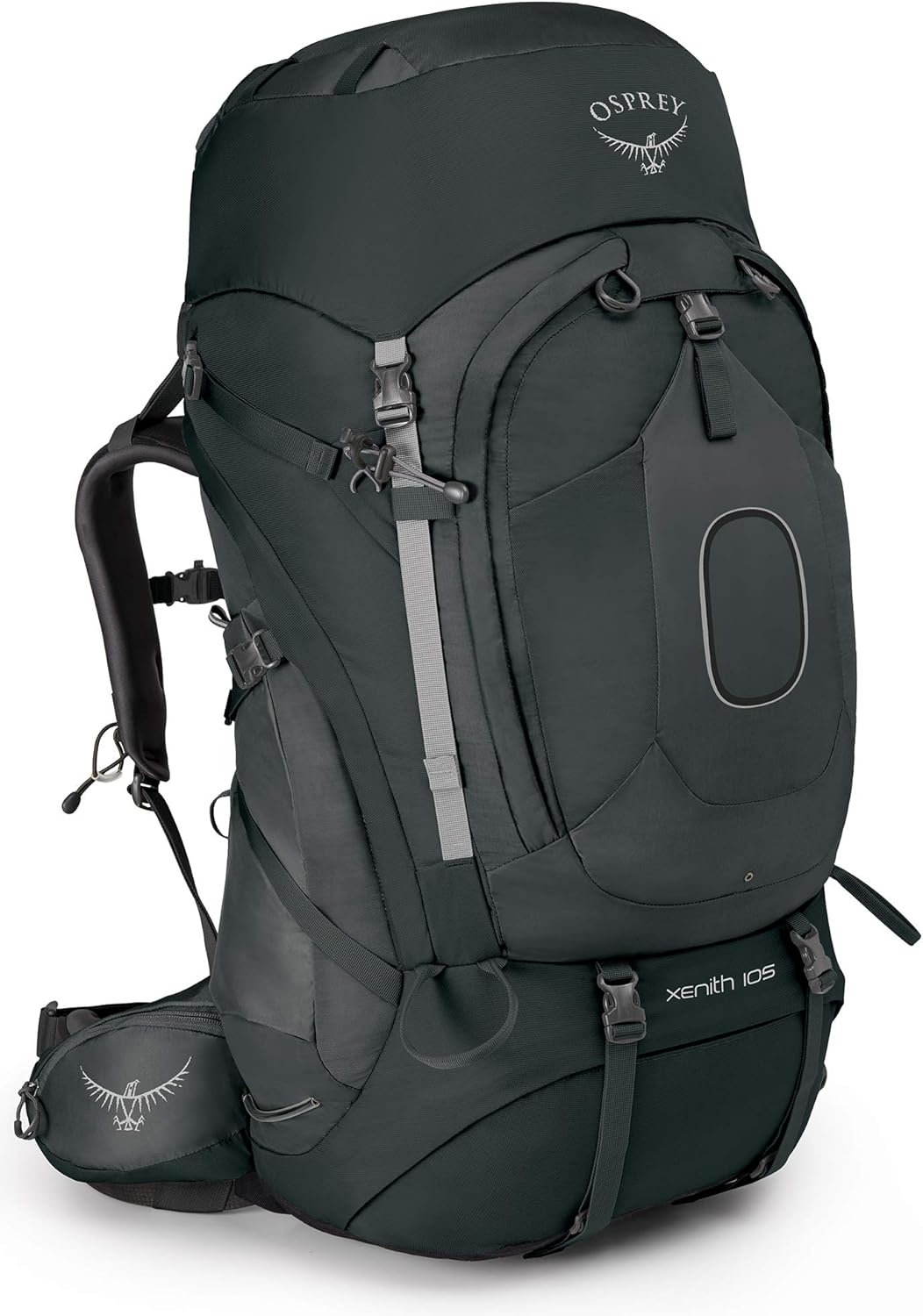
Osprey Xenith 105 Backpack
| Capacity | 105L |
|---|---|
| Load | 40+ lb ready |
| Belt | Beefy hip belt + load lifters |
| Best for | Winter / family base camp |
Buy this if
- Winter trips or family base-camp hauls
- Regular loads past ~40 lb
- Need expedition volume and load lifters
Skip if
- Summer thru-hikes under 30–35 lb
- Want a ventilated AG-style mesh panel
- Building a strict ultralight kit
When winter gear, group supplies, or base-camp hauls push past 40 pounds, the Xenith's load lifters and hip belt keep weight stable on off-camber terrain.
Pros
- 105L capacity for winter or family gear
- Beefy hip belt handles 40+ lb loads
- Expedition-ready load lifters
- Stable on off-camber terrain with heavy weight
Cons
- Heavy and oversized for summer ultralight kits
- Overkill for weekend trips under 30 lb
Complete the kit
Full Comparison Table
| Product | Capacity | Best For | Buy |
|---|---|---|---|
| Osprey Atmos AG 65 Backpack | 65L | Week-long backpacking | Amazon → (paid link) |
| Granite Gear Blaze 60 Backpack | 60L | Fast-and-light thru-hikes | Amazon → (paid link) |
| Osprey Xenith 105 Backpack | 105L | Winter or family base camp | Amazon → (paid link) |
Common mistakes
- Buying by volume alone — An empty 105L pack still hurts if torso length and hip belt are wrong. Fit first, liters second.
- Putting weight on the shoulders — Tighten the hip belt so 70–80% sits on your hips. Loose belts turn every mile into shoulder pain.
- Using an expedition pack for summer thru-hikes — Extra fabric and unused volume bounce and tempt overpacking. Match capacity to trip length.
- Skipping torso measurement — Brand size charts differ. Get measured once — then adjust harness after food weight drops.
- Confusing this with a full UL kit guide — Pack choice is one slot. Shelter, pad, quilt, and filter live in the ultralight cluster pages.
Frequently Asked Questions
What size backpack for a week-long hike?
Internal vs external frame backpack?
How should a hiking backpack fit?
Is a 65L pack too big for ultralight hiking?
When should I choose a 100L+ expedition pack?
Do I need a ventilated mesh back panel?
Related Guides


